IN Brief:
- Tsoukes Sarres is European Energy’s first operational wind project in Greece.
- Six Vestas V150-4.4 turbines provide a combined installed capacity of 27MW.
- European Energy and Sampension jointly own the project following a 2025 transaction.
European Energy has reached commercial operation at the 27MW Tsoukes Sarres wind park, completing its first operational wind project in Greece.
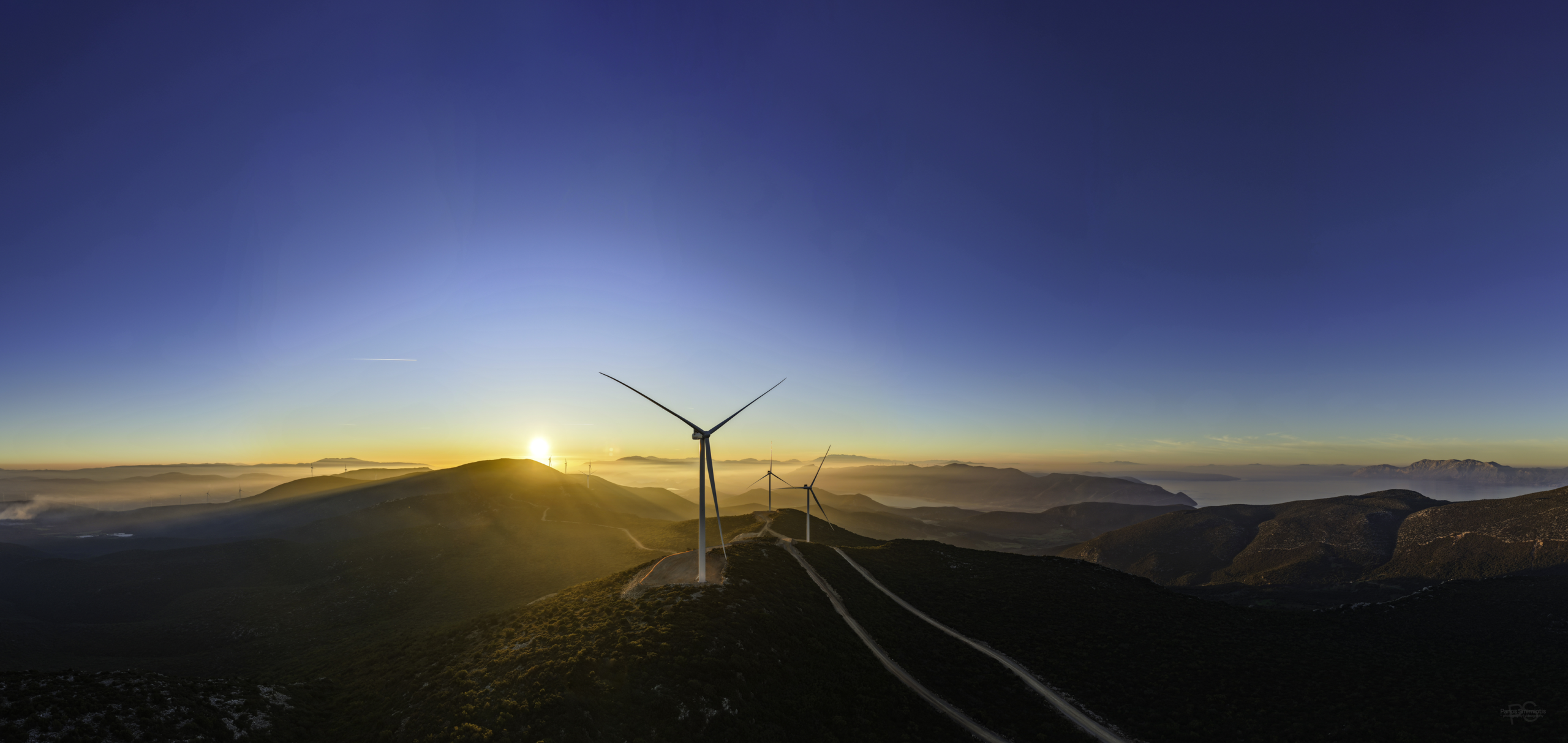
The development is located in the Municipal Unit of Avlida across Voiotia and Evia and uses six Vestas V150-4.4 onshore turbines. Construction began in 2024 on mountainous and rocky terrain at an elevation of around 700 metres.
European Energy jointly owns Tsoukes Sarres with Danish pension company Sampension. The developer sold a 50% interest in the project to Sampension in December 2025 through an existing renewable energy investment partnership between the two organisations.
Commercial operation closes the main construction and commissioning phase and shifts the asset into routine generation. Turbine erection is followed by electrical completion, grid energisation, control system testing and performance checks before a wind farm can export power under normal operating conditions.
The six V150 machines each have a nominal rating of 4.4MW, giving the development an installed capacity of approximately 27MW. The turbine uses a 150-metre rotor diameter, allowing each unit to sweep a larger area of the wind resource than earlier machines with smaller rotors.
Site conditions give the equipment choice a demanding construction setting. Tower sections, blades, nacelles, transformers and cranes all have to reach individual turbine positions over access roads capable of handling abnormal loads, while lifting areas and foundations require suitable ground conditions.
The rocky terrain at Tsoukes Sarres therefore places substantial emphasis on civil engineering and logistics alongside the turbine installation programme. Road gradients, turning radii, drainage, excavation and underground cable routes can all affect the sequence in which turbines are erected and connected.
Once mechanically complete, the wind farm’s electrical system collects output from the six turbines and transfers it through the internal network to the grid connection. Protection settings, reactive power behaviour and plant controls have to comply with the operating requirements of the network before commercial export can continue without commissioning restrictions.
Bringing the project into operation also changes the risk profile for its owners. Sampension’s investment provides institutional capital exposure to a generating asset, while European Energy retains an ownership interest after carrying the development through construction.
Partial asset sales are widely used across renewable development because they allow capital to be recycled into later projects while infrastructure investors gain exposure to operating generation. The arrangement separates some of the development and construction risk from the longer operating period without changing the engineering requirements of the plant itself.
Tsoukes Sarres gives European Energy its first operating wind reference in Greece as the company develops a broader portfolio spanning wind, solar and battery storage. The project is relatively modest beside the multi-hundred-megawatt schemes moving through parts of Europe, but it establishes local construction, grid and operating experience that can be carried into subsequent developments.
Greece’s renewable build-out also increases the importance of the networks and flexibility needed to manage variable generation. Wind output changes with weather conditions, so transmission capability, forecasting, balancing resources and storage increasingly determine how much renewable electricity can be absorbed without creating operating constraints elsewhere in the system.
The investment partnership with Sampension extends an arrangement already used across other European renewable assets. The 2025 transaction brought the Greek project into that portfolio before commercial operation, allowing the owners to share exposure as construction moved through its final stages.
Operation now replaces construction progress as the principal measure of delivery. Availability, energy yield and compliance with grid requirements will determine the plant’s technical performance, while maintenance of the six turbines and the balance of plant becomes the long term engineering task.
The mountainous location will remain relevant during that operating phase. Access for major maintenance, replacement components and lifting equipment must be maintained over the life of the wind farm, so the roads and working areas created for construction continue to form part of the project’s asset management requirements.
Tsoukes Sarres has consequently moved through the point at which permits, foundations and turbine installation dominate the programme. European Energy’s first Greek wind farm is now a working generating asset, leaving operational reliability and output as the next evidence of how the project performs.