IN Brief:
- Green Breeze comprises 16 Vestas V162-6.2MW turbines with total installed capacity of 99.2MW.
- The project has entered commercial operation under Nala Renewables ownership and a long-term corporate power purchase agreement.
- OX2 has about 300MW of additional Romanian wind projects approaching delivery and a further 1.2GW development pipeline.
OX2 has handed the 99.2MW Green Breeze wind farm in Romania to owner Nala Renewables after completing construction and bringing the 16-turbine project into commercial operation.
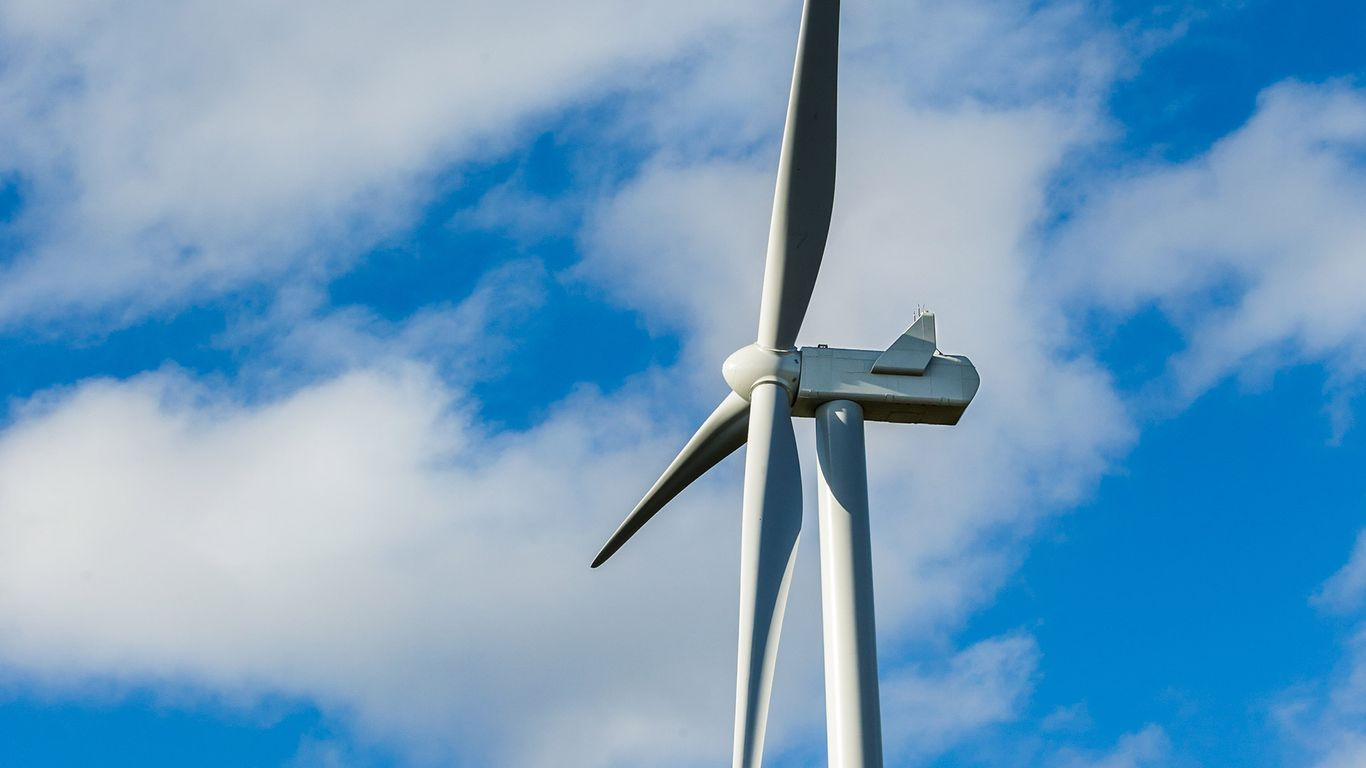
Green Breeze is located mainly in the municipality of Cuca in Galați County and uses 16 Vestas V162-6.2MW turbines. The project is supplying electricity to the Romanian grid and will deliver renewable power to a multinational corporate offtaker under a long-term power purchase agreement.
The handover is OX2’s first completed Romanian project after five years in the market. OX2 developed and built Green Breeze as a turnkey scheme for Nala Renewables and will remain involved through technical and commercial management, giving the developer an operating role after the construction programme has closed.
OX2 puts expected annual production at about 312GWh, equivalent to the annual electricity demand of almost 51,000 households on the company’s assumptions. Grid access was secured through a connection agreement with national transmission operator Transelectrica in March 2023, an early milestone for a project whose output ultimately depends on the surrounding network accepting generation when wind conditions are favourable.
Construction began in 2024 after Nala Renewables acquired the project from OX2. The delivery programme combined turbine installation with medium-voltage infrastructure, an indoor substation, and a 110kV underground connection to the transmission network. Those electrical works turn the generating equipment into an operating power station capable of meeting protection, control, and grid code requirements.
Romania is adding renewable generation while also investing in equipment intended to support transmission stability. Transelectrica has recently received two transmission-level STATCOM installations at Sibiu Sud and Bradu, providing fast reactive power support as the network accommodates more converter-connected generation and changing power flows.
Green Breeze reaches operation against that wider programme. An individual wind farm can secure a connection and satisfy its own technical obligations, but the cumulative effect of new projects changes loading, voltage profiles, and congestion across the transmission system. Network reinforcement and controllable support equipment therefore have to develop alongside generation if additional renewable capacity is to be used without increasing curtailment or operational restrictions.
OX2’s Romanian pipeline indicates that the pressure on delivery and connection capacity will continue. The company says it has three wind projects totalling about 300MW that are under construction or expected to enter construction shortly, with a further 1.2GW of onshore wind, battery storage, and solar projects at various stages of development.
That pipeline is more than ten times the capacity of Green Breeze. Converting it into operating assets will require further grid studies, substations, cable, transformers, protection systems, civil works, and specialist commissioning resources alongside turbines and battery equipment. Where several projects progress at similar times, equipment availability and connection work can become as important to schedule as the generating technology itself.
The long-term corporate power purchase agreement adds revenue visibility by linking output to a contracted offtaker rather than leaving the project wholly exposed to wholesale electricity prices. The commercial arrangement does not change the physical requirement to move energy through the network, so transmission capacity remains the common dependency between contracted generation and actual delivery.
Romania’s grid also has to accommodate the variability of new wind output alongside existing generation and cross-border flows. A strong connection at project level reduces local risk, but system operators still need sufficient reactive power, reserve, transfer capacity, and operational flexibility across the wider network to manage periods of high renewable production.
The project also provides a completed reference for the contractual model used between OX2 and Nala Renewables. OX2 carried the scheme through development and construction, Nala owns the operating asset, and OX2 remains responsible for technical and commercial management. That arrangement keeps development, ownership, and operations distinct while preserving continuity between the team that delivered the wind farm and the team managing its performance.
Green Breeze has now moved from development and construction into that operating environment. Its 16 turbines, substation, and 110kV connection are complete, while OX2’s continued management role keeps the company involved in performance after handover.
The next test is the scale-up behind it. OX2’s 300MW near-term programme and 1.2GW development pipeline will require the same combination of generation equipment, grid access, and electrical infrastructure on a much larger basis. Green Breeze is the first completed reference point in Romania; the pace of the projects behind it will show how quickly that development pipeline can be translated into connected capacity.