IN Brief:
- Palmer will supply InoBat with BESS units during 2026 under a reciprocal European supply arrangement.
- From 2027, Palmer can source BESSMONT systems from InoBat's planned Slovak manufacturing capacity.
- Brill Power BMS and EMS technology will be integrated into BESSMONT, with system data stored in Europe.
InoBat and Palmer Energy Technology have agreed a European battery energy storage partnership covering reciprocal system supply, controls integration, and future manufacturing from InoBat’s Slovak production base.
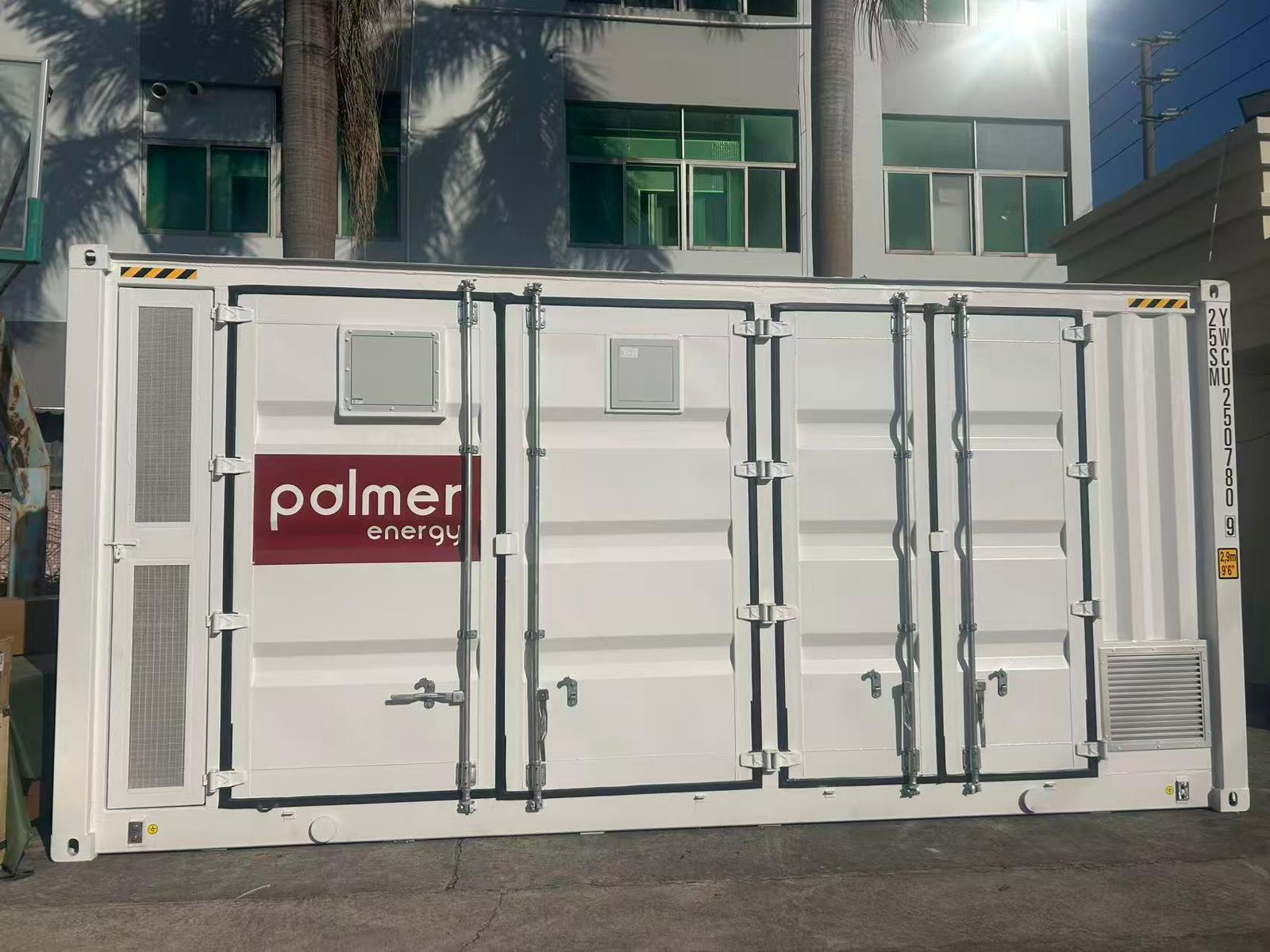
Under the arrangement, Palmer Energy Technology is expected to supply BESS units to InoBat during 2026. From 2027, Palmer will have the option to source BESSMONT systems from InoBat’s Slovak manufacturing facility once that capacity is commissioned, creating a two-way supply structure rather than a single-vendor relationship.
Palmer will also provide Brill Power battery management and energy management technology for integration into the BESSMONT platform. The companies say Brill Power software is developed in Oxford and system data will be stored on Palmer-controlled servers in Europe.
The agreement combines three layers that are often procured separately in storage projects: battery hardware, the battery management system that supervises cell and pack behaviour, and the higher-level energy management system that determines how the asset is dispatched. Bringing those functions together can simplify integration, although it also places more emphasis on software interfaces, data ownership, and responsibility for faults across the complete system.
InoBat has been expanding its stationary storage business around the BESSMONT brand. The company says it has contracted or delivered 875MWh of utility-scale battery storage across Europe, while developing further manufacturing capacity to support a larger project pipeline.
Palmer’s contribution sits further up the controls stack. Brill Power’s technology is based on cell-level monitoring and active balancing, intended to manage differences between cells as a battery pack ages. The energy management layer then sits above the BMS and translates project objectives into charging and discharging schedules.
Those functions are technically distinct. The BMS is responsible for keeping cells and modules inside safe electrical and thermal operating limits, while the EMS considers the external requirement — whether that is a grid service, price signal, demand profile, or dispatch instruction — and determines how the battery should respond.
A storage plant’s usable output is therefore never defined by nameplate energy capacity alone. Cell temperature, state of charge, degradation, inverter limits, connection constraints, protection settings, and warranty conditions all affect what can be dispatched at a particular moment. Coordination between the BMS, EMS, inverter controls, and site controller is required if the project is to deliver its contracted response without pushing equipment outside those limits.
The decision to host system data in Europe adds another design consideration. Utility and industrial storage projects increasingly depend on remote monitoring, optimisation, software updates, and cloud-based diagnostics, so the location and control of operational data can become part of procurement and cybersecurity assessment alongside the physical equipment.
European data hosting does not by itself establish compliance or resilience, but it gives project developers a clearer architecture for where operational information is held and which organisation controls the environment around it. That can simplify contractual and security reviews where owners want to limit dependence on infrastructure outside the region.
The reciprocal hardware arrangement addresses a different risk: availability. Storage developers have had to manage changing cell prices, inverter supply, certification, shipping, and manufacturing lead times, and a second supply route can reduce dependence on a single factory if project delivery dates overlap.
For InoBat, Palmer provides a near-term source of systems during 2026 before additional Slovak capacity is commissioned. For Palmer, the option to source BESSMONT units from Slovakia from 2027 creates access to an EU manufacturing base while preserving a role for its own control technology within the finished system.
Assembly inside Europe does not mean every cell or component is locally sourced, but it can shorten integration, testing, service, and spares loops. That becomes more valuable as customers ask suppliers to support commissioning, long-term maintenance, software, warranty management, and replacement equipment rather than simply deliver containers to site.
The agreement does not disclose a committed megawatt-hour volume, named projects, or contract value, so its significance lies in the operating model rather than an immediate capacity addition. The next measure of the partnership will be how quickly the reciprocal supply framework and Brill Power controls move into commissioned European projects.
At that point, responsibility at the interfaces will matter as much as the headline hardware. Cell behaviour, BMS logic, EMS dispatch, inverter response, thermal management, and project-level controls all have to work within a single warranty and commissioning structure if customers are to avoid disputes over where a performance problem begins and ends.