IN Brief:
- Italy’s Council of Ministers granted Digital Vault Sulcis pre-eminent national strategic status on 4 August 2026; Energy Vault detailed the development on 1 September.
- The first phase is expected to provide around 30MW of AI-focused IT capacity, with the wider plan targeting more than 100MW of total site power.
- Energy Vault targets construction by 2028 and commercial operation by 2030, subject to remaining approvals and development milestones.
Energy Vault has set out updated milestones for its Digital Vault Sulcis project in Sardinia after the Italian government designated the investment as being of pre-eminent national strategic interest, giving the proposed AI data centre and associated energy infrastructure an accelerated administrative route.
The government designation itself was approved by Italy’s Council of Ministers on 4 August 2026. Energy Vault published further details on 1 September, including the current scale of the project, its phased development plan, and target dates for construction and commercial operation.
The initial phase is expected to provide approximately 30MW of AI-focused IT capacity. Energy Vault says the wider master plan is designed to expand towards roughly 50–60MW of IT capacity and ultimately more than 100MW of total site power.
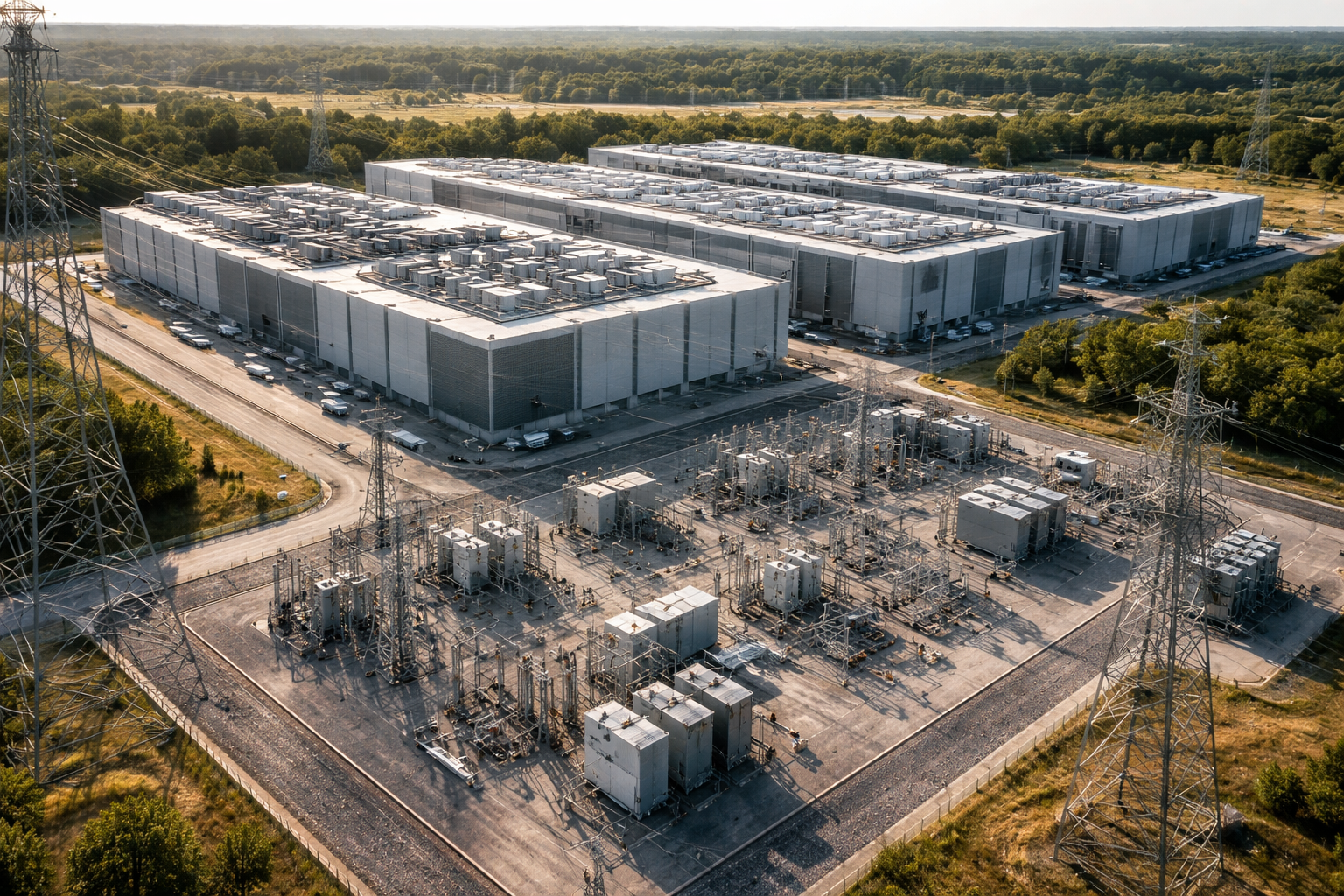
The difference between IT capacity and total electrical demand is important. A data centre requires electricity not only for computing equipment but also for cooling, power conversion, pumps, communications, security, lighting, and other auxiliary systems. The grid connection and generation infrastructure therefore have to be designed around the complete facility rather than server load alone.
Digital Vault Sulcis is planned for the former Carbosulcis mining complex at Nuraxi Figus. Energy Vault intends to integrate the campus with renewable generation and energy storage, turning the energy system into part of the development rather than treating the data centre as a conventional customer waiting for a standard grid connection.
That approach reflects a growing constraint facing large computing projects. Control of suitable land is no longer enough if the transmission or distribution system cannot provide the required power within the project timetable. For AI infrastructure in particular, electrical capacity can become one of the longest-lead elements of development.
Energy Vault is pursuing a build, own, and operate model combining powered land, energy infrastructure, storage, and computing capacity. The company’s proposition is therefore broader than supplying battery equipment to a third-party data-centre developer.
The strategic designation is intended to accelerate part of the administrative process, but it does not amount to construction approval or a final investment decision. Remaining authorisations, engineering work, commercial arrangements, financing, and development milestones still have to be completed before physical delivery can begin.
Energy Vault currently targets construction by 2028 and commercial operation by 2030. Those dates remain subject to approvals and project development, placing Digital Vault Sulcis well before procurement, energisation, and commissioning.
The electrical architecture will determine whether the proposed model can perform as described. A 100MW-class campus represents a large, relatively continuous load, while AI computing can also create rapid variations in demand. Matching that profile with renewable generation requires decisions on grid imports, storage duration, reserve margins, backup arrangements, charging strategy, and the amount of renewable capacity that can realistically be dedicated to the site.
Storage can help smooth short-term mismatches, provide ride-through capability, manage peaks, and potentially support grid services. It cannot make intermittent generation continuously firm unless the system also has sufficient stored energy, generation diversity, grid support, or another source of dependable power.
That is why a headline figure for renewable generation tells only part of the engineering story. The useful questions are how much power can be delivered at the point of connection, how long the storage system can sustain output, what happens during prolonged low-renewable conditions, and how the computing load responds when the energy system is constrained.
The project also sits within a wider industrial transition in Sardinia. Regional authorities have been seeking new uses for the former Carbosulcis site as coal extraction is wound down, with technology and energy projects intended to create a different economic role for the area.
Reusing an industrial location can provide advantages, including existing infrastructure, established energy activity, and land that has already supported heavy industry. It does not automatically remove connection constraints or the need for new high-voltage equipment, civil works, communications, and generation assets.
Commercial risk remains equally important. AI data centres require large amounts of capital and depend on long-term demand for computing capacity, access to specialised hardware, energy prices, customer commitments, and financing structures capable of supporting both the computing and power infrastructure.
Energy Vault has not yet published a full electrical single-line design, final renewable-generation capacity, detailed storage power and energy ratings, network-connection specification, or principal construction contracts for the Sardinian campus. Those figures will ultimately show how much of the site’s power can be provided locally and how dependent it remains on the wider grid.
The 1 September announcement is therefore best understood as a development-risk milestone rather than the start of construction. Government support may shorten part of the route, and Energy Vault has put 2028 and 2030 dates against construction and operation, but the decisive engineering stage begins when the proposed 100MW-plus power campus moves into contracted electrical infrastructure.