
IN Brief:
- UniCredit is providing €153m of bridge facilities and a €65m guarantee facility.
- Ełk and Turośń Kościelna are each rated at 200MW/800MWh.
- Turośń was inaugurated in July, while Ełk is targeting commercial operation during the fourth quarter of 2026.
Greenvolt has secured €218 million of financing from UniCredit for its Ełk and Turośń Kościelna battery projects in north-eastern Poland, backing two four-hour systems with a combined rating of 400MW/1.6GWh.
The package comprises €153 million in bridge facilities and a €65 million guarantee facility. Each project is rated at 200MW/800MWh, putting the pair among the larger utility-scale battery developments now being delivered into the Polish power system.
Turośń Kościelna was officially inaugurated in July 2026, while Ełk is expected to reach commercial operation during the fourth quarter. The financing therefore supports projects that have already moved beyond early development into physical delivery and operation rather than speculative storage capacity waiting for a connection route.
At four hours of nominal duration, each system can sustain its full 200MW rated output for substantially longer than the shorter-duration batteries initially deployed for frequency-response markets. That broadens the range of services available to the assets and increases the amount of renewable output or system imbalance that can be shifted between trading periods.
Finance follows construction and connection
The timing of the transaction places engineering performance firmly alongside finance. Once batteries reach commissioning and operation, value depends on converter availability, thermal management, protection, control software, communications, cell condition, and the ability to respond reliably to dispatch signals.
Project finance can absorb construction expenditure and provide guarantees required through delivery, but operating revenue still rests on equipment that has to perform repeatedly across charging and discharging cycles. Capacity alone says little about whether a battery is available at the periods when the grid or market requires it.
The four-hour configuration also changes the operating problem. State of charge has to be managed across longer dispatch windows, particularly where the asset participates in several markets or retains energy for contracted obligations later in the day.
Poland’s storage pipeline is growing rapidly around the same time. R.Power has awarded EPC contracts covering another 550MW/2.2GWh of Polish battery capacity, also using four-hour systems and targeting operation during 2027 and 2028.
That volume creates demand beyond battery cells and containers. High-voltage transformers, switchgear, cabling, inverters, fire-safety systems, control platforms, grid studies, commissioning engineers, and qualified EPC capacity all have to expand with the storage market.
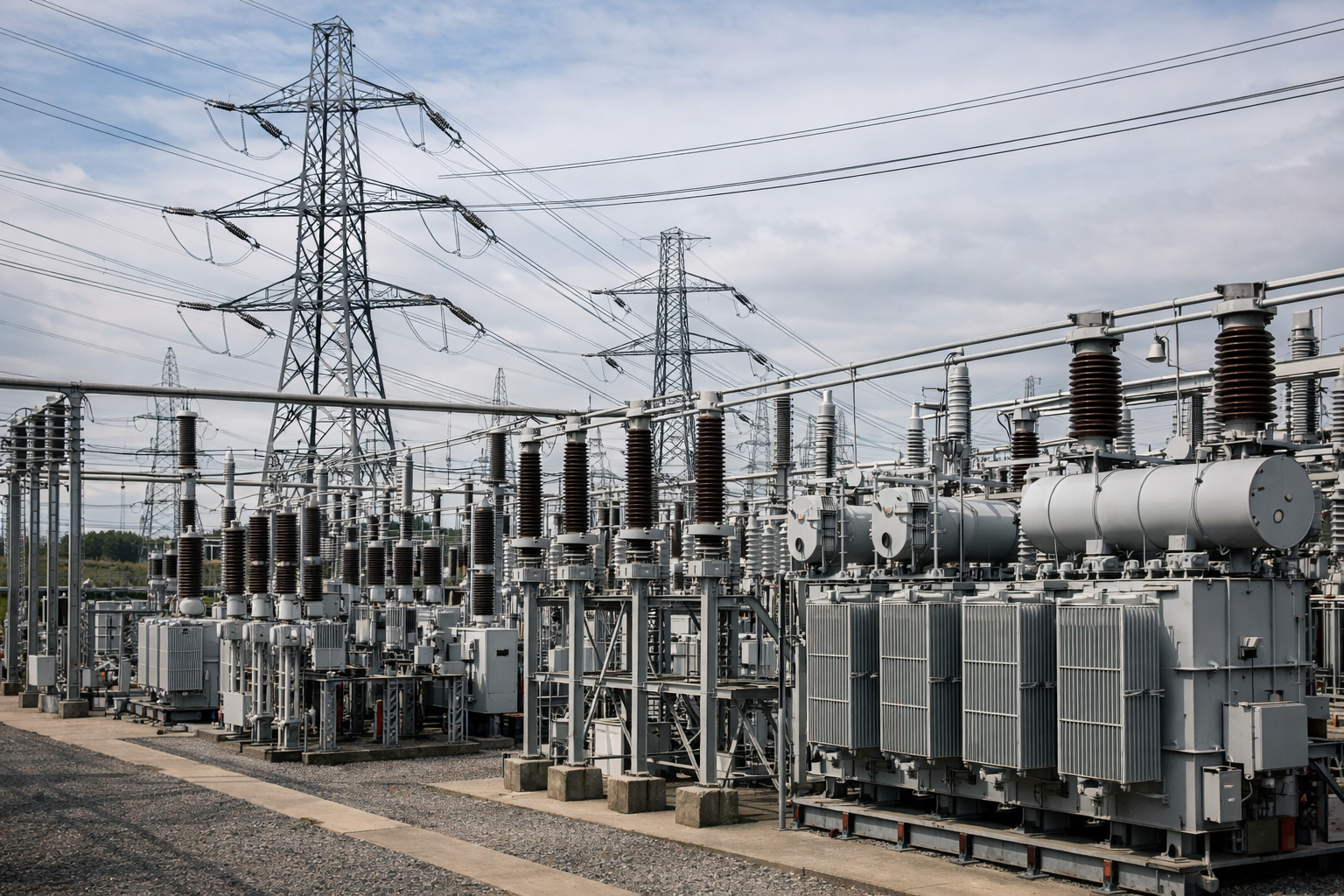
Connection infrastructure is particularly important for projects measured in hundreds of megawatts. Large batteries behave as substantial loads while charging and generators while discharging, so network studies have to accommodate both operating states as well as fault levels, reactive-power requirements, protection coordination, and dispatch communications.
Delivery scale is becoming the differentiator
Greenvolt says its wider battery development portfolio extends across 13 countries and totals about 5GW. Its Polish pipeline also includes a planned 600MW/2.4GWh scheme at Siedlce, considerably larger than either of the two projects covered by the UniCredit package.
Replicating a 200MW/800MWh design can create procurement and engineering efficiencies, but parallel deployment also concentrates exposure to equipment lead times and specialist labour. Manufacturing slots for transformers and power-conversion equipment have to align with civil works and grid-connection dates, while commissioning teams cannot simply be multiplied at short notice.
The financing market is adapting at the same time. UniCredit’s use of bridge facilities alongside a guarantee line reflects the mixture of capital requirements around projects that are passing through different delivery stages rather than a single construction loan covering an early development.
For lenders, operating history will become increasingly useful as Poland’s battery fleet scales. Actual availability, degradation, dispatch patterns, maintenance cost, warranty performance, and market revenue provide a stronger basis for later projects than forecasts derived from a market with relatively few large batteries in service.
The Greenvolt pair therefore arrives at an important point in that transition. Turośń can begin producing operating evidence while Ełk completes its route to commercial service, giving the developer two matched systems from which to test assumptions about technical availability, revenue stacking, and lifecycle performance.
The €218 million package establishes financial capacity for those projects, but their longer-term value will be set by how consistently 1.6GWh of installed storage can be kept connected, charged, and dispatchable. As Poland’s project pipeline grows, that operating record will carry more weight than another headline announcing several gigawatt-hours under development.

