
IN Brief:
- METLEN has signed the balance-of-plant contract with Pulse Clean Energy for the Penn BESS.
- Its current delivery specification is 129MW/362MWh, giving a nominal duration of approximately 2.8 hours.
- METLEN's scope includes grid connection works, with energisation expected by the end of 2027.
METLEN has signed a balance-of-plant contract with Pulse Clean Energy for the Penn battery energy storage system in the West Midlands, with the current delivery specification putting the project at 129MW/362MWh.
The contract makes Penn the largest UK storage project undertaken by METLEN to date by energy capacity. Its scope includes grid connection works alongside the wider electrical and civil balance of plant, with energisation scheduled by the end of 2027.
At 362MWh against 129MW of rated power, the current figures give Penn a nominal duration of approximately 2.8 hours at maximum output. That provides a larger energy reservoir than a conventional two-hour battery while retaining the rapid response associated with inverter-based storage.
The specification differs slightly from Statkraft’s June announcement of a long-term optimisation agreement for Penn. Statkraft described the project as a 128MW distribution-connected BESS and expected commercial operation in early 2028. METLEN’s newer delivery announcement uses 129MW/362MWh and sets an end-2027 energisation target.
Those dates are not necessarily contradictory. Energisation brings the electrical installation live, after which testing, grid compliance, market qualification, and commercial commissioning can continue before full operation.
Balance of plant carries the connection interface
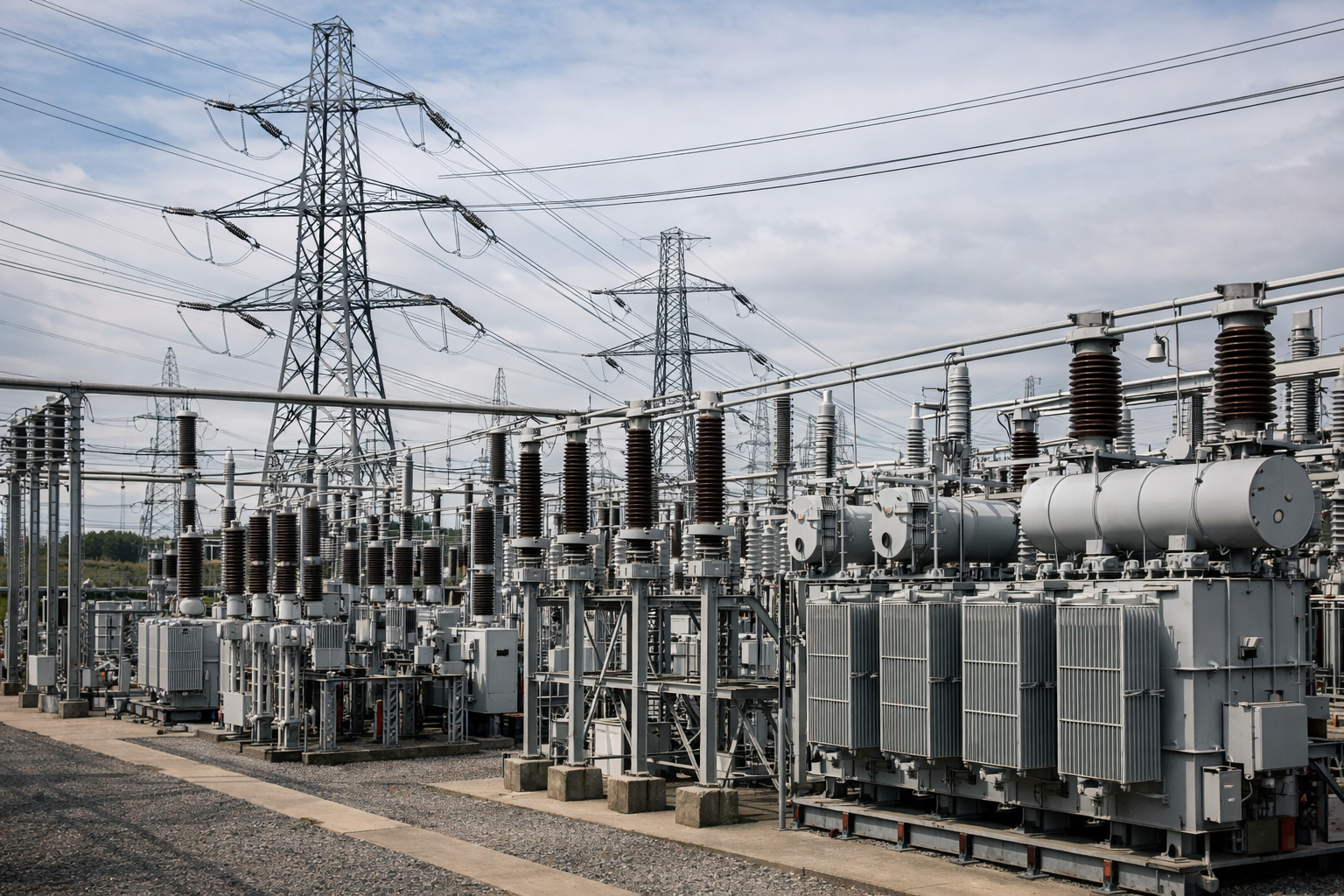
Battery cells and containers account for only part of a large BESS installation. The balance of plant turns those manufactured units into a grid-connected power station through transformers, switchgear, cabling, protection, metering, controls, auxiliary systems, communications, earthing, and civil infrastructure.
METLEN’s inclusion of the grid connection within its scope brings one of the more consequential project interfaces into the same delivery package. A battery can be physically installed well before it is commercially useful if the high-voltage connection, protection arrangements, or network works remain incomplete.
Connection programmes are becoming particularly important as UK storage projects increase in both power and energy capacity. Battery containers can be manufactured on relatively short cycles compared with large transformers, substations, or upstream network reinforcement, creating a mismatch between equipment availability and the date on which the plant can actually export.
Penn’s distribution connection therefore has to accommodate substantial bidirectional flows. Charging makes the battery a 129MW-class load at maximum power, while discharge turns it into an equivalent generator, subject to the precise limits in the connection agreement.
Protection and control equipment must operate correctly in both modes. Network voltage, fault levels, transformer loading, reactive power, harmonics, and switching behaviour all have to remain within the conditions established through the connection studies.
The roughly 2.8-hour duration changes the commercial envelope compared with a shorter battery. Penn can sustain maximum output for longer and move more energy between trading periods, potentially widening the set of wholesale price spreads that can be addressed.
More duration does not make the asset unconstrained. State of charge, round-trip losses, degradation, inverter ratings, network limits, and market commitments still determine whether a particular dispatch is physically and commercially sensible.
Statkraft is already contracted to provide trading and optimisation services once the project reaches operation. Its agreement also includes a long-term income guarantee intended to support financing, reducing some of the merchant exposure associated with relying entirely on changing market revenues.
The optimiser will have to coordinate Penn across several potential markets. Day-ahead and intraday trading may reward energy shifting, while balancing and reserve products place a value on keeping capacity available for system response.
Those uses compete for the same battery. An asset fully discharged into an attractive wholesale price cannot immediately provide upward response unless charging or reserve headroom has been preserved, while holding capacity back for a service can mean passing up another trading opportunity.
Battery degradation places another cost underneath those decisions. Each cycle uses part of the lifetime capability of the cells, so an optimisation strategy that maximises gross short-term revenue can be inferior to one that accounts for replacement cost, warranty throughput, and long-term availability.
Pulse Clean Energy is developing Penn within a wider storage portfolio. METLEN says the company has around 400MWh already in its fleet, a further 400MWh under construction, and an ambition to reach 2GWh by 2030.
METLEN itself says it has delivered or is working on about 30 battery units in the UK, including standalone and co-located installations representing nearly 2GWh of energy capacity. That scale creates scope to reuse engineering, procurement, and commissioning experience across projects rather than treating each BESS as a first-of-kind installation.
Even so, increasingly large projects make the electrical works more substantial. Higher ratings require larger transformers, heavier collector systems, more switchgear, longer cable runs, more complex protection, and tighter coordination between battery controls and the grid connection.
Penn’s current 129MW figure should therefore be treated as the delivery-stage specification rather than retrospectively rewriting the 128MW figure published in June. Project ratings can change as detailed engineering, equipment selection, and connection work progress, and no public explanation has been given for the one-megawatt difference.
The next physical milestone is energisation by the end of 2027. Meeting that date would leave the project positioned for final testing and market entry ahead of the early-2028 commercial operation period previously identified by Statkraft.

