
IN Brief:
- COMAX France has completed ten distribution-connected BESS sites totalling 57MW/114MWh.
- Entech delivered the EPC scope using CATL Pods and SMA inverters.
- Completion raises COMAX's operating French battery portfolio above 86MW/143MWh.
COMAX France has completed ten battery energy storage sites with combined capacity of 57MW/114MWh, increasing its operational French BESS portfolio to more than 86MW and 143MWh.
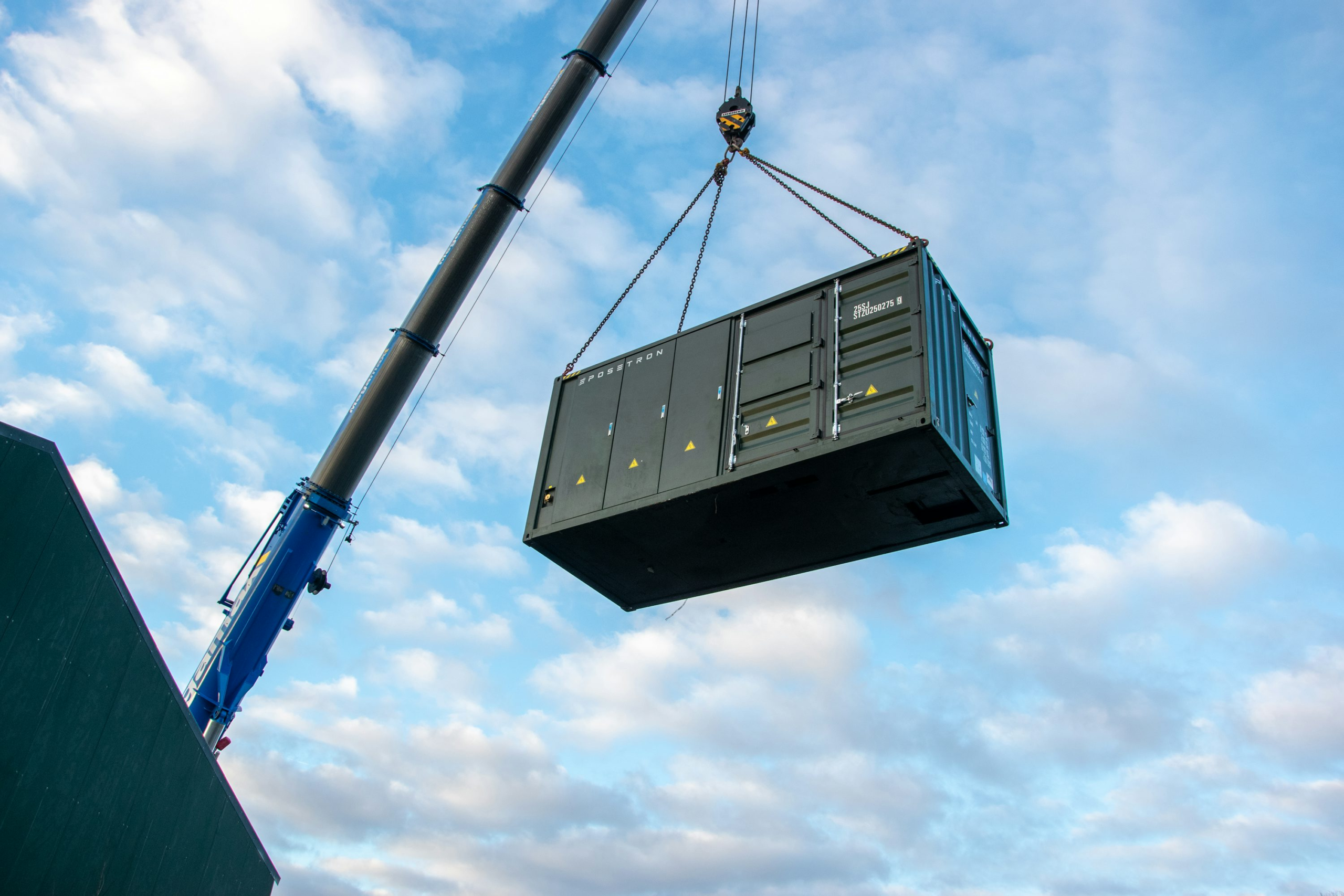
The projects are connected to France’s distribution network and were developed over the past three years. Entech acted as the contractor responsible for the engineering, procurement, and construction scope, integrating CATL battery Pods with SMA inverters.
The aggregate figures give the newly completed portfolio a nominal two-hour energy-to-power ratio. Individual site ratings have not been disclosed, so that duration applies to the combined 57MW/114MWh programme rather than confirming an identical design at every location.
COMAX has been part of MET Group since November 2024, when the Swiss-headquartered energy company acquired the French flexible-generation and storage business. At the time, COMAX operated around 29MW of battery storage alongside a broader portfolio of flexible generation assets.
The latest programme therefore converts a substantial development pipeline into operating infrastructure. In storage, that distinction is increasingly useful: proposed capacity can remain in connection, planning, financing, or procurement for years, whereas commissioned assets have already passed through construction, energisation, grid compliance, and market-entry work.
Ten sites create a different operating problem
A distributed fleet creates more duplicated infrastructure than one 57MW battery built behind a single connection point. Each installation requires its own switchgear, transformers, protection, metering, communications, controls, auxiliary systems, and network interfaces.
The advantage is geographical diversification. Ten connection points reduce dependence on the performance and availability of one local network node, while placing flexible capacity at several points across the French distribution system.
Operating the fleet coherently demands a control layer above the individual sites. State of charge, equipment availability, market positions, network constraints, and maintenance requirements differ between batteries, even where the underlying equipment comes from the same suppliers.
CATL provides the storage systems and SMA the power conversion equipment, while Entech has been responsible for making the complete plants work as grid-connected electrical installations. Integration requires the battery management systems, inverters, site controllers, protection, and communications to exchange accurate information under both charging and discharging conditions.
The bidirectional nature of a BESS also affects the network. During charging, each plant behaves as a sizeable electrical load; during discharge, it exports as a generator. Distribution protection and connection studies therefore have to consider fault levels, voltage behaviour, thermal limits, and power flows in both directions.
Two-hour storage provides enough energy to participate in wholesale shifting while retaining the fast response available from battery inverters. It can move electricity between parts of the day, respond to balancing requirements, and alter output quickly when the system needs additional flexibility.
The same capacity cannot be allocated freely to every service at once. A battery committed to reserve activity must retain sufficient state of charge, while aggressive wholesale cycling can affect both degradation and the capacity available for later balancing opportunities.
Optimisation consequently becomes an engineering as well as a trading problem. Dispatch has to stay within cell, inverter, thermal, warranty, and connection limits, and those restrictions can differ between sites according to equipment condition and local network requirements.
For MET Group, the French portfolio adds physical assets to a business already active in power trading and flexible generation. That combination can reduce the separation between plant operation and commercial dispatch, provided the trading strategy remains grounded in the technical limits of the equipment.
The company says the ten assets can participate in grid flexibility services as well as support greater integration of renewable generation. The precise revenue stack for individual sites has not been disclosed, and conditions in storage markets tend to change as new capacity enters and competition increases.
France’s distribution-connected model also places these projects closer to local demand and generation than a battery attached only at transmission level. That can be useful where renewable production and consumption create local peaks, although the commercial battery owner still operates within national market arrangements and the constraints set at its particular connection.
Portfolio scale can improve maintenance planning as well. Repeated equipment architectures allow spare parts, service procedures, monitoring, and engineering experience to be shared across several plants, while faults at one site do not remove the entire 57MW fleet from operation.
The counterweight is greater operational complexity. Ten sites mean ten sets of alarms, interfaces, permits, inspections, and local network conditions, and portfolio performance depends on whether the operator can maintain that distributed infrastructure consistently.
COMAX now has more than 86MW of BESS in operation in France rather than a storage strategy represented mainly by future projects. The next performance measure is no longer installed capacity alone, but how reliably the ten new sites convert 114MWh of physical storage into dispatchable flexibility across different parts of the distribution network.

