IN Brief:
- Alpiq is acquiring the operational 103.5MW/238MWh Bollingstedt battery from ECO STOR.
- ECO STOR will remain responsible for technical and operational management of the Schleswig-Holstein facility.
- The project already uses a flexible grid connection and load monitoring to operate within local network constraints.
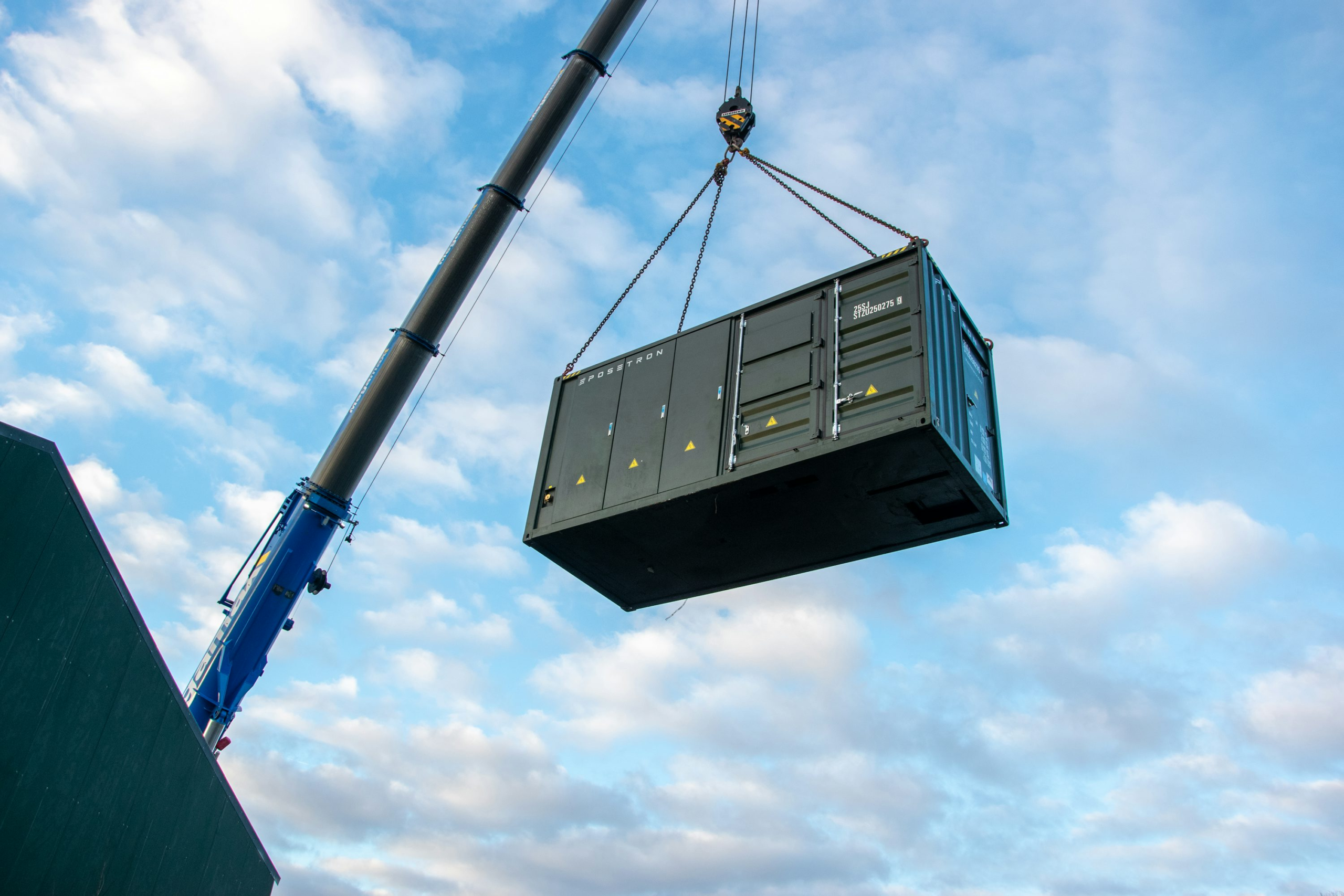
Alpiq is acquiring ECO STOR’s 103.5MW/238MWh Bollingstedt battery energy storage system in Schleswig-Holstein, adding its first operational large-scale German BESS to a European storage portfolio that is expanding through both acquisitions and development.
The facility has been operating since June 2025 and was developed and built by ECO STOR. Financial terms have not been disclosed, while ECO STOR will continue to handle the technical and operational management of the plant after ownership transfers.
The transaction covers ECO POWER ONE GmbH, the project company behind Bollingstedt. With 238MWh of storage against 103.5MW of rated power, the installation has a nominal duration of around 2.3 hours at maximum output.
Bollingstedt becomes Alpiq’s third operational BESS and its largest by energy capacity. The company’s other operating assets include the 100MW Cheviré battery in France and a 30MW installation at Valkeakoski in Finland, while more than 250MW of further storage is under construction or approaching commissioning.
Alpiq has also expanded its development exposure through the acquisition of a 90% stake in Harmony Energy in July. Bollingstedt differs from that pipeline in one useful respect: it is already connected, commissioned, and generating operating data rather than waiting on planning, equipment procurement, or network works.
Flexible connection is already being tested
The grid arrangement at Bollingstedt has become one of the project’s defining engineering features. ECO STOR and Schleswig-Holstein Netz have used the site to demonstrate a Flexible Connection Agreement coupled with network utilisation monitoring, allowing battery operation to respond to available grid capacity rather than assuming unrestricted import and export at all times.
That approach addresses a practical problem created by the pace of German battery development. Schleswig-Holstein Netz said in June that it had around 2,700 storage connection enquiries representing approximately 27GW of power, compared with roughly 2GW of peak consumer demand connected to its network.
Application volumes on that scale cannot be treated as if every project will require firm bidirectional capacity simultaneously. Conventional reinforcement remains necessary in many locations, but flexible connection terms provide an alternative where a battery can alter its operating schedule when local network conditions tighten.
Bollingstedt’s arrangement uses monitoring of network utilisation to determine how much charging or discharging capacity is available. The battery may therefore face restrictions during periods of high local loading while retaining greater freedom to trade when spare capacity exists.
The compromise is between connection speed and operating freedom. A project that waits for a fully firm connection may gain fewer restrictions but face several additional years before energisation, while an asset accepting dynamic limits can reach operation earlier at the cost of occasionally surrendering a trading opportunity.
Whether that trade-off works commercially depends on the frequency and severity of constraints. A flexible agreement becomes difficult to finance if restrictions repeatedly remove the battery from the most valuable market periods, whereas modest curtailment can be tolerable if it avoids expensive reinforcement and brings revenue forward.
ECO STOR has also opened operational data from Bollingstedt through a public dashboard showing how the battery behaves alongside dynamic network restrictions. That provides a more useful basis for assessing the model than connection agreements considered only in contractual terms.
The issue is likely to become more prominent as E.ON introduces a standardised form of flexible connection agreement across its German distribution companies. The group said in June that the Bollingstedt approach had been developed as a model for wider use, with national rollout planned by the end of 2026.
For storage owners, network conditions are now becoming as material to project economics as battery degradation and wholesale spreads. Connection limits affect when an asset can charge, discharge, or reserve capacity for system services, so optimisation software must incorporate physical network restrictions rather than simply chase the highest market price.
Bollingstedt’s 2.3-hour configuration gives Alpiq a meaningful volume of energy for short-duration price shifting while retaining the response characteristics expected from inverter-based storage. Revenue will still depend on availability, efficiency, cycling strategy, trading performance, and the terms of the flexible connection.
The acquisition also separates asset ownership from day-to-day technical operation. Alpiq takes the infrastructure and commercial exposure, while ECO STOR retains responsibility for the operation of a plant it developed, commissioned, and has used to refine its connection model.
That continuity reduces one source of transition risk following the transaction. Operating histories, equipment behaviour, network interfaces, maintenance procedures, and constraint data remain with the technical team already familiar with the installation.
Germany has no shortage of announced battery capacity; the harder constraint is converting proposals into financeable, connected assets. Bollingstedt has already crossed that divide. Alpiq is buying an operating 238MWh plant together with a live test of how large batteries may have to behave when connection capacity becomes scarcer than project ambition.