
IN Brief:
- Next2Sun is seeking up to €5m through a new direct share offering.
- Project delivery is expected to reach around 50MW in 2026 and exceed 70MW in 2027.
- Its vertical bifacial systems shift a greater proportion of generation towards morning and evening periods.
Next2Sun has launched a share offering of up to €5m to finance further growth in vertical bifacial photovoltaics, with the German company planning to accelerate its own project development and scale a business model built around solar generation outside the conventional south-facing ground-mounted format.
The capital increase opened first to existing shareholders under subscription rights from 21 August to 4 September 2026. Next2Sun said new shares will then be available directly to other interested investors until 30 September. The company expects to deliver around 50MW of project volume during 2026, close to the total volume installed during its previous ten years, before increasing output beyond 70MW in 2027.
Its medium-term target is annual project volumes in the triple-digit megawatt range. That makes the €5m raise relatively small beside the financing required for a large utility-scale generation portfolio, suggesting the proceeds are intended primarily to support project development, working capital, and business scaling rather than fund the entire construction cost of every new solar plant.
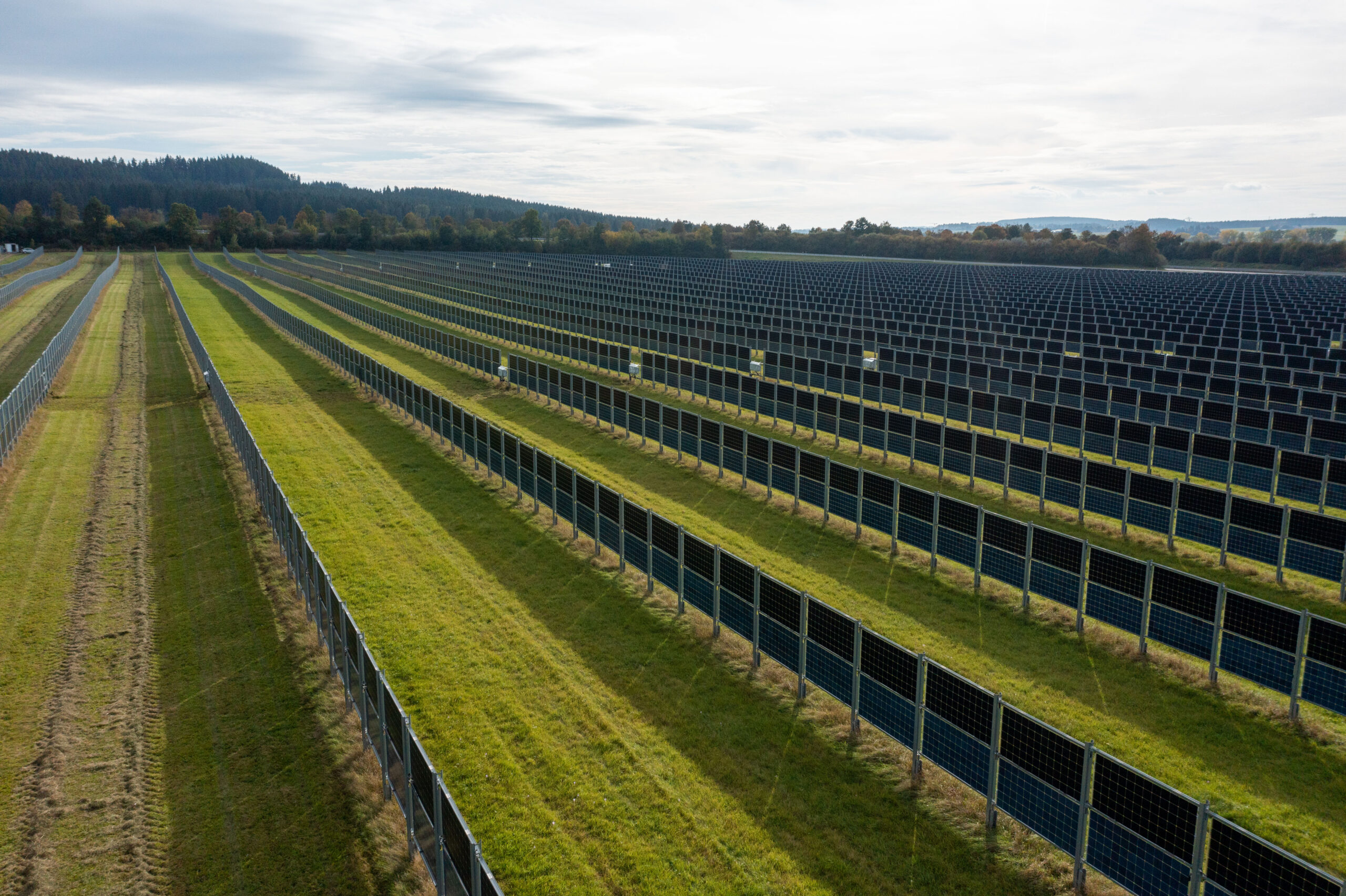
Next2Sun’s core technology uses vertically installed bifacial photovoltaic modules. Rather than tilt conventional modules towards the south to maximise production around the middle of the day, its systems arrange bifacial modules vertically so that the two active faces receive light from opposite directions. Depending on orientation and site conditions, output can be weighted more towards morning and evening periods.
That production profile is becoming commercially relevant in markets with high midday solar penetration. When large volumes of photovoltaic generation arrive simultaneously, wholesale prices can fall sharply and network congestion can increase. A plant that produces a larger share of its annual energy outside the strongest midday peak may therefore achieve a higher captured market price even if its total annual yield is similar to a more conventional layout.
Next2Sun says the market value of electricity from its installations exceeded the German Solar Market Value by more than 60% during the first half of 2026. That is a company-reported comparison rather than a universal performance figure for vertical PV, and the result will depend on location, orientation, weather, curtailment, and market prices. It nevertheless illustrates why production timing is increasingly being treated as a design parameter rather than a secondary consequence of module placement.
The trade-off is that vertical systems solve a different optimisation problem from conventional arrays. South-facing tilted modules are normally arranged to maximise irradiance capture and annual kilowatt-hours for a given module area, while east-west vertical systems may sacrifice some midday output in exchange for a broader generation profile. Land use, row spacing, shading, wind loading, and bifacial gain all affect the final design.
Vertical mounting can also alter the civil and structural requirements. Modules present a different aerodynamic profile to wind than low-tilt ground-mounted panels, so foundations and support structures must be designed for site-specific loads. Vegetation and agricultural activity around the rows introduce further practical considerations around access, machinery clearances, maintenance, and cable protection.
Next2Sun has positioned agrivoltaics as one of the principal applications for the technology. Vertical rows leave much of the land between modules available for agricultural use, creating a different land-sharing model from conventional solar parks. The commercial case still depends on whether the combined value of electricity and continued agricultural use offsets any additional structural, installation, or maintenance cost associated with the vertical system.
The company says it has realised more than 65MWp of projects in Germany and abroad since its foundation in 2015 and now employs more than 140 people across Germany, Austria, Poland, and Japan. One of its most prominent installations is the 17.4MW vertical photovoltaic project at Frankfurt Airport, giving the technology a reference point beyond small demonstration systems.
Scaling from tens of megawatts towards annual triple-digit delivery will test more than investor appetite. Project development requires land agreements, planning, grid connections, procurement, construction capacity, and access to modules and electrical balance-of-plant equipment. A differentiated mounting system does not bypass those constraints, particularly in Germany where connection capacity and curtailment risk are increasingly important considerations for new renewable projects.
The financing also arrives at a point when solar developers are paying closer attention to capture prices rather than nameplate capacity alone. As photovoltaic penetration increases, two projects with the same annual megawatt-hour output can have different commercial value if one produces more heavily during low-price periods. Storage can shift part of that output, but batteries add capital cost and conversion losses, making generation profiles themselves more valuable where they can reduce the need for shifting.
Next2Sun’s €5m offering is therefore less significant for its absolute size than for what the company is attempting to scale. Vertical bifacial PV remains a specialised part of the solar market, and the next stage will show whether its timing advantage can translate into repeatable project economics at much greater volume. Moving from roughly 50MW in 2026 towards more than 70MW next year will require the technology to prove itself not only on module yield, but on construction cost, grid value, and long-term operating performance.

