
IN Brief:
- Masdar's 35MW/70MWh Rochdale battery has entered commercial operation as its second operating UK BESS.
- The two-hour installation can respond within milliseconds and will participate in grid-balancing services.
- Masdar is targeting a 3GWh UK storage pipeline backed by a planned £1 billion investment programme.
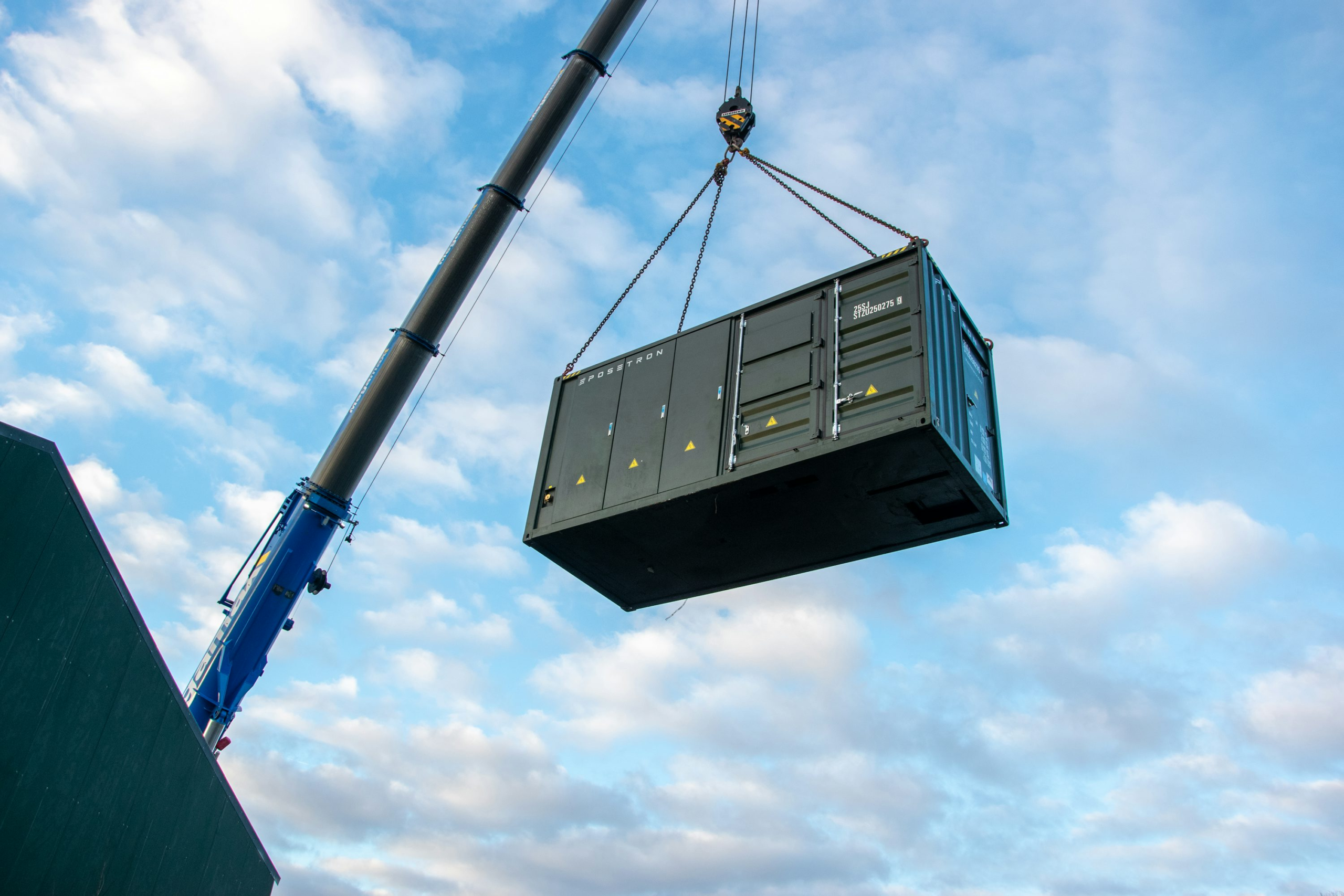
Masdar has started commercial operation of its 35MW/70MWh battery energy storage system in Rochdale, adding a two-hour flexible asset to the UK electricity network as the developer expands its domestic storage portfolio.
The facility is Masdar‘s second operational UK battery project and will participate in grid-balancing services. Its power-conversion system can respond to changes in supply and demand within milliseconds, allowing the plant to alter import or export rapidly as system conditions change.
Masdar calculates that the battery could provide the equivalent daily electricity consumption of around 35,000 homes if it completed two charging and discharging cycles. That figure describes potential energy throughput rather than continuous generation: Rochdale stores electricity produced elsewhere and returns it to the network later.
The project follows Masdar’s 20MW/40MWh Welkin Road installation in Stockport, which entered commercial operation in December 2025. Chesterfield and Cardiff projects with a combined planned rating of 150MW/300MWh are also under development.
Financing for all four projects was completed in July, with Masdar securing up to £97 million from SMBC and ING. The portfolio sits within a planned £1 billion investment programme intended to develop 3GWh of battery capacity in the UK following Masdar’s acquisition of Arlington Energy in 2022.
Two-hour systems join a larger flexibility fleet
Rochdale’s 70MWh energy capacity and 35MW maximum power give the installation a nominal two-hour duration. That configuration is suited to services requiring rapid response and relatively short periods of discharge, including wholesale energy shifting, balancing, and selected ancillary markets.
Battery duration matters because megawatts and megawatt-hours describe different attributes. A 35MW battery can change system power flows by up to that amount when operating at full output, while its 70MWh stored-energy capacity determines how long that output can be sustained before the available charge is depleted.
Those characteristics make two-hour lithium-ion systems quite different from technologies intended to cover prolonged periods of low renewable generation. They can nevertheless respond much faster than many conventional generating units, giving grid operators and market participants a resource capable of absorbing excess electricity or supplying power without a lengthy start sequence.
The commercial challenge is that fast response alone does not guarantee attractive revenues. As the UK battery fleet expands, competition for individual ancillary services increases, forcing operators to optimise assets across wholesale spreads, balancing opportunities, and other flexibility markets rather than relying indefinitely on one premium service.
Connection rights also shape performance. A battery rated at 35MW requires sufficient network capacity both to charge and discharge, while local constraints or operating restrictions can reduce when the full rating is commercially or technically available.
Operating capacity matters more than pipeline numbers
The UK government’s Clean Power 2030 Action Plan envisages up to 27GW of battery storage by the end of the decade. That target is expressed in power capacity rather than stored energy, so it cannot be compared directly with Masdar’s 3GWh pipeline, but both point to a substantial increase in the quantity of storage expected to connect to the system.
The resulting fleet will have to perform several roles. Short-duration batteries can handle rapid balancing and intraday price differences, while longer-duration resources may be required where the mismatch between electricity production and demand persists for many hours or days.
Masdar’s Rochdale plant sits firmly at the short-duration end of that spectrum. Its value will come from repeated operation and the ability to respond quickly, not from attempting to provide continuous power through an extended shortage.
The company says its UK batteries include fire detection and suppression systems, continuous CCTV monitoring, and local response arrangements. Those controls accompany cell design, thermal management, electrical protection, enclosure layout, operating procedures, and emergency planning as part of the wider safety case for grid-scale batteries.
For the UK storage market, Rochdale’s most useful characteristic is simply that it has crossed from development into commercial operation. Planning applications and announced pipelines have grown rapidly, but system flexibility is provided by assets that have been financed, built, connected, commissioned, and made available for dispatch.
Welkin Road and Rochdale give Masdar 55MW/110MWh of operating UK battery capacity before Chesterfield and Cardiff are added. The gap between that figure and a proposed 3GWh portfolio remains substantial, leaving execution and grid connection — rather than another pipeline announcement — as the measure of how far the £1 billion programme ultimately progresses.

