
IN Brief:
- The 114MWp Halenbeck-Rohlsdorf II solar park has entered operation in northern Brandenburg.
- Shell Energy Europe will take around 75% of output for ten years, alongside two Finanz Informatik companies.
- DAL says the plant operates without public subsidy or an EEG guaranteed feed-in tariff, relying on direct marketing and contracted offtake.
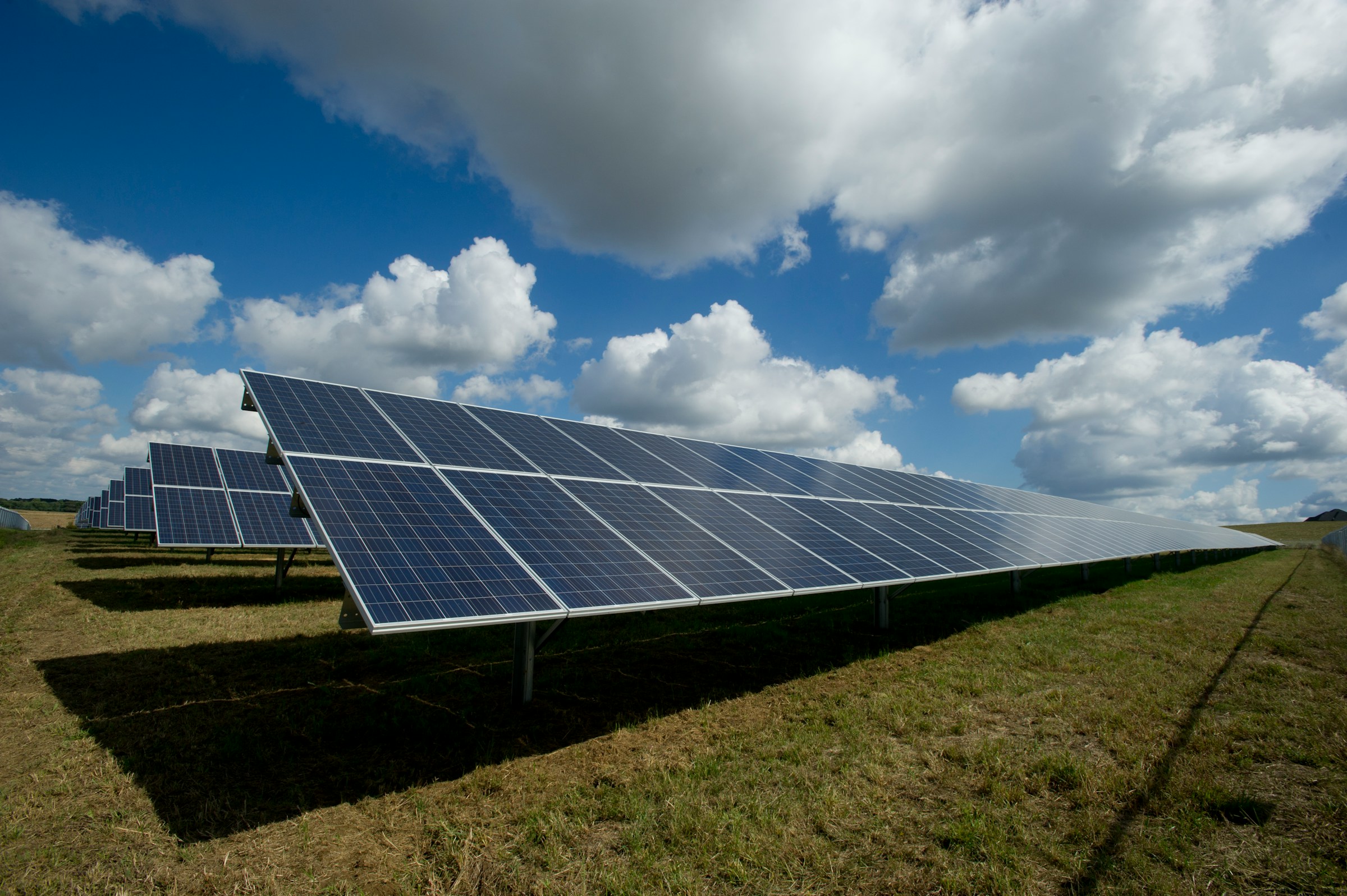
DAL Deutsche Anlagen-Leasing has brought the 114MWp Halenbeck-Rohlsdorf II solar park into operation in northern Brandenburg, establishing a large subsidy-free generating asset whose output is contracted to corporate customers through long-term power purchase agreements.
The plant is expected to generate up to 120,000MWh a year. Its disclosed offtakers are Shell Energy Europe, Finanz Informatik, and Finanz Informatik Technologie Service, linking utility-scale solar generation with energy, financial-sector IT, and digital infrastructure demand.
Shell is contracted to take around 75% of the generated electricity for ten years. DAL says part of that energy will be used for hydrogen production associated with the REFHYNE-2 electrolyser, creating a commercial connection between the photovoltaic project and an industrial load whose economics depend heavily on the cost and provenance of electricity.
Finanz Informatik and its technology-services subsidiary form the other disclosed customer group. The arrangement gives the two businesses a long-term renewable procurement route for electricity associated with their digital operations, while the solar project gains contracted offtake beyond the conventional wholesale market.
The PPA structure does not mean the three customers are physically supplied by the solar park at every moment. Halenbeck-Rohlsdorf II remains connected to the wider grid, and the contractual arrangements sit on top of normal system balancing, metering, and market processes needed to match variable solar production with demand that follows a different hourly profile.
That distinction is particularly important for data and IT infrastructure, where loads can be relatively persistent while photovoltaic output falls to zero overnight and varies with weather during the day. A long-term PPA can support renewable procurement and price planning, but it does not remove the requirement for the wider power system to balance instantaneous supply and consumption.
The financing model is another defining feature of the project. DAL holds a 50% interest in the operating company, Solarkraftwerk Halenbeck-Rohlsdorf II GmbH, and structured the debt financing, while pvx energy built the plant. The financing consortium includes several German savings banks alongside DAL/Deutsche Leasing Finance.
DAL says the project receives no public subsidy and no guaranteed feed-in tariff under Germany’s Renewable Energy Act. Revenue is instead supported by direct marketing and long-term offtake agreements, placing greater emphasis on plant performance, contractual allocation of volume and price risk, and the creditworthiness of the counterparties.
For the generating plant, that makes dependable electrical performance commercially important from the first day of operation. Inverters, transformers, switchgear, protection, metering, communications, forecasting, and supervisory controls have to support the contracted output from an intermittent resource without relying on a guaranteed tariff to insulate the project from operational underperformance.
The 114MWp array also creates a sizeable power flow through the local connection when irradiance is strong. Managing voltage, reactive power, protection settings, export limits, and plant-controller behaviour becomes more consequential as photovoltaic installations move from distribution-scale additions into generation assets that can materially affect local network conditions.
Hydrogen adds another operating consideration. Electrolysers can offer some flexibility in when they consume electricity, but their utilisation targets, process requirements, connection capacity, and hydrogen-production economics determine how closely demand can follow solar output. The PPA provides a commercial link; the grid remains the physical mechanism that accommodates the mismatch between generation and consumption.
Halenbeck-Rohlsdorf II therefore sits at the intersection of several trends that are often reported separately: utility-scale photovoltaic construction, corporate procurement, project finance, digital-infrastructure demand, and the emerging electricity requirements of renewable hydrogen production.
None of those trends removes the basic engineering requirement to maintain plant availability over a long operating life. Module degradation, inverter failures, transformer condition, vegetation, soiling, cable faults, protection events, communications outages, and grid constraints can all reduce annual yield below the theoretical production implied by installed peak capacity.
Long-term offtake also changes the maintenance calculation. A short outage during a high-irradiance period can have a disproportionate effect on annual yield, so spare-parts strategy, inverter response times, transformer monitoring, and remote diagnostics become part of the commercial performance of the PPA-backed asset rather than merely routine O&M considerations.
The start of commercial operation is consequently the useful milestone. Financing structures and PPAs can make a project investable, but only an operating plant can demonstrate whether the expected 120GWh annual yield and contracted delivery arrangements stand up to real weather, equipment performance, and network conditions.
For subsidy-free renewables, that is where the business model becomes measurable. Halenbeck-Rohlsdorf II has moved beyond construction and contract announcements; it now has to produce predictable energy from an unpredictable resource while keeping the electrical plant available enough for its long-term agreements to retain their value.

