
IN Brief:
- Capital Dynamics has acquired the ready-to-build 170MW four-hour Knockanure battery project in County Kerry.
- The scheme has a secured 170MW connection at the neighbouring 110kV Knockanure substation.
- Planning consent was secured in October 2025, with procurement and delivery planning now under way.
Capital Dynamics has acquired a ready-to-build 170MW four-hour battery energy storage project at Knockanure in County Kerry, giving the asset manager its first investment in the Republic of Ireland and adding a sizeable long-duration project to the Irish Single Electricity Market pipeline.
The project has secured 170MW of grid connection capacity at the neighbouring 110kV Knockanure substation and received planning consent in October 2025. Capital Dynamics says procurement and delivery planning have started, placing the scheme beyond the earlier development stages in which planning and connection rights remain unresolved.
The four-hour specification is central to the project. It means the battery is intended to sustain its rated output across a much longer period than the short-duration systems originally deployed for fast frequency services, giving Knockanure greater potential to shift energy between periods of renewable surplus and periods of higher system need.
Capital Dynamics has not published a separate MWh nameplate figure in its acquisition announcement, so the project should continue to be described using the company’s 170MW and four-hour specification rather than assigning an unconfirmed installed energy capacity. The commercial significance lies in the combination of substantial connection power and extended duration.
The company says the project will be among the first long-duration energy storage developments delivered in the Republic of Ireland under EirGrid’s classification. Ireland’s high share of renewable generation makes that duration relevant because wind output can vary materially over the course of a day while transmission constraints and demand patterns can create periods of curtailment at one time and tighter supply at another.
A battery cannot create additional energy, but it can change when existing electricity is delivered. Charging during periods when renewable output exceeds immediate system demand and discharging later can reduce the amount of otherwise curtailed generation and provide controllable power during periods when the system needs additional flexibility.
The secured 110kV connection is therefore as important as the battery technology. Connection queues have become a material constraint for storage and renewable development across Europe, and a project without an agreed route to the network can remain commercially stranded regardless of how advanced its planning or procurement work appears.
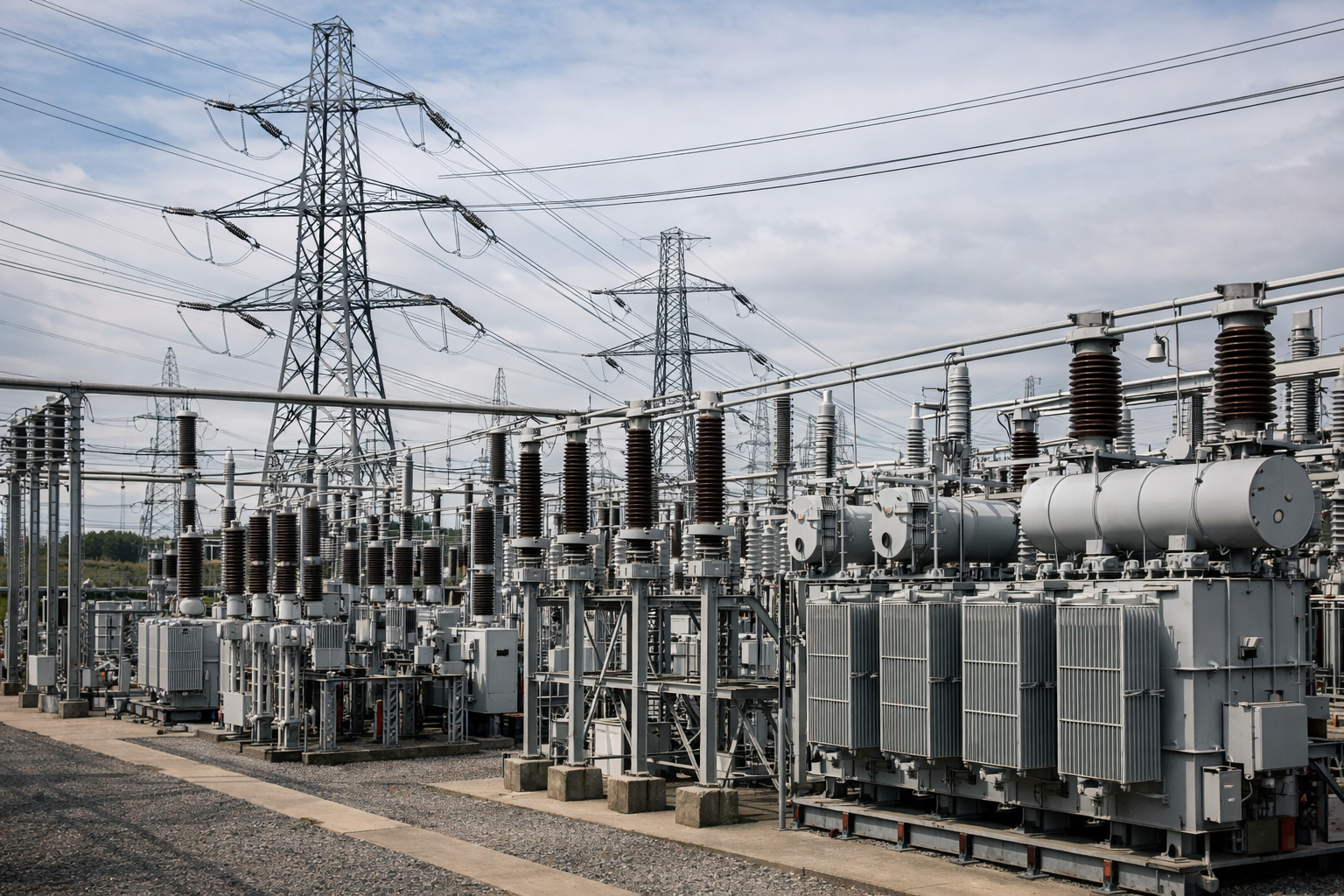
At Knockanure, the neighbouring substation gives the project a defined high-voltage interface, but considerable electrical work still sits between battery containers and the grid. Power-conversion systems, transformers, medium-voltage collection equipment, switchgear, protection, metering, SCADA, communications, auxiliary supplies, and connection-control systems must all be engineered around the 170MW export and import capability.
A four-hour plant also carries a larger stored-energy inventory for each megawatt of inverter capacity than a shorter-duration installation. That increases the amount of battery equipment, thermal management, internal DC cabling, fire detection and suppression, auxiliary power, and physical space required, while placing greater emphasis on degradation management over repeated charge and discharge cycles.
Those lifecycle considerations matter because a storage project’s useful capability is not fixed at commissioning. Cell degradation can reduce available energy over time, so owners may use augmentation, operating limits, warranty structures, and state-of-charge controls to preserve the contracted or targeted duration across the asset’s operating life.
Capital Dynamics has not disclosed the final battery supplier, EPC contractor, construction-start date, or commercial-operation date in the acquisition announcement. Those details should remain open rather than being inferred from the ready-to-build description, which establishes that key development hurdles have been cleared but does not mean physical construction has begun.
The project was acquired from a group of private shareholders, with Pinsent Masons providing legal advice, AFRY technical advice, and Mazars financial advice. Capital Dynamics already has exposure to storage and renewable infrastructure elsewhere in the broader Irish market, but Knockanure is its first investment in the Republic itself.
The Irish system provides a demanding environment for storage because flexible assets have to operate alongside high wind penetration, interconnection, conventional generation, and network constraints. Batteries can respond rapidly, but the value of four-hour duration emerges when that fast response is combined with enough stored energy to remain useful through a sustained period rather than a short balancing event.
That makes plant controls and forecasting central to the eventual operating strategy. The battery management system, power plant controller, market dispatch, network instructions, and state-of-charge plan will have to work together so the project can respond when required without exhausting its stored energy before the highest-value period has passed.
Knockanure still has a construction and commissioning programme ahead, but planning consent and a secured 170MW connection remove two of the obstacles that commonly keep large batteries on development lists for years. Procurement and delivery planning now have to convert those rights into an operating electrical asset capable of cycling reliably through the increasingly variable conditions of Ireland’s power system.
For a project sold on flexibility, that is the relevant test. Four hours of duration gives Knockanure more room to move energy through time; dependable transformers, protection, controls, cells, cooling, and grid integration will determine whether those four hours remain available when the system actually calls for them.

