
IN Brief:
- EDF power solutions has executed two 25-year PPAs with NV Energy covering the combined Winston Energy project.
- Winston pairs 400MWac of solar with a 400MW/1,600MWh battery, giving the storage system a nominal four-hour duration.
- The project expects to begin electricity deliveries in October 2029 and generate around 1.11TWh of renewable electricity annually.
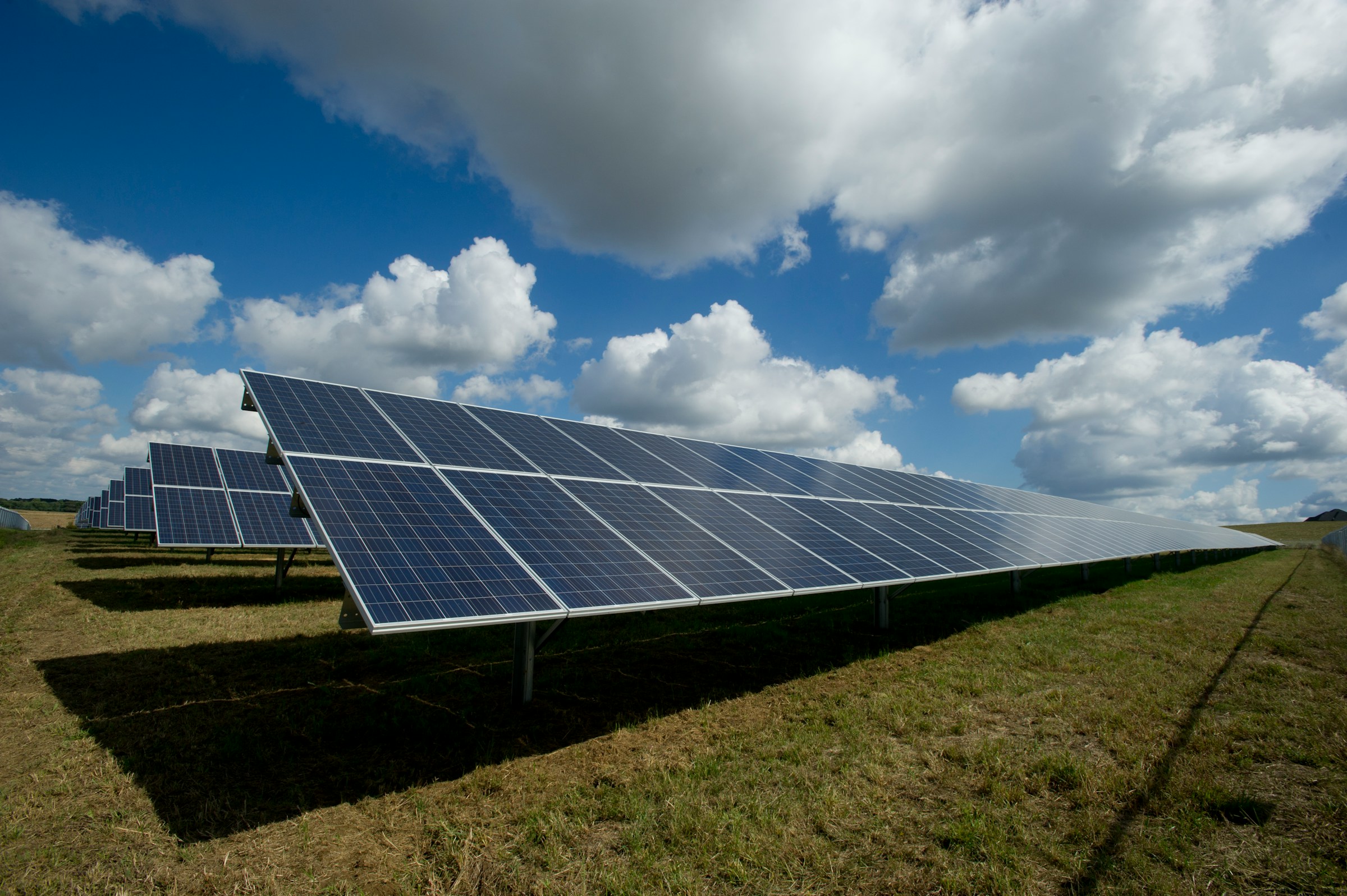
EDF power solutions North America has executed two 25-year power purchase agreements with NV Energy covering the combined output of the Winston Energy project in Nevada, pairing 400MWac of solar generation with a 400MW/1,600MWh battery energy storage system. The project expects to begin delivering electricity in October 2029.
The battery has a nominal four-hour duration at its full 400MW power rating, giving Winston considerably more energy-shifting capability than a storage system designed mainly around short frequency-response duties. Its 1,600MWh capacity allows a substantial block of electricity to be moved from periods of strong solar production into later hours when photovoltaic output has declined.
EDF expects the combined project to generate approximately 1,110,000MWh of renewable electricity annually, equivalent to 1.11TWh. That figure is materially different from 1.11GWh and has been corrected in the refined package. The company estimates annual production at a level equivalent to the consumption of around 100,000 Nevada homes.
Winston will be built on private land in Lyon County. Peak construction is expected to employ more than 400 workers, while EDF forecasts approximately $100 million in local tax revenue over the operating life of the development. Those figures indicate the physical scale behind what is currently a contractual milestone rather than an operating power station.
The two PPAs give the project a long-term route to market, but delivery depends on a substantial electrical integration programme. Solar arrays, DC collection equipment, inverters, the battery system, transformers, switchgear, protection, metering, communications, and high-voltage connection infrastructure all have to operate as a coordinated plant before contracted electricity can begin flowing.
The matching 400MW solar and battery power ratings do not mean the two assets will simply export simultaneously at their headline values. The plant controller has to manage charging and discharging against the site’s connection limits, solar production, state of charge, contractual delivery requirements, equipment availability, and network instructions.
During strong daytime solar production, the battery can absorb electricity that would otherwise be exported immediately. Stored energy can then be released after solar output falls, extending the period during which the project can deliver a controlled block of power. That makes the four-hour MWh rating fundamental to the operating model rather than an additional specification attached to the solar plant.
A four-hour system also changes the engineering compared with a shorter battery. More cells are required for each megawatt of power, increasing the amount of thermal-management equipment, DC cabling, auxiliary load, fire protection, and physical space associated with the installation. The trade-off is a larger usable energy reservoir and greater flexibility over when electricity reaches the grid.
Battery state-of-charge management becomes central to meeting the PPAs. If the storage system is discharged too aggressively during an earlier price opportunity, it may not have sufficient energy available later when contracted delivery is more valuable. Conversely, keeping the battery unnecessarily full can leave insufficient charging headroom during periods of strong solar generation.
The optimisation platform therefore has to balance short-term dispatch against longer operating requirements. Battery cells degrade through both time and cycling, so every charge-discharge decision carries a physical cost. A 25-year commercial arrangement extends well beyond the life over which the original battery cells can be assumed to retain their initial usable capacity without intervention.
That makes augmentation and lifecycle planning significant. The operator may need to install additional cells or replace sections of the system over time to maintain the usable energy required for contractual performance. Initial oversizing, warranty terms, degradation assumptions, cycling strategy, and future equipment costs all feed into that decision.
The solar plant has its own long-term degradation profile, although photovoltaic modules generally lose output more gradually than frequently cycled battery cells. Inverter and transformer availability also matters because a failure in shared electrical infrastructure can constrain both solar export and battery operation even where the underlying generation and storage equipment remain available.
Long-term PPAs can help support financing by providing greater revenue certainty, but they also raise the cost of underperformance. A project expected to deliver power over 25 years needs maintenance strategies, spare-parts planning, controls support, and performance monitoring suited to infrastructure that will pass through several generations of battery and digital technology during its commercial life.
Winston also illustrates the increasingly integrated form of utility-scale renewable development. Standalone solar generation is intrinsically tied to daylight conditions, while adding four-hour storage gives the project greater control over when a portion of that energy is delivered. It does not make the plant continuously dispatchable and it cannot produce energy once the battery has been depleted, but it can materially reshape the daily output profile.
That distinction is important as grids absorb larger amounts of photovoltaic generation. High solar output can depress daytime residual demand while the evening transition creates a requirement for generation or storage as the sun sets. Four-hour batteries are designed in part around that gap, storing energy across one part of the day and returning it during another.
The October 2029 delivery target is now the relevant timetable in EDF’s current PPA announcement. The next phase will therefore centre on converting the contractual framework into physical infrastructure — procurement, construction, connection works, commissioning, and demonstration that the 400MW/1,600MWh battery and 400MWac solar plant operate as one controlled asset.
Winston’s significance lies in that integration. The project combines generation, four-hour storage, and 25-year contracted output at utility scale, moving the engineering question beyond how cheaply another solar farm can be built. The more demanding task is ensuring that 1.11TWh of expected annual renewable generation can be managed through batteries, controls, and network infrastructure in a form that remains technically and commercially useful over decades.

