
IN Brief:
- Two new 100MVA, 132/33kV transformers have entered service at the Ijora Transmission Substation.
- The replacement programme increases installed substation capacity from 90MVA to 230MVA, equivalent to 184MW.
- Nigeria is targeting 6,000MW of comfortable wheeling capability and 20 transmission-project commissions before year-end.
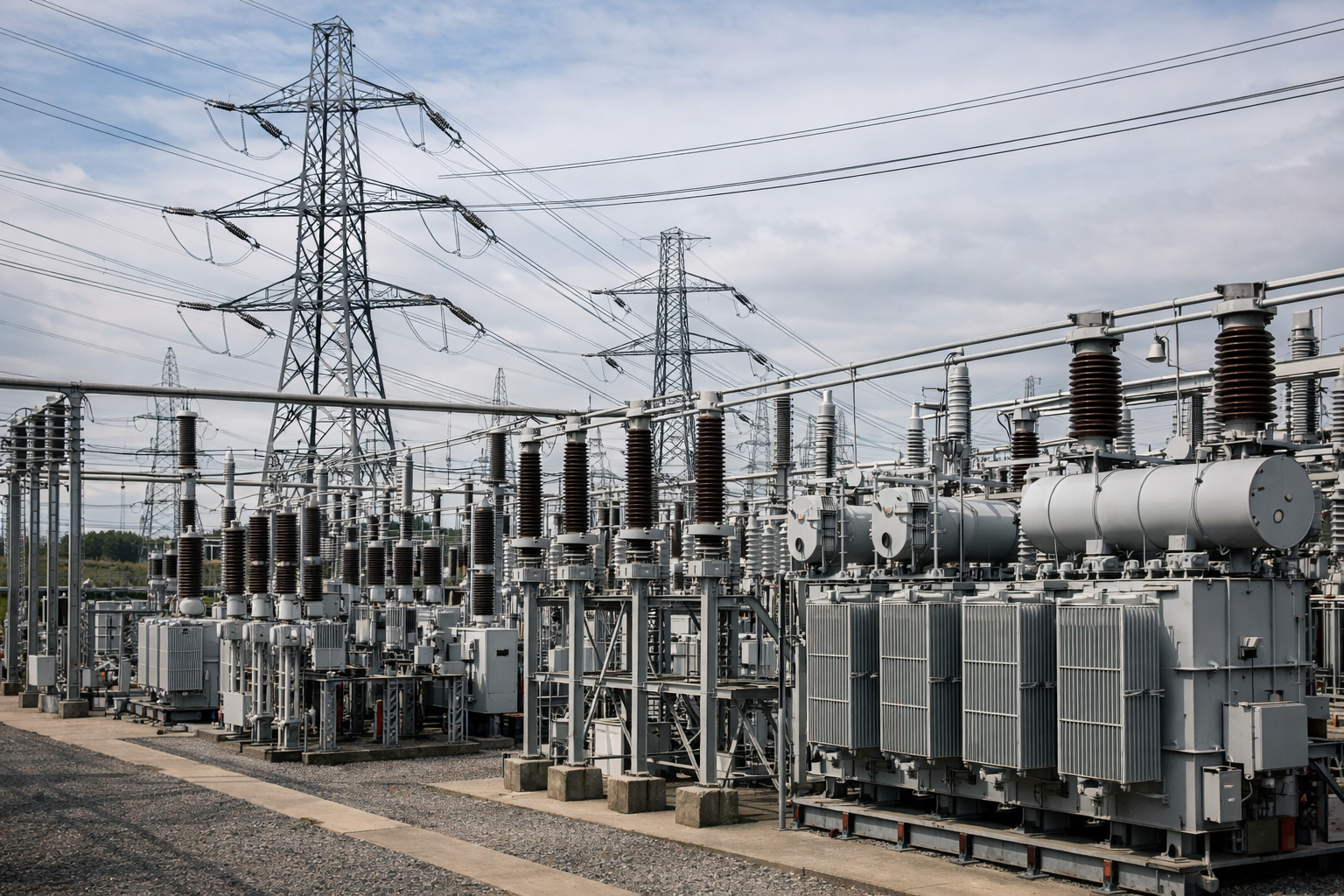
Transmission Company of Nigeria has commissioned two new 100MVA, 132/33kV power transformers at the Ijora Transmission Substation in Lagos, lifting total installed capacity at the site from 90MVA to 230MVA. TCN states that the upgraded substation is equivalent to 184MW of capacity, adding a substantial new margin at one of the transmission-to-distribution interfaces serving the city’s industrial and commercial load.
The work replaced two of Ijora’s existing 30MVA transformers with 100MVA units while retaining the third 30MVA machine. That changes the installed configuration from three 30MVA transformers to two 100MVA units plus one 30MVA unit, raising the total nameplate rating by 140MVA. The commissioning took place on 17 August as part of a wider day of transmission upgrades in Lagos.
Ijora is a brownfield reinforcement rather than a new grid node, which makes the project less visually dramatic than a new substation but operationally useful. Existing transmission lines, busbars, protection systems, civil infrastructure, and distribution connections can be retained where suitable, while the limiting transformer capacity is increased. Brownfield work can reduce the land and connection requirements associated with a new site, although carrying out replacement and commissioning around an energised network demands careful outage planning.
A 132/33kV transformer sits at a critical boundary in the power system, transferring bulk electricity from the higher-voltage transmission network into the lower-voltage system used by the distribution company. Increasing transformer capacity raises the amount of power that can pass through that interface, subject to the ratings and operating condition of upstream lines, downstream feeders, switchgear, protection, and other equipment. Nameplate capacity is therefore an important constraint, but not the only one that determines how much electricity can be delivered to customers.
TCN has framed the Ijora work as part of its nationwide transmission expansion programme, with managing director Sule Ahmed Abdulaziz saying the company is continuing to invest in substations, transformer upgrades, transmission lines, and grid technologies. The company’s current role is focused on transmission service provision following the separation of system and market operation functions into the Nigerian Independent System Operator, leaving network development, maintenance, and capacity reinforcement at the centre of TCN’s mandate.
The commissioning also provided the backdrop for a broader government target. Power Minister Joseph Olasunkanmi Tegbe said Nigeria should be able to wheel 6,000MW comfortably before December and that 20 transmission projects are intended to be commissioned before the end of the year. The target is national rather than an output attributable to Ijora, but the Lagos upgrade illustrates the type of physical reinforcement required if more available generation is to reach distribution networks.
That distinction between generation and wheeling is important. Additional generating capacity cannot increase delivered electricity if transmission corridors or substations cannot carry the resulting power, while stronger transmission alone cannot create generation that is not available. The system has to improve across both sides of the interface, with transmission capacity sufficiently robust to move power from generators to the distribution networks that can absorb it.
At Ijora, the increase from 90MVA to 230MVA creates more transformer headroom, but actual loading will depend on network conditions and demand. Protection settings have to reflect the new equipment, thermal limits elsewhere on the network remain binding, and distribution infrastructure must be capable of taking the additional power. The 184MW equivalent cited by TCN describes the substation’s installed capacity conversion rather than a guarantee that 184MW will flow continuously through the site.
The location gives the upgrade particular economic relevance. Ijora sits within Lagos’s dense industrial, port, and commercial corridor and supplies areas within the Eko Electricity Distribution Company franchise. Industrial and logistics loads are sensitive to interruptions and voltage quality, while sustained demand can expose weak transformer margins more quickly than in lightly loaded parts of a network. Reinforcement at the transmission interface can therefore remove one constraint, provided neighbouring parts of the system are strengthened where necessary.
The Ijora commissioning was accompanied by an upgrade at Apapa Road, where two 60MVA, 132/33kV transformers and associated gas-insulated substation equipment were brought into service. Taken together, the two Lagos projects illustrate how TCN is pursuing capacity growth through targeted substation work rather than waiting for entirely new transmission corridors to solve every constraint. Incremental reinforcement is less glamorous than a new interconnector, but it can add usable network capability where demand already exists.
The government’s 6,000MW objective will depend on whether similar projects remove genuine constraints across the wider grid rather than simply increasing aggregate equipment ratings. Transmission systems behave as networks, so the weakest corridor, overloaded transformer, unavailable line, or voltage limitation can restrict transfers despite capacity additions elsewhere. TCN’s challenge is therefore to sequence reinforcements so that individual projects combine into higher dependable system capability.
Ijora offers a measurable contribution to that process: two 100MVA transformers are now in service, and installed capacity at the substation has risen to 230MVA. The national target is much larger and more difficult. Reaching it will require dozens of upgrades to operate as a coherent network, not as isolated commissioning ceremonies.

