
IN Brief:
- Părău 2 combines 342MW of solar with a co-located 150MW/300MWh battery in Brașov.
- Aggregate debt financing reaches up to €229 million, including up to €120 million from the EBRD.
- A 125MWac portion of the solar plant holds a 15-year Romanian CfD at €49.4/MWh.
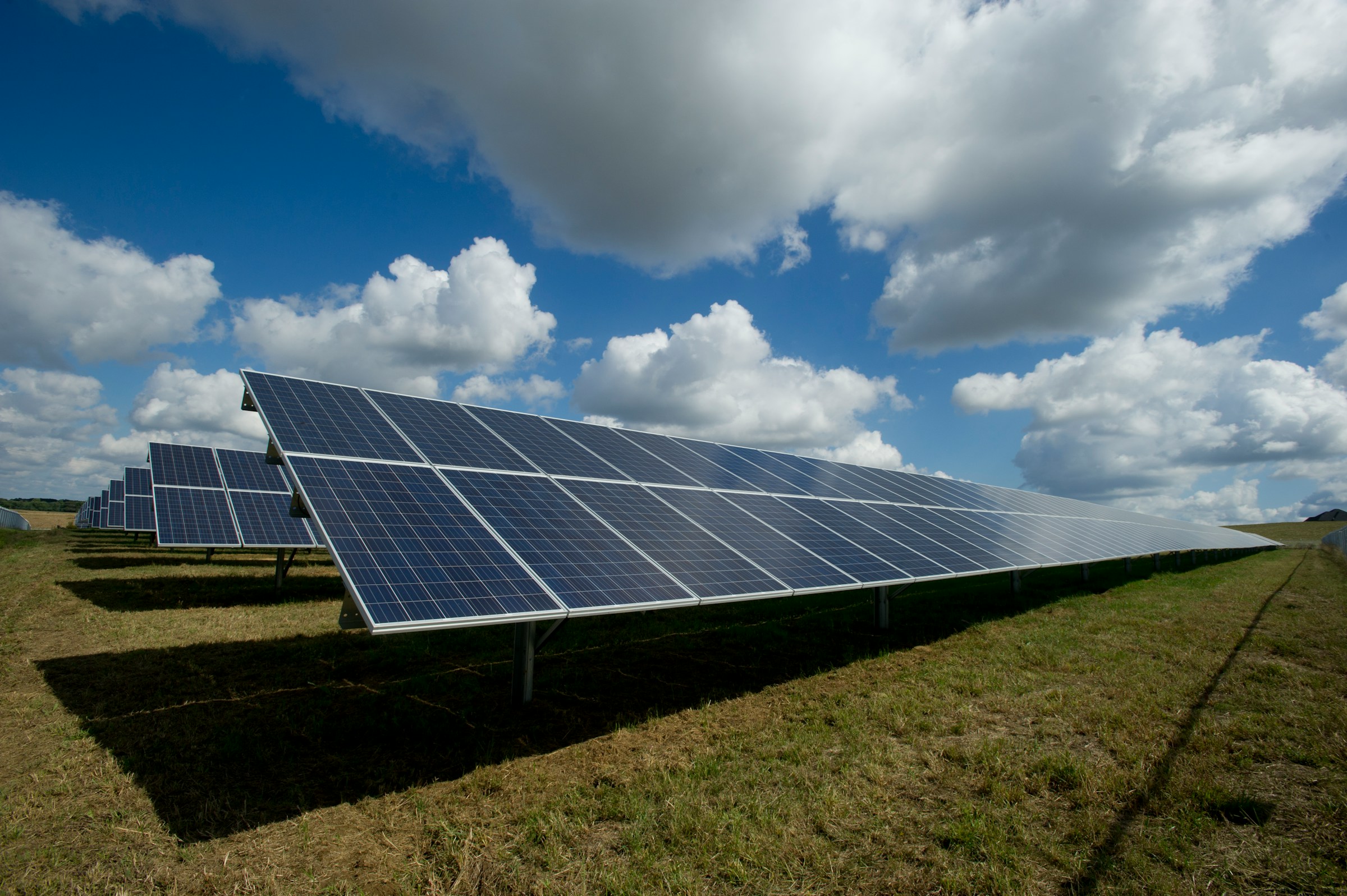
Econergy has secured an aggregate debt financing package of up to €229 million for its Părău 2 project in Romania, advancing construction of a 342MW solar plant and co-located 150MW/300MWh battery energy storage system in Brașov County.
The financing brings together six lenders around one of Romania’s larger hybrid renewable projects. The European Bank for Reconstruction and Development is providing up to €120 million through an A loan of up to €57 million and a B loan of up to €63 million, with the Black Sea Trade and Development Bank, OTP Bank, and Exim Banca Românească participating in the wider debt structure.
Intesa Sanpaolo and Exim Banca Românească will also provide a €25 million VAT facility and a €9.5 million letter-of-credit facility supporting obligations associated with the project’s Contract for Difference. An InvestEU first-loss guarantee covering up to €115 million of the EBRD financing is intended to reduce part of the risk associated with exposure to merchant electricity revenues.
Părău 2 consequently combines several revenue structures within one electrical project. A 125MWac portion of the solar plant secured a 15-year Romanian CfD at a strike price of €49.4/MWh, while generation outside the contracted allocation will remain exposed to market pricing.
The battery adds a separate layer of flexibility. At 150MW of power and 300MWh of energy capacity, its nameplate configuration provides a two-hour energy-to-power ratio, although actual dispatch duration will depend on operating limits, state of charge, degradation strategy, market conditions, and the services being provided.
Co-location changes how the plant can use its electrical connection because photovoltaic output no longer has to be exported entirely at the moment it is generated. Subject to the project’s connection arrangements and control strategy, some energy can be stored during periods of strong solar production and returned to the grid later.
That capability becomes increasingly relevant as additional photovoltaic capacity concentrates generation into the same daylight hours. Strong simultaneous output can depress wholesale prices and increase pressure on local or regional network capacity, while evening periods may combine lower renewable production with higher demand for flexible generation.
A battery does not change the underlying solar resource, but it can alter the timing of electrical delivery. It may also participate in balancing and ancillary-service markets where the plant meets the relevant technical and commercial requirements, providing a second source of value beyond wholesale energy arbitrage.
The difference between power and energy ratings is central to that operating model. The 150MW figure determines the nominal maximum charging or discharging rate, while 300MWh describes the quantity of stored energy available over time. The two values together define the broad operating envelope within which the battery can be dispatched.
The EBRD has identified flexibility, ancillary services, and balancing as intended benefits of the storage element. Those functions are increasingly useful as Romania adds wind and photovoltaic generation whose output follows weather conditions rather than conventional dispatch instructions.
Battery systems can change active-power output rapidly, but the grid interface supporting that response extends well beyond the cells themselves. Power-conversion equipment, transformers, switchgear, protection, control, metering, auxiliary supplies, communications, and a plant-level energy-management system all have to operate as a coordinated electrical installation.
Co-location does not remove grid constraints either. Părău 2 still requires sufficient import and export capability for the operating modes allowed under its connection agreement, while simultaneous solar generation and battery discharge can create a different loading condition from battery charging during periods of lower photovoltaic output.
The mixed CfD and merchant structure adds another layer of optimisation. Contracted solar production, uncontracted generation, storage charging, storage discharge, and balancing-market participation have to be managed together rather than treated as independent assets sharing the same site.
For lenders, that combination can diversify revenue but also makes the financial model more complicated. Long-term CfD income provides a degree of certainty, while merchant solar and battery revenues remain exposed to future power prices, spreads, balancing requirements, operating performance, and the growth of competing flexible capacity.
Storage-specific risks also have to be incorporated into financing assumptions. Battery degradation, cycle limits, warranty structures, augmentation requirements, round-trip efficiency, temperature management, and the future value of ancillary services can all influence long-term project economics.
The InvestEU guarantee is being applied against that background, supporting financing where a material share of revenues is not fixed through long-term contracts. The transaction is also the EBRD’s first financing of a hybrid solar-and-battery project in Romania, placing co-located storage more firmly within institutional renewable project finance.
Părău 2 is already under construction, with commercial operation expected in late 2027 or early 2028. Financial close therefore marks a major commercial milestone, but equipment procurement, installation, grid integration, commissioning, and performance testing remain between the present financing package and full operation.
The €229 million structure finances more than another block of renewable generation. Părău 2 is being built around the proposition that solar output, storage capacity, grid connection, and revenue design can be managed as one power-system asset — a model likely to become more important as renewable penetration increases the value of controllable flexibility.

