
IN Brief:
- Hidrocantábrico Distribución Eléctrica is seeking contractors for a new 132kV underground connection in Llanera.
- The circuit will connect into the future 132kV Asipo substation.
- Bids are currently scheduled to close on 23 September 2026.
Hidrocantábrico Distribución Eléctrica is seeking contractors to build a new 132kV underground high-voltage connection to the future Asipo substation in Llanera, Asturias. Bids are currently scheduled to close on 23 September 2026.
The project will create the cable connection into the planned 132kV site, adding another high-voltage node to the electrical infrastructure serving Llanera and the surrounding industrial area. Public procurement information identifies the voltage, location, connection point, and contracting organisation, but does not disclose the cable length, conductor size, thermal rating, contract value, or final energisation date.
Those omissions are important because underground high-voltage systems are defined as much by route conditions as by nominal voltage. A 132kV cable running through developed land has to be engineered around civil constraints, existing services, road crossings, soil conditions, installation depth, and the thermal performance of the surrounding material.
Unlike an overhead line, where conductors dissipate heat directly into the air, an underground cable relies on heat passing through its insulation, sheath, backfill, and surrounding ground. Poor thermal conditions can reduce the continuous current that a cable can carry without exceeding its permissible conductor temperature, even where the electrical design is otherwise unchanged.
Route engineering therefore becomes part of the electrical design. Burial depth, spacing between phases or circuits, duct arrangements, joint-bay locations, crossings, and the presence of neighbouring utilities can all affect the thermal and mechanical performance of the installation.
The cable system will also require joints and terminations capable of operating reliably at 132kV. Long manufacturing lengths can reduce the number of joints required, but transport, route geometry, pulling forces, and installation constraints usually mean a project of any significant distance must be divided into workable sections.
Each joint has to reproduce the electrical and environmental integrity of the original cable. The conductor connection, insulation, screening, earthing, and moisture protection all have to be restored with tolerances appropriate to high-voltage operation, making installation quality a major determinant of long-term reliability.
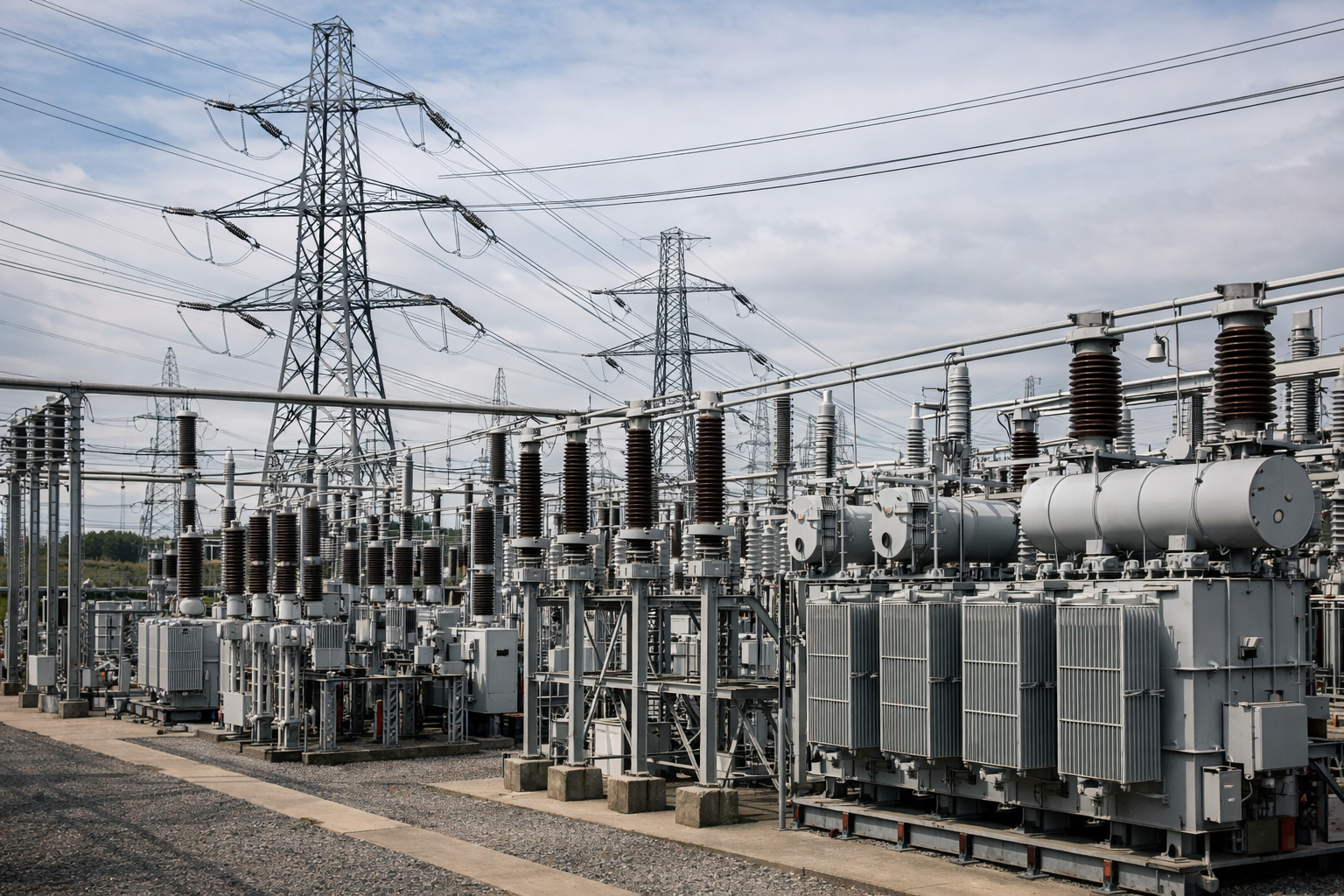
The terminations at Asipo will form another critical interface. Underground cable circuits cannot simply end at the substation boundary; they have to connect into switchgear, busbars, instrument transformers, protection equipment, earthing systems, and the wider control architecture of the new 132kV facility.
That places particular importance on coordination between the cable package and the substation design. Final termination positions, phase spacing, cable routes, earthing arrangements, protection interfaces, and commissioning sequences must correspond with the equipment being installed at Asipo.
The fact that the connection point is a future substation rather than an established facility adds another layer of interface management. Changes to the station layout can affect cable lengths, joint positions, civil works, and termination arrangements, while cable installation decisions can constrain the physical configuration available to the substation contractor.
Underground cables also behave differently from overhead conductors electrically. Their construction gives them higher capacitance, which can influence reactive-power behaviour on the network. The magnitude of that effect depends on route length and cable configuration, so no requirement for compensation equipment can be inferred from the limited published information for Asipo.
Protection and fault management similarly require careful engineering. Damage to an underground circuit may not be visually apparent, while locating and repairing a failed section can take considerably longer than identifying a fault on an exposed overhead line.
That increases the importance of selective protection, accurate fault-location data, sheath monitoring, installation records, and commissioning tests. At 132kV, repairs can require specialist cable and jointing teams rather than routine distribution maintenance, making prevention and installation quality commercially important as well as technically desirable.
Construction itself places significant mechanical demands on the cable. Minimum bend radii, pulling tensions, sidewall pressure, drum handling, and temporary storage conditions all have to remain within manufacturer limits if the insulation and conductor are to reach service without damage.
Once installed, the completed circuit will also have to pass electrical tests before energisation. The exact testing regime for Asipo has not been disclosed, but high-voltage cable commissioning normally has to demonstrate that the installed system, joints, terminations, earthing, and associated equipment are suitable for service before the circuit is handed over for operational use.
Hidrocantábrico Distribución Eléctrica operates publicly under the E-REDES identity and remains the legal entity behind the distribution business. The Asipo procurement therefore sits within a regulated network programme rather than a private behind-the-meter electrical installation.
The decision to create a 132kV substation and corresponding underground connection points to investment at a voltage level used for substantial regional power flows. Public information does not identify the demand forecast or individual customers behind the new station, so its eventual load profile cannot be assumed from the industrial location alone.
What the tender does establish is that Asipo is being developed as a new high-voltage node rather than an incremental extension of a lower-voltage network. The cable package will have to integrate primary plant, protection, control, communications, civil infrastructure, and the future substation as one operating connection.
Undergrounding removes the visual presence of towers and conductors, but at 132kV it does not remove engineering complexity. At Asipo, much of that complexity will simply move below ground and into the interfaces where the new cable system meets the wider network.

