IN Brief:
- EPEC has secured the high-voltage connection package for Lower Wonga in Queensland.
- Its scope includes a 275/33kV substation and associated 275kV overhead transmission line.
- Lower Wonga combines around 380MWdc of solar with a 281MW/843MWh battery system.
EPEC Group has secured the high-voltage grid connection package for the Lower Wonga solar and battery project in Queensland, taking responsibility for the substation and transmission infrastructure needed to connect the hybrid development to Australia’s National Electricity Market.
The company has been appointed by EPC contractor INTEC Energy Solutions to deliver the design, engineering, procurement, construction, testing, and commissioning of a 275/33kV substation and associated 275kV overhead line. The connection will run into Powerlink Queensland’s Woolooga substation.
Lower Wonga combines approximately 380MWdc of photovoltaic generation with a 281MW/843MWh battery energy storage system in Queensland’s Gympie region. Lightsource bp began construction on the project in June, with the solar and battery package being delivered by a joint venture between INTEC Energy Solutions and Gotion Hi-Tech Australia.
EPEC’s appointment fixes one of the project’s most consequential engineering packages. Several hundred megawatts of inverter-based generation and storage can only enter commercial service once the plant has a high-voltage route through which power can be transformed, protected, metered, controlled, and exported into the transmission network.
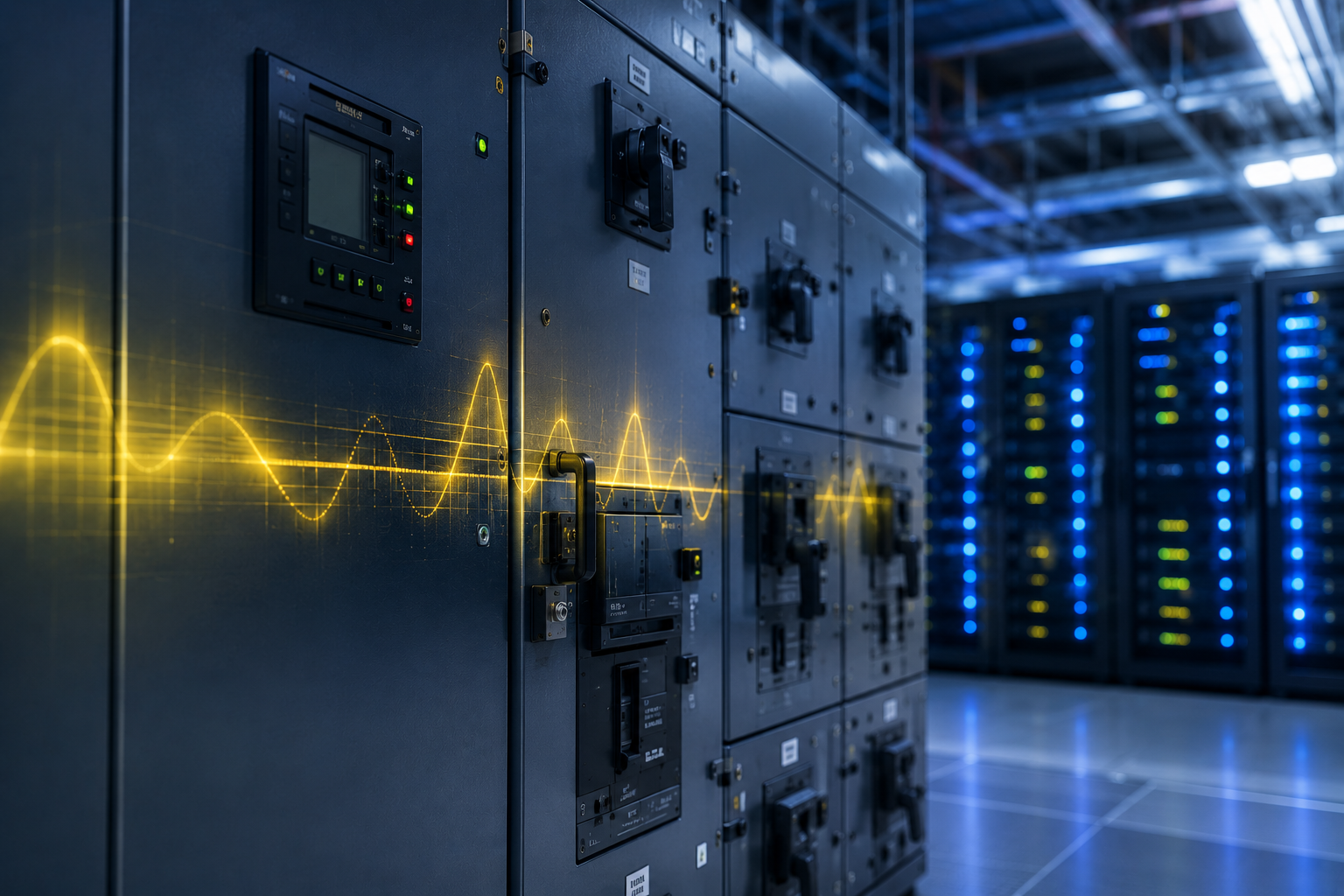
The 275/33kV substation will form the interface between Lower Wonga’s internal electrical collection system and the Powerlink network. Its design has to coordinate transformer ratings, busbars, switchgear, protection, control, auxiliary supplies, communications, earthing, and metering with the characteristics of both the photovoltaic plant and the battery.
The associated 275kV overhead line provides the physical export path to Woolooga, but line construction is only one part of the connection problem. The completed circuit must operate within network fault levels, insulation requirements, thermal limits, protection zones, clearances, and the wider operating envelope set for the project.
EPEC’s scope extends through testing and commissioning, so the contract is broader than a conventional substation equipment order. Protection schemes have to be proven, communications tested, instrument transformers and metering validated, and the response of the full generating plant checked against its approved connection requirements before energisation.
That commissioning work is particularly important because Lower Wonga combines two large inverter-based resources with very different operating profiles. Solar generation follows available irradiance, while the battery can switch between importing and exporting electricity within its power and state-of-charge limits.
The battery’s 281MW power rating and 843MWh energy capacity give it a nominal three-hour duration. Co-location allows the project to shift part of its renewable output between periods, but the storage system can also operate as an independent grid resource where the electrical and commercial arrangements permit.
Bidirectional battery operation creates additional connection states for engineers to model. Solar and storage may export together, the battery may charge while the solar plant is generating, and storage can potentially import from the network when photovoltaic output is low. Protection, voltage control, transformer loading, and dispatch systems have to remain valid across those operating combinations.
Lower Wonga has secured support through Australia’s Capacity Investment Scheme and a hybrid offtake agreement with Rio Tinto. That gives the project a substantial industrial demand link, but the commercial agreements cannot compensate for an electrical connection that does not perform as designed.
Large inverter-based projects require detailed power-system modelling around voltage control, reactive power, frequency response, fault ride-through, and interaction with other power-electronic equipment. Those studies can affect physical plant specifications well into detailed engineering, particularly where network conditions or approved performance standards change.
EPEC’s business model combines that analytical work with substation EPC, SCADA, testing, commissioning, and compliance. Keeping several connection disciplines under one contractor can reduce handover risk between modelling and construction, although it also places more responsibility on the contractor to reconcile changes discovered during engineering with equipment already being specified or procured.
High-voltage equipment procurement adds another constraint. Transformers, switchgear, protection equipment, communications hardware, and specialist components can carry long manufacturing lead times, meaning the connection programme has to remain aligned with civil construction and the delivery of hundreds of megawatt-hours of battery equipment.
Network outages and commissioning windows also determine when energisation can take place. A substation may be mechanically complete while waiting for an approved outage, final protection testing, or the completion of network-side works before it can be connected safely.
Lower Wonga is already under construction, so EPEC’s package now sits directly on the critical path towards commercial operation. Solar modules and battery containers can be installed in parallel with the grid works, but neither asset can perform its intended market role until the 275kV connection has been completed and accepted.
The project’s generation and storage capacity will attract most of the headline attention, but the less visible equipment will determine whether those megawatts are usable. The substation, overhead line, transformers, protection, controls, and commissioning programme are the components that turn Lower Wonga from an assembly of generating equipment into a power-system asset.