IN Brief:
- Heron Power will invest more than $100 million in a 286,000 sq ft California factory.
- The plant will manufacture modular medium-voltage Heron Link power-conversion systems.
- Annual design capacity reaches 10,000 units, with mass production planned from late 2027.
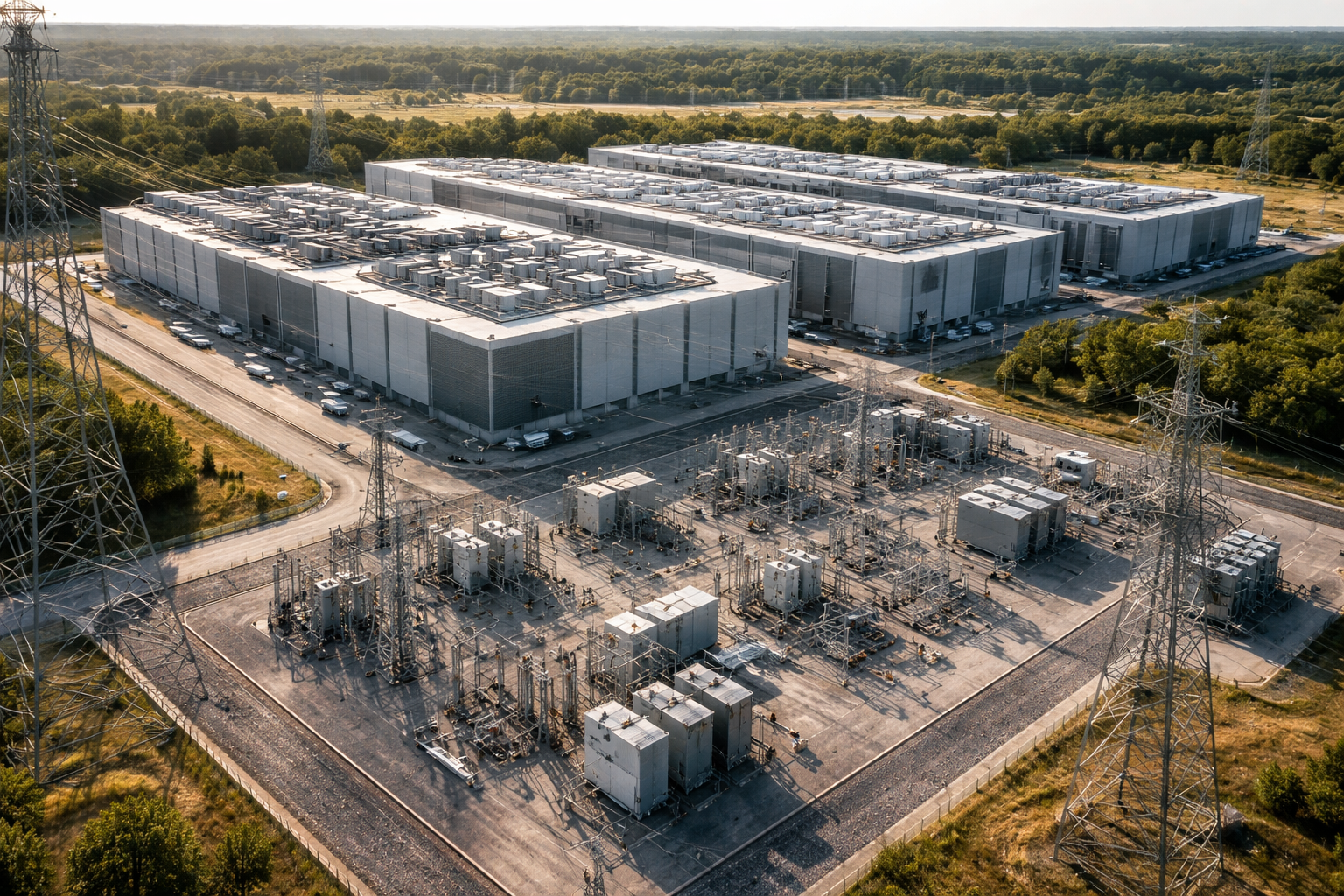
Heron Power will invest more than $100 million to convert a 286,000-square-foot former distribution warehouse in Morgan Hill, California into a factory for medium-voltage power electronics, with mass production targeted for late 2027.
The site will manufacture Heron Link, the company’s modular power-conversion platform for grid, storage, renewable-energy, and data-centre applications. Heron says the plant is designed for up to 10,000 units annually, representing more than 40GW of potential yearly manufacturing capacity at full utilisation.
The company expects the facility to create more than 600 manufacturing, engineering, and operations jobs. Site preparation is beginning ahead of equipment installation and production ramp-up, moving Heron from development and demonstration towards industrial-scale manufacture.
The factory is the more consequential part of the announcement because the challenge facing new grid technologies is rarely limited to proving that a prototype works. Electrical infrastructure customers need equipment that can be manufactured repeatedly, qualified against standards, serviced for years, and supplied in sufficient volume to meet project schedules.
Heron Link uses high-power semiconductor conversion rather than relying solely on conventional passive transformer architecture. The platform combines voltage conversion with software-controlled switching and is intended to integrate functions that are normally distributed across several pieces of equipment.
For battery and renewable projects, the company describes configurations that combine inverter and solid-state transformer functions. Data-centre versions are intended to convert medium-voltage AC more directly into higher-voltage DC architectures while incorporating protection and distribution functions.
The exact electrical arrangement varies by application, but the factory announcement centres on a medium-voltage platform at approximately 5MW per system. At that scale, each unit sits firmly within infrastructure engineering rather than conventional low-voltage electronics.
The technology is aimed at a part of the power system where procurement constraints have become increasingly visible. Transformers, switchgear, and other high-power components face strong demand from grid reinforcement, renewable projects, batteries, industrial electrification, and large data-centre campuses.
Heron is proposing that power electronics can reduce some of the physical equipment and conversion stages needed in those installations. Fewer components and a smaller footprint could reduce installation complexity, but semiconductor-based systems also replace a mature passive technology with more active electronics, controls, cooling, and software.
That creates a different engineering risk profile. Conventional transformers have well-understood fault behaviour and decades of operating experience, while solid-state alternatives must demonstrate reliability, electromagnetic compatibility, insulation performance, thermal control, protection coordination, cybersecurity, maintainability, and acceptable lifecycle cost.
Manufacturing quality will therefore be central to commercial acceptance. A large solid-state power-conversion unit includes power semiconductor modules, busbars, capacitors, insulation systems, cooling circuits, control electronics, sensors, enclosures, firmware, and protection functions that all have to remain consistent across production batches.
Factory testing also has to identify faults before equipment reaches site. Infrastructure customers are unlikely to accept production variability that requires extensive troubleshooting after installation, particularly where a failed module sits on the critical path of a battery, data-centre, or grid-connection project.
The Morgan Hill plant gives Heron a domestic manufacturing base close to its California engineering organisation. The project is supported in part by a $26.4 million California Competes tax credit, linking the private investment to state economic-development incentives.
Heron has already begun working with other energy-equipment suppliers on application engineering. Its collaboration with LG Energy Solution Vertech is integrating Heron Link into battery storage architectures, with the companies targeting a more compact electrical footprint and fewer separate conversion stages.
A pilot deployment is intended to precede broader commercial availability. That progression will be important because field behaviour matters more than laboratory efficiency once equipment is connected to operating grids and exposed to switching events, faults, changing loads, high ambient temperatures, and continuous duty.
Data centres provide another demanding application. New campuses can require hundreds of megawatts of electrical capacity, while high-density computing produces rapid load changes and places pressure on utility connections, substations, transformers, switchboards, and onsite distribution systems.
Reducing conversion stages could improve efficiency and free physical space, but concentrating functions into fewer power-electronics modules increases the consequence of individual equipment failures. Redundancy, modular replacement, diagnostics, and service arrangements will therefore be as important as rated efficiency.
Heron’s stated 40GW annual production capability should be treated as factory design capacity rather than a forecast of installed equipment. Reaching that scale would require customer orders, certification, qualified suppliers, trained staff, acceptable manufacturing yields, and successful field deployments.
The factory nevertheless addresses a genuine industrial bottleneck. Grid and energy projects increasingly face long waits for major electrical equipment, and additional manufacturing capacity can shorten one part of that delivery chain if the technology proves technically and commercially competitive.
Late 2027 will therefore be a more meaningful milestone than the current investment announcement. By then, Heron will need to show that its medium-voltage conversion technology can move from engineering prototypes into repeatable production, with units leaving Morgan Hill at a quality and volume suitable for critical power infrastructure.