
IN Brief:
- Obelisk’s second phase has reached commercial operation, completing 1,125MW of solar capacity.
- The first phase contains the project’s full 100MW/200MWh battery storage system.
- Electricity is supplied to Egyptian Electricity Transmission Company under a 25-year US-dollar-denominated PPA.
Scatec has reached commercial operation on the second phase of the Obelisk project in Egypt, completing a 1.125GW solar development paired with 100MW/200MWh of battery storage. The full project is now operating under a 25-year power purchase agreement with the Egyptian Electricity Transmission Company.
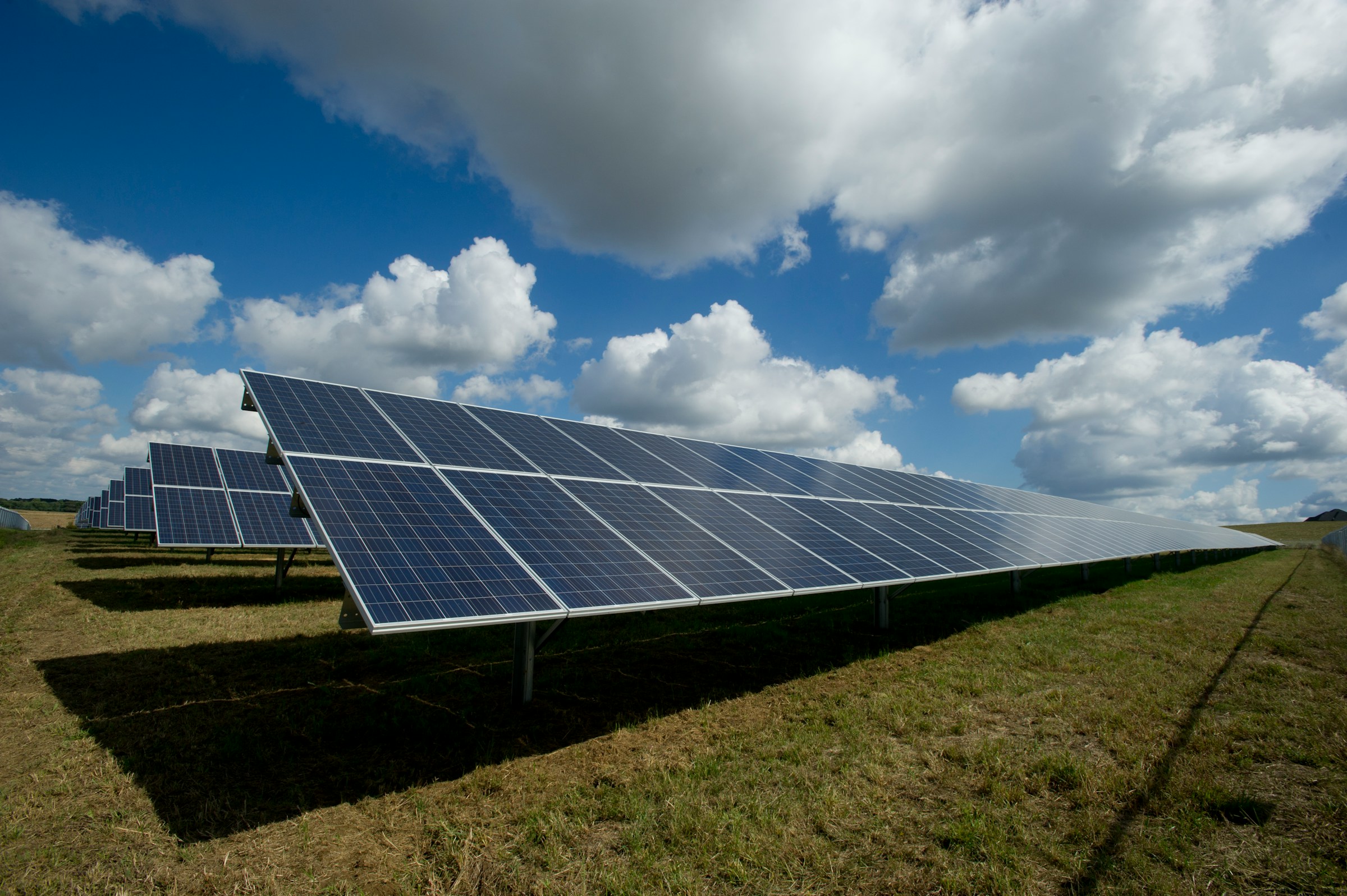
Obelisk was delivered in two phases. The first comprised 561MW of photovoltaic capacity together with the project’s complete 100MW/200MWh battery system, while the second has added another 564MW of solar generation. Scatec describes the completed facility as Africa’s largest hybrid solar-and-battery project.
The plant is expected to generate more than 3,000GWh of electricity annually. Its power purchase agreement is denominated in US dollars, providing a long-duration revenue framework for an asset combining utility-scale photovoltaic generation with battery storage intended to increase flexibility around its grid connection.
The battery is relatively small compared with the solar array when measured in power. Its 100MW rating is less than one tenth of the photovoltaic plant’s nameplate capacity, while 200MWh of stored energy provides approximately two hours at full battery output. Obelisk is therefore not designed to move the entire daytime solar production into the evening.
Instead, the battery makes a portion of the plant controllable. It can absorb energy during selected periods and discharge later, while its power-electronic interface allows rapid changes in output that a photovoltaic array cannot provide independently of sunlight. The resulting flexibility can assist with ramp management, short-duration energy shifting, and other grid requirements within the battery’s energy limits.
The electrical integration is more complex than operating two independent assets on neighbouring plots. Photovoltaic inverters, battery power-conversion systems, transformers, protection equipment, plant controls, metering, and communications all have to work against a common connection and dispatch framework. The controller must know the available solar output, battery state of charge, export limit, and transmission-system instruction at the same time.
That coordination becomes increasingly valuable as solar penetration rises. Photovoltaic capacity can be installed relatively quickly in markets with strong irradiation, but output is concentrated into daylight hours and changes rapidly around sunrise and sunset. Successive gigawatts therefore increase the requirement for balancing, transmission capacity, reactive-power management, and flexible resources able to alter the net generation profile.
A 200MWh battery cannot replace structural network reinforcement or firm capacity through a prolonged period of poor renewable output. It can, however, manage shorter changes and make better use of part of the connection, particularly where generation would otherwise be concentrated into already crowded hours.
Commissioning a 1.125GW photovoltaic plant is itself a significant electrical programme. Hundreds of inverter and transformer blocks feed medium-voltage collection circuits before power reaches higher-voltage substations and the transmission interface. Energisation has to be staged, with protection, metering, controls, communications, and plant performance validated before commercial operation is declared.
Storage adds further commissioning requirements because the battery has to demonstrate charge and discharge behaviour across its operating envelope. State-of-charge calculations, thermal systems, inverter response, auxiliary supply, protection, and hybrid control functions must remain stable while the solar plant changes output around it.
Scatec remains involved beyond development through engineering, procurement and construction, asset management, and operations and maintenance. That integrated model provides continuity between the assumptions made during plant design and the performance observed once the generating and storage systems begin commercial operation.
The project also has a broad financing structure. Scatec is the controlling shareholder, with National Bank of Egypt, Norfund, and EDF Power Solutions participating as minority equity partners, while senior financing involves international development institutions. The long-term PPA provides the revenue base against which that capital structure is supported.
Obelisk takes Scatec’s operating position in Egypt to roughly 1.5GW when combined with its existing BenBan solar interests. The company also has a much larger Egyptian development pipeline spanning renewable generation and storage, indicating that the hybrid architecture is intended as part of a broader build programme rather than a one-off demonstration.
That makes the project relevant beyond its geography. Power systems adding large volumes of solar increasingly move from a simple capacity problem to a control problem: the issue is no longer only how many photovoltaic megawatts can be constructed, but how their concentrated output interacts with networks, reserves, and demand.
Obelisk has now moved from construction into that operating environment. Its performance will be measured through solar yield, inverter availability, battery cycling, grid compliance, and the hybrid controller’s ability to make part of a 1.125GW variable generator dispatchable when the Egyptian transmission system needs it.

