
IN Brief:
- Grid-scale solar supplied 9.4% of Ireland’s July electricity mix, up from 8.2% in June and 7.8% in May.
- Wind contributed around 22% and generated 614GWh, while total system demand reached 2,744GWh.
- EirGrid can currently operate with up to 75% variable renewable electricity instantaneously and is working towards 95%.
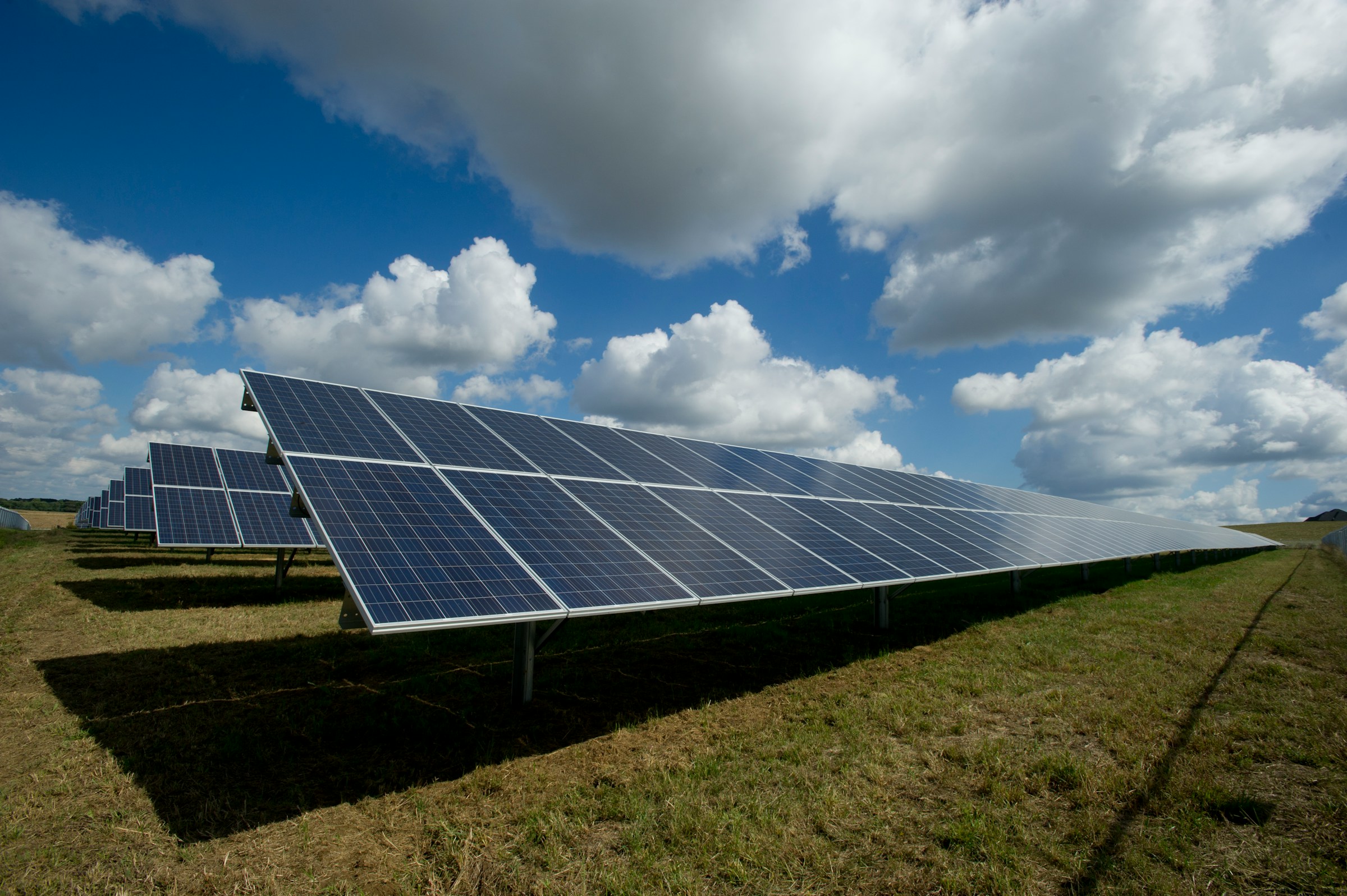
Grid-scale solar supplied a record share of Ireland’s electricity during July, accounting for 9.4% of the monthly fuel mix as strong summer production pushed photovoltaic generation above its previous monthly contribution.
Provisional figures from EirGrid put solar’s share at 9.4%, compared with 8.2% in June and 7.8% in May. Wind remained the larger renewable source during July, supplying around 22% of electricity and generating 614GWh.
Gas-fired generation accounted for 43% of electricity used during the month, while net imports through interconnection represented approximately 24%. Total electricity system demand reached 2,744GWh, up from 2,676GWh in June.
The solar record reflects more than a favourable month of weather because installed grid-scale photovoltaic capacity has also increased substantially. Summer conditions give that capacity its strongest opportunity to contribute, producing a pronounced daytime generation profile that increasingly alters what the rest of the Irish power system is required to do.
A monthly share of 9.4% should not be confused with the instantaneous proportion of electricity supplied by solar during individual daylight hours. Photovoltaic output rises from zero after sunrise, can reach much higher shares around the middle of the day, and then falls back to zero after sunset, while demand follows a separate profile.
The operational consequence is a steeper change in the residual demand that other generators, storage assets, and interconnectors must meet. Strong solar output can reduce the requirement for conventional generation during the daytime before the system has to replace that output as evening approaches.
Forecast accuracy becomes increasingly valuable as that contribution grows. Cloud movements can alter photovoltaic production across short periods, while weather forecasts, live measurements, and information from connected generators give control-room teams the data needed to anticipate changes rather than respond only after they have appeared on the system.
EirGrid has already made substantial changes to accommodate high levels of weather-dependent generation. The system can currently operate with up to 75% of electricity coming from variable renewable sources such as wind and solar at a given time, and work is underway to raise that operating capability to 95%.
Reaching those instantaneous levels requires the grid to obtain technical services that were traditionally supplied as a by-product of conventional synchronous generation. Frequency response, reserves, voltage support, inertia-related capabilities, fault behaviour, and system restoration all have to remain available as the generation mix changes.
Solar and wind also interact differently with demand. Photovoltaic output follows daylight relatively predictably at a broad level, while wind can remain high overnight and varies according to different weather systems. Combining the two can reduce dependence on a single renewable profile, but it does not remove periods when both technologies produce either very strongly or relatively little.
July’s figures retain a substantial role for gas, which supplied 43% of electricity. Thermal generation remains capable of increasing or reducing output when required, although the economic and technical operation of those plants changes as renewable generation occupies a larger proportion of the energy market.
Interconnection is another major part of the balance. Net imports represented about 24% of July electricity use, giving the Irish system access to generation in neighbouring markets and helping manage differences between domestic production and demand.
Interconnectors are not an unlimited balancing resource. Their availability can be affected by outages and maintenance, while electricity prices and generation conditions in connected markets influence the direction and scale of flows. A neighbouring system facing its own tight conditions may have less electricity available to export precisely when Ireland would value it most.
Battery storage can help manage shorter changes around the solar profile by charging when electricity is plentiful and releasing energy later. Its usefulness depends on power rating, duration, state of charge, network location, and market conditions, with shorter-duration batteries providing rapid flexibility and longer systems capable of shifting larger volumes of energy between different parts of the day.
Distribution networks also face a changing engineering problem as more solar connects below transmission level. Electricity that once flowed predominantly from large power stations towards consumers can increasingly move from distribution-connected generators back through substations, changing transformer loading, voltage conditions, and protection requirements.
Visibility of those resources becomes more important as their combined contribution increases. A system operator cannot manage a rapidly changing generation mix effectively if substantial volumes of distributed production are poorly measured or difficult to forecast, making communications and data increasingly part of renewable integration rather than an administrative extra.
The July record therefore adds another datapoint to Ireland’s changing generation mix rather than marking the completion of its renewable transition. Solar supplied 9.4% across the month, but gas and imports still accounted for roughly two-thirds of electricity use between them.
The next records will place greater demands on forecasting, network operation, system services, storage, and flexible consumption. Installing additional photovoltaic capacity is the comparatively straightforward part; operating the grid securely as that capacity becomes a much larger daytime resource is the continuing engineering job.

