IN Brief:
- The 45MW Strzałkowo development is Enefit's largest completed investment in Poland to date.
- Expected annual production is around 45GWh, taking Enefit Polska's renewable generating portfolio to 78MW.
- Around 75% of forecast output was covered by a 15-year indexed contract for difference when the project reached final investment decision.
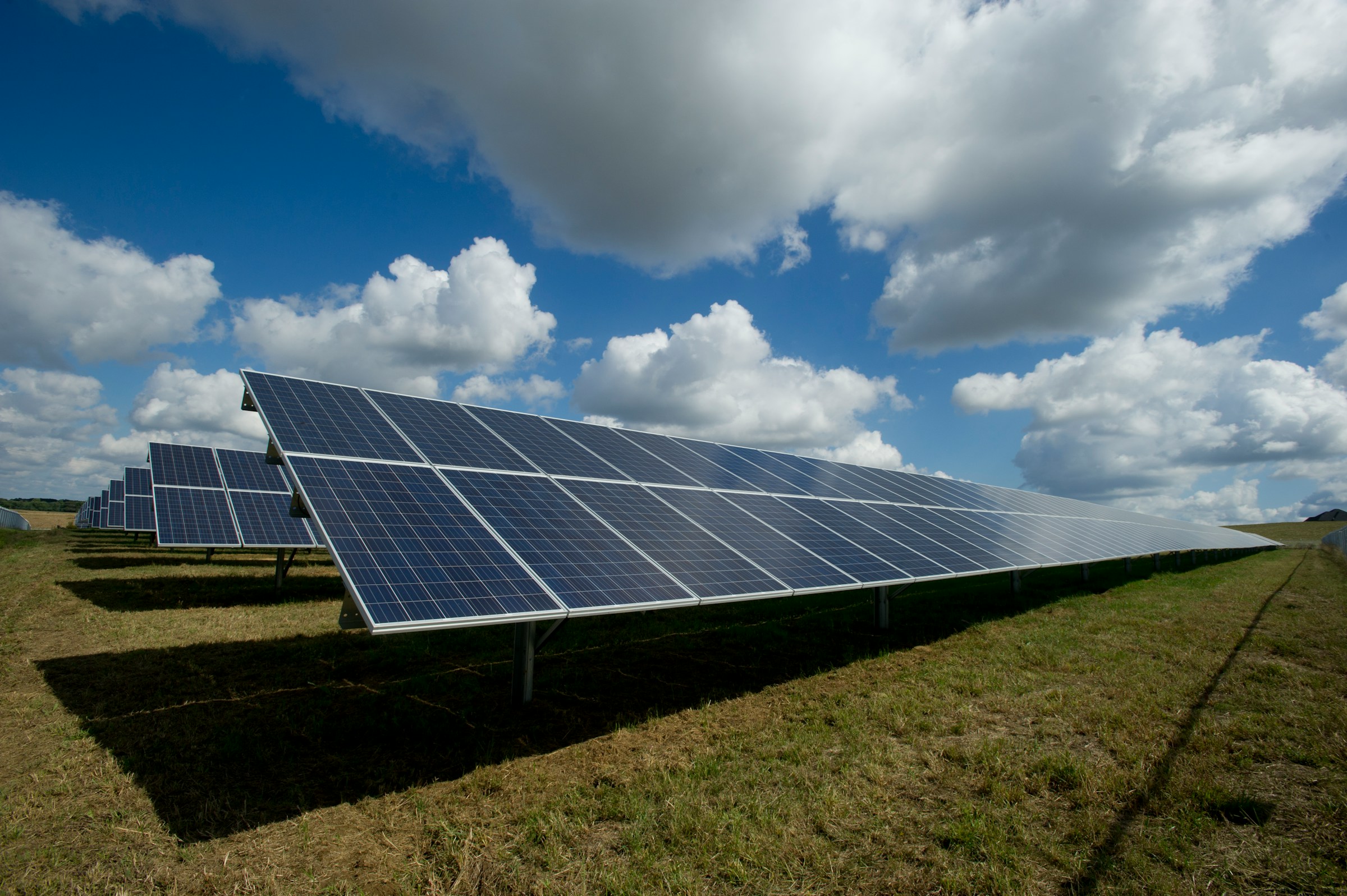
Enefit has commissioned its 45MW Strzałkowo solar farm in Poland, completing the company’s largest investment in the country to date and substantially increasing the scale of its local renewable generation portfolio.
The plant, near Strzałkowo in west-central Poland, is expected to produce around 45GWh of electricity annually. Its completion takes Enefit Polska’s operating renewable portfolio to 78MW, adding a single asset larger than the company’s entire Polish solar fleet was when the investment received final approval in 2025.
Enefit Green, which was developing the project at that stage, took its final investment decision in March 2025. Construction investment was then expected to approach €26 million, with commercial operation targeted for summer 2026.
At the time, the group operated 21 solar farms in Poland with combined capacity of 33MW. Strzałkowo therefore changes the shape as well as the size of the portfolio, concentrating a much larger proportion of generating capacity at one utility-scale site rather than across relatively small individual installations.
The completed plant has a nominal capacity of 45MW, while expected annual generation of around 45GWh reflects the variable output profile inherent in photovoltaic generation. Production will rise and fall according to daylight, weather, temperature, and seasonal conditions rather than remaining close to rated capacity throughout the year.
That production profile becomes increasingly important as more solar capacity connects to the Polish electricity system. Large volumes of photovoltaic generation can depress daytime power prices when weather conditions are favourable, while output falls rapidly towards evening as demand may remain high.
The commercial arrangements established around Strzałkowo recognise some of that exposure. When the project reached final investment decision, Enefit said around 75% of forecast output was covered by a 15-year indexed contract for difference, providing a long-term contracted position over most expected generation.
Such structures can improve revenue visibility while leaving part of the plant’s output available for other market arrangements. The balance between contracted and merchant exposure has become increasingly relevant for renewable developers as electricity prices become more sensitive to the timing of wind and solar production.
Poland has added photovoltaic capacity quickly in recent years, transforming solar from a relatively small contributor into a significant source of generation. That expansion creates an integration challenge alongside the decarbonisation benefit because new generation has to be matched by sufficient network capacity, flexibility, forecasting, and market arrangements.
The problem is not simply how many megawatts are installed. A power system has to accommodate when and where those megawatts appear, particularly when many solar assets respond to the same weather conditions at approximately the same time.
Transmission and distribution networks can become constrained if renewable development outpaces reinforcement in areas with attractive land, connection opportunities, or resource conditions. Curtailment can then rise even though the generating equipment itself remains technically available.
Storage is one response, allowing electricity generated during periods of high renewable output to be shifted into later periods. Flexible demand, interconnection, dispatchable generation, and improved network capacity provide others. The usefulness of each depends on location, duration, market design, and the specific constraint being managed.
Enefit’s broader regional strategy increasingly reflects that relationship between generation and flexibility. The group operates renewable assets across the Baltic region and Poland while developing energy-management and storage capability intended to support more variable electricity markets.
Strzałkowo itself remains a conventional utility-scale solar project rather than a combined generation-and-storage development. Its electrical infrastructure nevertheless extends well beyond the photovoltaic modules visible on site, including inverters, transformers, protection equipment, cabling, switchgear, communications, monitoring, and the systems required to interface with the Polish network.
Commissioning therefore marks more than completion of physical construction. Protection settings, communications, metering, control functions, and grid behaviour have to be tested before a plant of this scale can move into routine commercial operation.
The development also creates a different asset-management profile for Enefit Polska. A company that previously held 33MW across 21 solar farms has now added 45MW at one location, increasing the operational importance of a single site’s availability, maintenance performance, connection, and market access.
Scale can bring efficiencies because inspection, maintenance, security, monitoring, and technical support are concentrated, but it also means that faults at the larger site have a greater effect on total portfolio output. Inverters, transformers, high-voltage equipment, monitoring systems, and module performance therefore become more significant to overall generation results.
The 15-year contract covering most forecast output gives Enefit greater certainty over a large share of that production, while the remaining volume retains exposure to other market opportunities and risks. How that balance performs will depend increasingly on the difference between average electricity prices and the prices available specifically during solar-generating hours.
That issue will become more pronounced if photovoltaic deployment continues to rise faster than storage, flexible demand, or network reinforcement. Solar generation may remain inexpensive to produce while becoming less valuable during periods when many plants are exporting simultaneously.
Strzałkowo adds another 45MW to that changing system. For Enefit it is a clear construction and commissioning milestone; for the Polish grid it is another sizeable block of variable generation whose long-term value will depend on the electrical infrastructure and flexibility developing around it.