
IN Brief:
- The proposed right would apply to qualifying transmission and distribution investigations in England.
- Tests could reach 15 metres deep and cover up to 90 square metres.
- Works would normally be limited to 28 days, with 14 days’ notice to councils.
Department for Energy Security and Net Zero has opened a consultation on new permitted development rights for temporary ground investigations and surveys supporting electricity network projects in England.
The proposal would allow specified low-impact works to proceed without a separate planning application, subject to limits on size, duration, location, and environmental effects. It is intended to reduce administrative delays before transmission and distribution schemes enter their principal consenting and construction stages.
Ground investigations provide information required to design foundations, cable routes, access arrangements, and construction methods. They can also identify archaeological deposits, unexploded ordnance, drainage behaviour, soil strength, and conditions affecting the movement of heavy equipment.
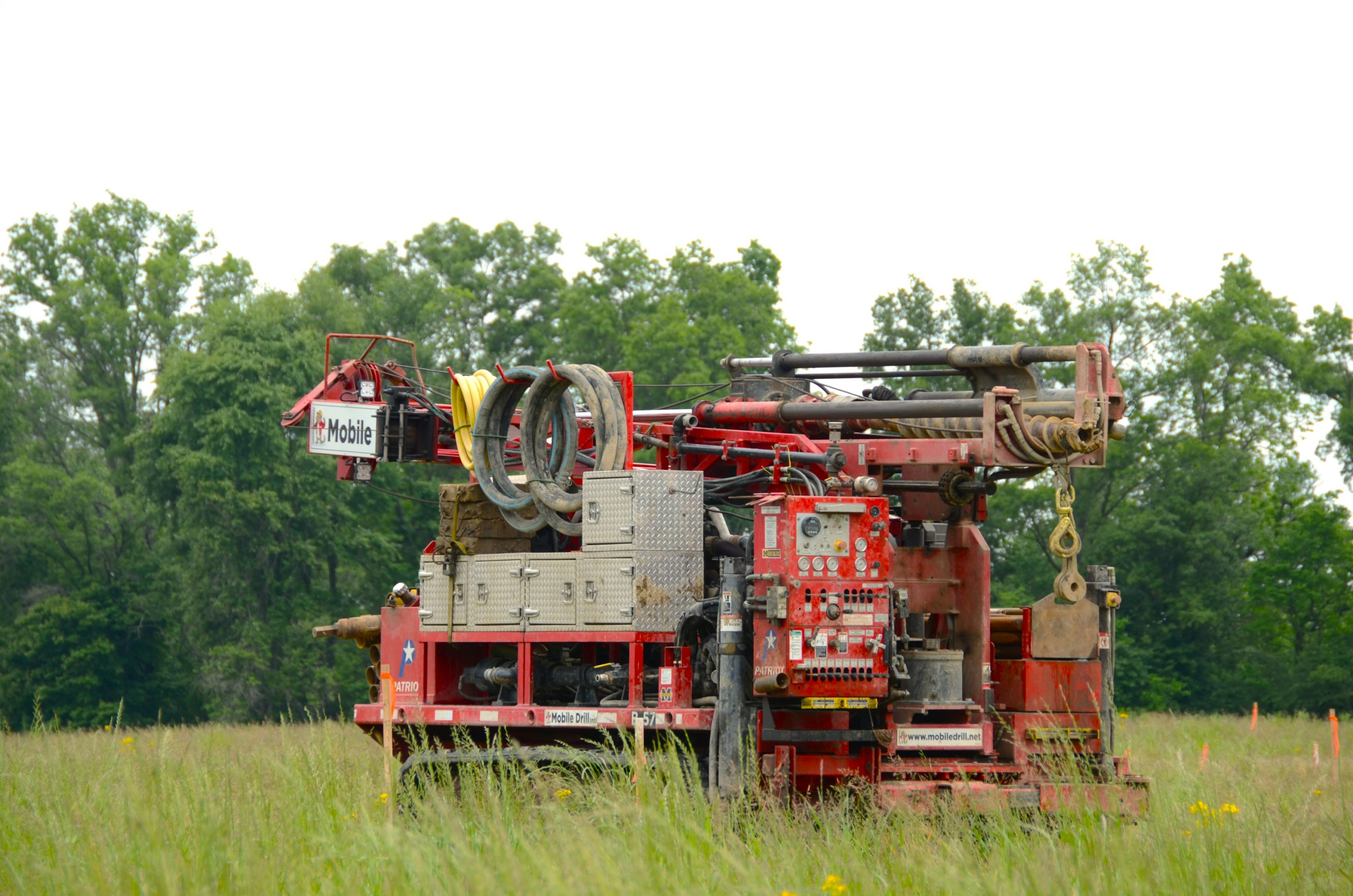
The consultation lists archaeological trial trenches, infiltration pits, unexploded-ordnance surveys, California bearing ratio tests, and cone penetration tests among the possible activities. The proposed right would cover investigations needed to assess feasibility, route infrastructure, prepare environmental assessments, or support consent applications.
It would apply to transmission and distribution licence holders and third parties working on their behalf. The government expects the largest benefit to arise on long linear transmission schemes, which can extend from 20km to more than 120km and require hundreds or thousands of separate investigation points, although distribution projects would also be included.
The proposed limits are specific. Individual tests would be restricted to a maximum depth of 15 metres and a surface area of 90 square metres, approximately half the size of a tennis court.
Works would normally have to be completed within 28 days from commencement. Written approval from the local planning authority would be required where an investigation needs to continue beyond that period.
Land would have to be restored, as far as practicable, to its original condition when work finishes or within 28 days. Excavated soil would be retained for reinstatement, and the right would prohibit tree removal or other activity likely to damage trees.
Temporary fencing, welfare facilities, track mats, and other structures needed to carry out the investigations could also be permitted. The government proposes a maximum height of 10 metres and would apply the same 28-day limit used for the investigation itself.
Network developers would still have to notify the local planning authority in writing at least 14 days before work begins. Removing the need for a planning application would not remove communication with councils or provide an unrestricted right to enter land.
Landowner rights would remain in place. Developers would need voluntary access agreements, wayleaves, or the relevant statutory powers of entry, together with any required notice, before investigations could begin.
Other environmental, heritage, licensing, and consent regimes would also continue to apply. The proposal could operate on operational and non-operational land and, in most cases, within designated areas such as National Parks, National Landscapes, Sites of Special Scientific Interest, and World Heritage Sites.
Scheduled Monuments would be excluded. Investigation work at those sites would continue to require Scheduled Monument Consent, reflecting their statutory protection and archaeological significance.
That distinction matters because preliminary surveys can uncover the very constraints they are intended to identify. Where archaeological material is found during the 28-day period, the consultation expects developers to inform the local authority and agree how deposits should be preserved and assessed.
The government is asking whether the final rules should contain a prescribed process for those discoveries. Without one, developers and councils may interpret the boundary between routine investigation, preservation, and mitigation differently, creating the uncertainty the new right is supposed to reduce.
The consultation argues that present requirements can produce disproportionate work for temporary investigations and allow important ground conditions to emerge late in project development. Earlier access to reliable data can reduce design risk, improve environmental mitigation, and prevent unsuitable foundation or route assumptions being carried too far into a scheme.
The proposal will not accelerate every element of network delivery. Major transmission lines, substations, and cable routes will still face their principal planning, environmental, land, procurement, and construction processes, while transformer, switchgear, and cable lead times remain unaffected.
There is also a balance between consistency and local control. Standard limits could make routine surveys easier to programme along extended routes, but councils, landowners, and communities will still expect noise, vehicle movements, temporary compounds, repeated investigation points, and reinstatement to be managed competently.
The consultation closes on 4 September 2026. Any final permitted development right will have to define where a low-impact investigation ends and material development begins — a procedural boundary best settled before the drill rig reaches the field.

