
IN Brief:
- Dajin has started manufacturing 63 transition pieces at its Penglai facility.
- The structures are engineered for Gennaker’s monopile foundations and Baltic Sea conditions.
- Delivery to European ports is planned during 2027 ahead of offshore installation.
Dajin Heavy Industry has started manufacturing 63 transition pieces for the 976.5MW Gennaker offshore wind farm, starting physical production on a major foundation package.
First steel was cut at Dajin’s Penglai facility in China on 30 July. The completed structures are scheduled for delivery to European ports during 2027 under the supply agreement awarded by project developer Skyborn Renewables.
Transition pieces form the interface between each monopile foundation and turbine tower. They also carry much of the equipment needed for installation and long-term access, including platforms, boat landings, ladders, cable routes, corrosion protection equipment, and mounting points for ancillary systems.
The 63 Gennaker units are being engineered for water depths of approximately 13 to 20 metres. Dajin has specified S355ML+Z35 offshore structural steel and identified EN 1090, DNV-OS-C401, and NORSOK M-101 among the fabrication and coating standards applied to the work.
Those requirements govern more than documentation. Offshore structures are exposed to repeated loading over millions of operating cycles, so weld quality, material traceability, dimensional control, surface preparation, coating application, and inspection records all contribute to long-term performance.
Each transition piece must match its corresponding monopile within tight tolerances. The installed structure must preserve the geometry needed for tower erection, with flange alignment, verticality, cable entry positions, platform levels, and internal equipment arrangements remaining within the specified limits.
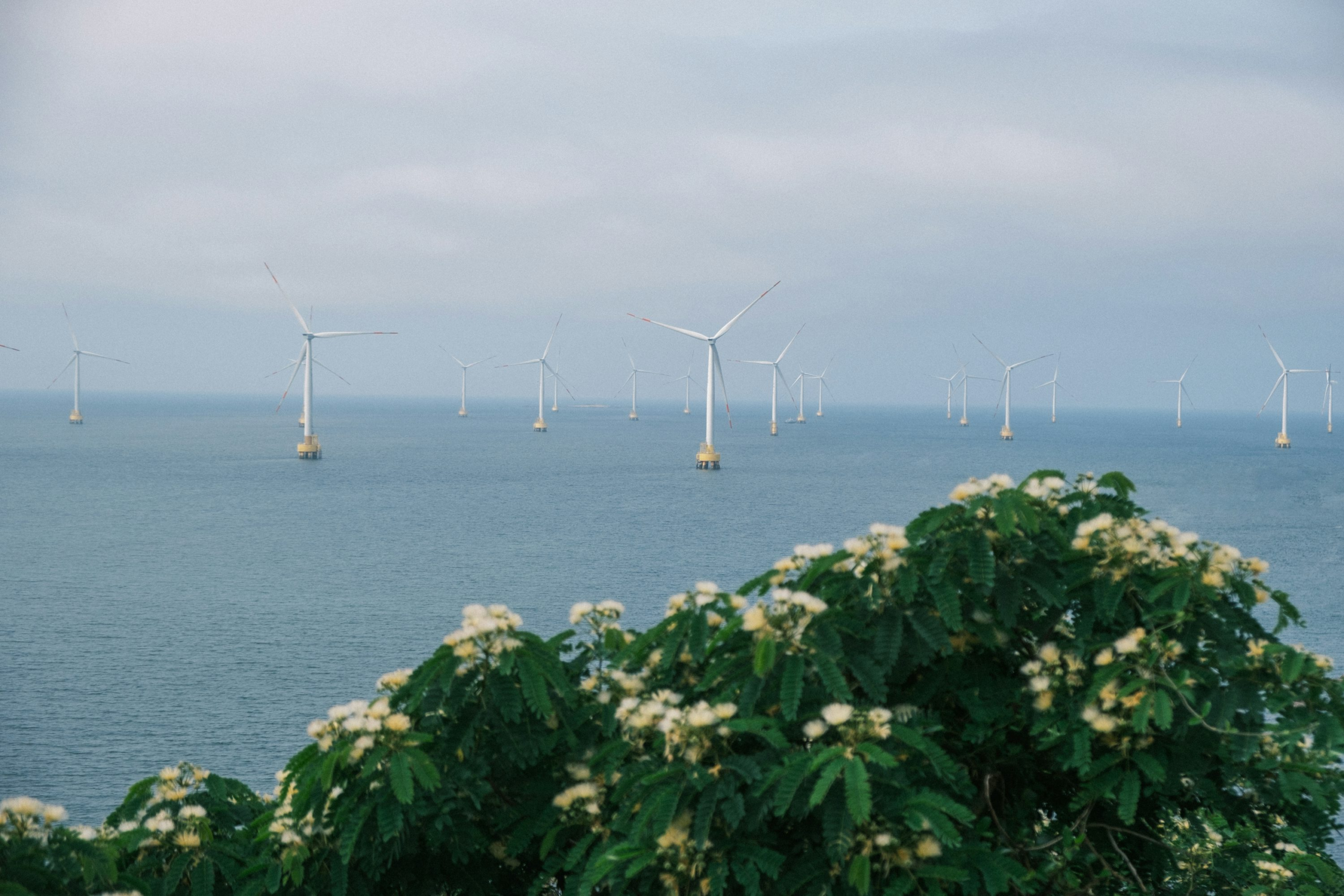
Gennaker will use 63 Siemens Gamesa turbines on monopile foundations. The project is located around 15 kilometres north of the Fischland-Darß-Zingst peninsula in the German Baltic Sea and will connect to the transmission system operated by 50Hertz.
With a planned capacity of up to 976.5MW, Gennaker is expected to become the largest offshore wind farm in the German Baltic Sea. Skyborn estimates annual generation of about 4TWh once the project is fully operational, with commissioning scheduled for 2028.
The wind farm received its principal construction and operating approval in December 2025. Contracting has since progressed across turbines, foundations, installation, and power offtake, establishing the industrial sequence needed before offshore construction can begin.
The turbine configuration changed during development. An earlier design based on a larger number of smaller machines was replaced by 63 turbines rated at up to 15MW, reducing the number of foundations while increasing the dimensions and loads associated with each position.
Larger machines can reduce the number of array connections, foundations, and maintenance locations required for a given project capacity. They also demand heavier structures, greater lifting capacity, larger installation vessels, and electrical equipment capable of handling more power at each turbine.
Dajin’s transition pieces will be paired with monopiles manufactured separately. Seaway7 holds the transportation and installation scope for the 63 monopiles and transition pieces, making delivery sequencing between factories, European ports, transport vessels, and the offshore site a critical part of the programme.
A transition piece may leave the fabrication yard months before installation. Storage supports, preservation measures, transport engineering, lifting points, sea fastening, inspection access, and port handling must therefore be incorporated into the component and its logistics plan.
Gennaker’s relatively shallow Baltic location does not remove the marine engineering challenge. Seabed conditions, installation tolerances, vessel positioning, weather restrictions, noise management, and the sequence of piling and secondary structure work will shape the offshore campaign.
The electrical programme will proceed alongside foundation installation. Inter-array cables must connect the turbines to the offshore collection system, while the grid connection must carry close to one gigawatt of variable generation into the 50Hertz network.
Protection, communications, reactive power control, and commissioning tests will need to align with turbine installation and energisation. Delays in the electrical package can leave mechanically complete turbines unable to export power, while late foundations can hold up cable and turbine work.
Manufacturing the transition pieces in Penglai and delivering them to Europe adds an international logistics stage to the supply chain. The programme depends on qualified steel, fabrication capacity, marine transport, port availability, customs planning, inspection, and delivery dates that match the installation vessel sequence.
First steel cutting is an early milestone, but it is materially different from a supply agreement. Dajin must now convert the contracted design into 63 completed, inspected, coated, and transport-ready structures while maintaining the order required by the offshore programme.
Delivery during 2027 will feed a construction schedule culminating in turbine installation and commissioning during 2028. Completed units, load-out activity, European port arrivals, and the start of foundation installation will provide the next evidence that the manufacturing programme remains aligned with Gennaker’s operating target.

