IN Brief:
- The New Albany microgrid will provide 350MW of grid-independent power to an AI data centre campus.
- Its architecture combines gas engines, linear generators, a 430MWh battery system, and medium-voltage equipment.
- Veolia will support commissioning and run the plant to a 99.9% availability target with up to 40 on-site staff.
Veolia has been selected to operate and maintain a 350MW grid-independent microgrid supplying an AI data centre campus in New Albany, Ohio. The privately operated power system will combine gas engines, linear generators, 430MWh of battery storage, and medium-voltage infrastructure to provide the campus with all of its electricity without relying on the conventional grid.
The unnamed developer has brought Veolia into the project before commercial operation, giving the operator responsibility for start-up readiness, procedure development, contractor coordination, commissioning support, and long-term plant operations. The contract uses a performance-based model and targets 99.9% availability, equivalent to less than nine hours of unavailable time in a full year before any contractual exclusions are applied.
The 350MW rating places the microgrid closer to a utility-scale power station than a conventional commercial backup system. It must energise a mission-critical campus continuously, respond to fast changes in computing load, maintain voltage and frequency, and coordinate multiple generating technologies. Unlike a grid-connected site that can lean on system inertia and reserves, an islanded plant must provide those functions internally.
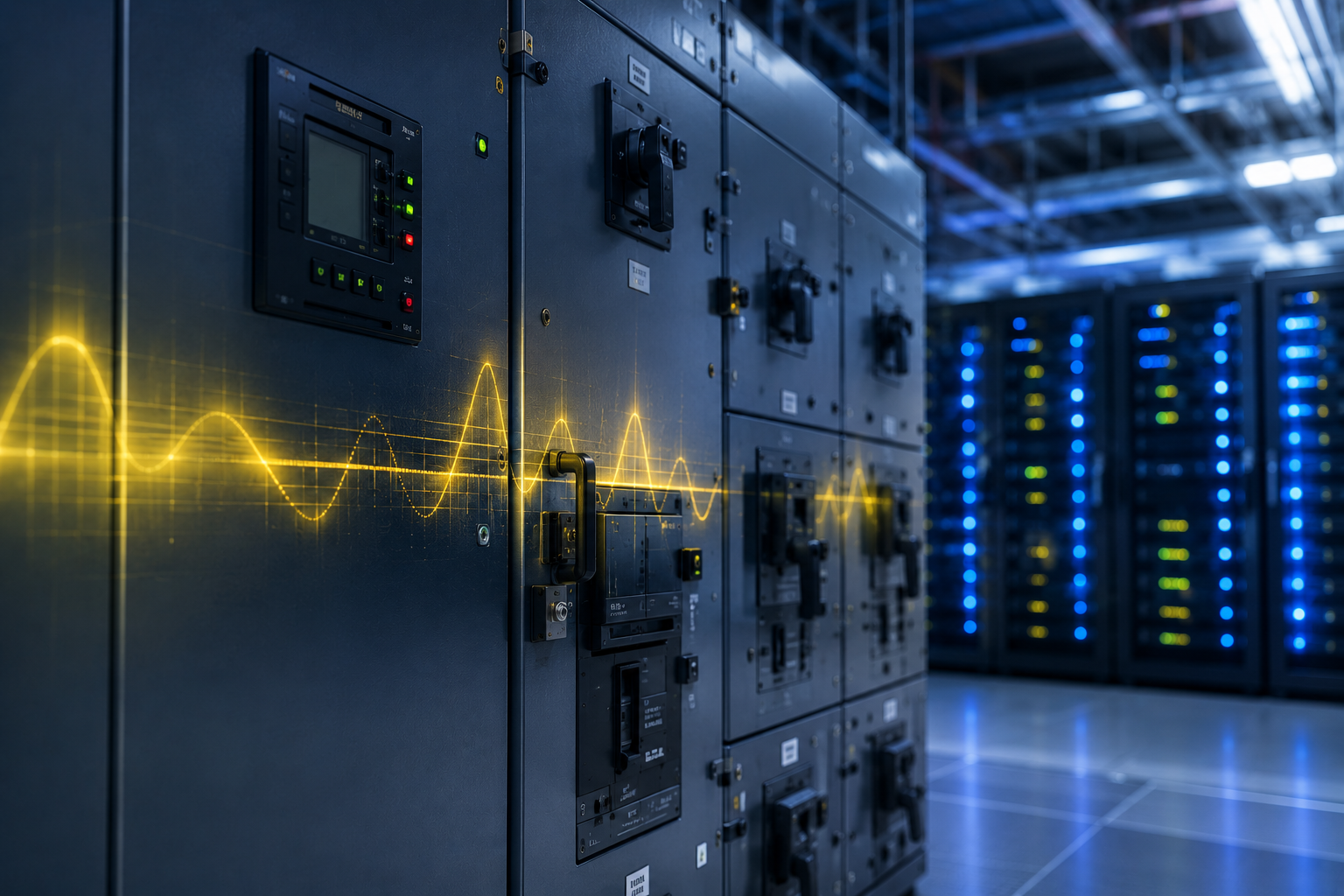
Gas engines will supply much of the sustained generation, while linear generators add another modular source of dispatchable power. The 430MWh battery energy storage system can respond rapidly to load steps, support black start, bridge generator starts, and reduce the need to keep every engine running at inefficient part load. Medium-voltage switchgear, protection, controls, and power-management software will bind the components into a single operating platform.
Speed to power shifts risk onto the site
The project is intended to avoid the long delays associated with conventional grid interconnection. Veolia cited an average wait of nearly five years for new US power projects in interconnection queues, a timescale that conflicts with the construction schedules pursued by AI infrastructure developers. Private generation can shorten the route to energisation, but it transfers generation, fuel, maintenance, and reliability responsibilities from the utility to the campus.
A public network pools generators and demand across a wide area, allowing outages to be covered by other assets. A grid-independent microgrid has a smaller portfolio and must carry enough redundancy to survive generator trips, maintenance, battery faults, and fuel-system interruptions. Achieving 99.9% availability depends on architecture, spare capacity, operating discipline, and rapid access to parts and specialist engineers.
Veolia expects the plant to require between 35 and 40 full-time on-site personnel operating around the clock. Automation will manage routine dispatch, but skilled operators remain essential for switching, work permits, alarm response, maintenance coordination, and recovery from abnormal events. A permanent workforce of that size turns private data-centre power into a continuous utility operation rather than a standby-generator fleet used only during outages.
Battery sizing is central to the design. At 430MWh, the system could theoretically support the full 350MW load for a little over an hour, although actual duration would be lower after reserve margins, conversion losses, and operating limits. Its most valuable function may be dynamic rather than long-duration: stabilising the microgrid while engines and linear generators follow large, fast-moving computing loads.
A new interface between utilities and data centres
Grid-independent operation reduces immediate demand on the local network, but it does not remove wider infrastructure consequences. The plant requires a large and dependable fuel supply, emissions permits, electrical equipment, cooling, water, and physical space. Its equipment supply chain competes with utilities for generators, transformers, switchgear, batteries, and commissioning expertise.
A future grid connection could allow the 350MW system to provide reserve or export surplus power, subject to technical and market rules. The current announcement is explicit that the campus will receive 100% of its power without relying on the traditional grid, making islanded reliability the first design priority.
Veolia is positioning the contract within its Data Center Resource 360 offering, which combines energy, water, and waste services for digital infrastructure. AI campuses couple electricity availability with cooling-water management, heat rejection, and environmental permitting. Operational responsibility across those systems may appeal to developers seeking one accountable infrastructure partner.
The New Albany project bypasses the grid queue by placing a 350MW power station behind one data-centre boundary. It must maintain availability, fuel efficiency, battery performance, and stable coordination across several generating technologies under rapidly changing load. Failures that a public grid would absorb across a wider system must be contained within the campus microgrid.