
IN Brief:
- Andrew Chilcott has joined AVK as vice-president of service.
- His remit covers standby generation, PowerPods, and prime power microgrids.
- AVK is building dedicated supply chain and engineering support for newer modular platforms.
AVK has appointed Andrew Chilcott as vice-president of service, with responsibility for expanding support across standby generation, modular power systems, and prime power microgrids.
Chilcott will continue developing the company’s established generator service operation while creating dedicated service functions for its PowerPods platform and microgrid portfolio.
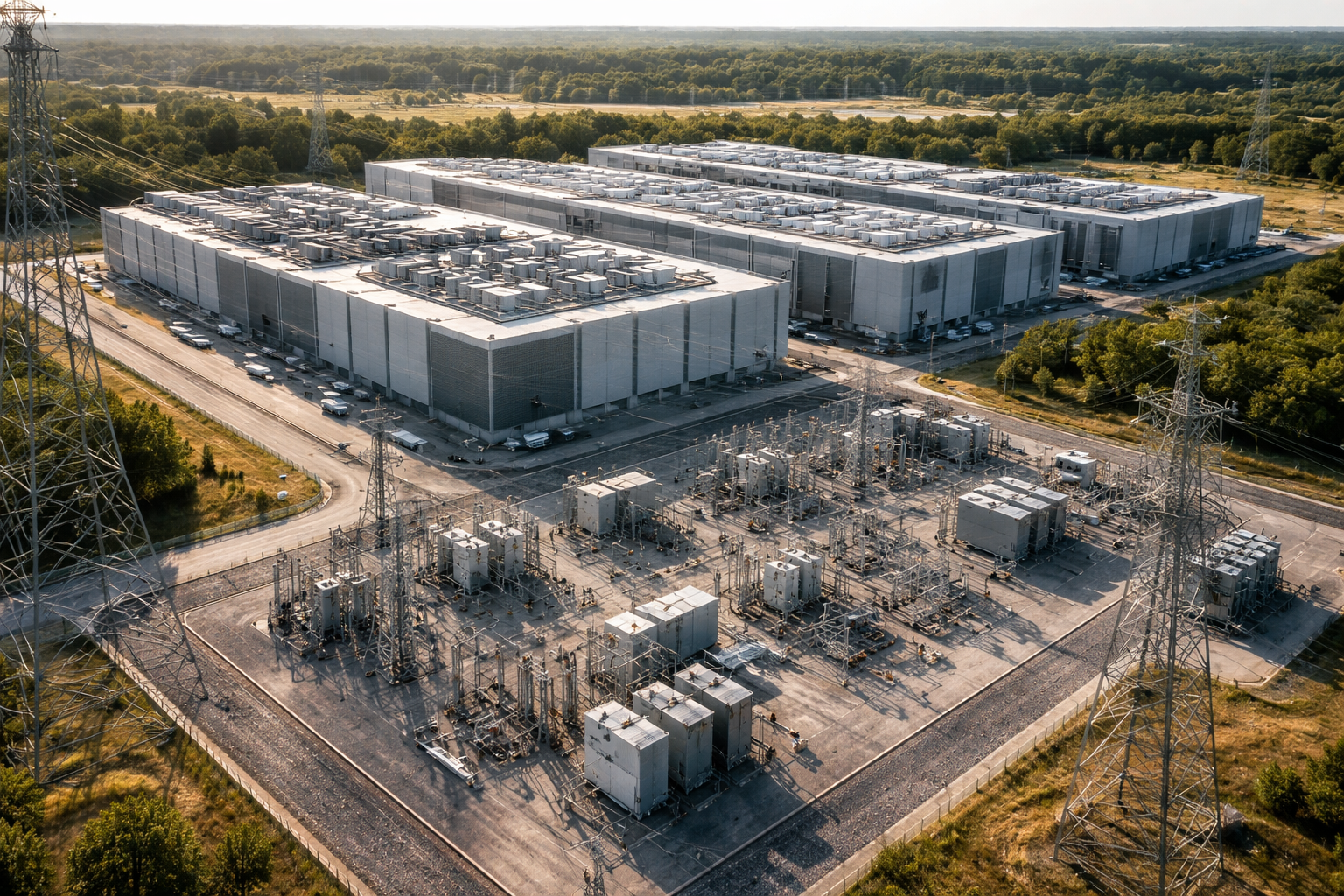
The first AVK prime power microgrid is operating at Pure Data Centres Group’s DUB01 campus in Dublin. The new role covers the supply chain, leadership structure, and engineering teams required to maintain that system and subsequent deployments.
PowerPods are modular power units intended to provide a repeatable route for deploying critical electrical capacity. Their service model must cover generating equipment, control systems, switchgear, fuel arrangements, emissions systems, communications, and interfaces with the wider site.
Chilcott joins after 16 years with CBRE Global Workplace Solutions, where he most recently served as global operations director within its data centre business.
He previously led the Yondr Group account across operational campuses in the UK, the Netherlands, Germany, Malaysia, the United States, and Canada. The account was supported by a workforce of approximately 150 people.
Earlier in his CBRE career, Chilcott built a new UK business unit team and almost trebled the operation’s size within two years. His career began with a four year electrical apprenticeship in heavy industry in South Wales.
He later moved into contracting with Mechwind, progressing to contract manager and part owner, before joining Norland, which was subsequently acquired by CBRE.
Chilcott first worked with AVK equipment in 2019 while supporting data centre generator contracts in the UK. His appointment places someone with contractor, facilities management, and customer side operating experience in charge of the service expansion.
Critical power extends beyond generator maintenance
Traditional standby generation service centres on ensuring equipment starts, accepts load, runs reliably, and remains available during a mains failure. Modern critical power systems have broader operating and control requirements.
Data centres may combine utility connections, generators, uninterruptible power supplies, batteries, switchgear, static transfer systems, load banks, fuel systems, emissions controls, and increasingly microgrid or onsite generation assets.
Each layer introduces interfaces that must be tested under normal, abnormal, and maintenance conditions. A generator can operate correctly in isolation yet fail to support the facility if controls, protection, synchronising, fuel supply, cooling, or switchgear sequences do not perform as intended.
Service organisations therefore need electrical, mechanical, controls, communications, and operational expertise. Fault finding can involve several suppliers, making ownership of alarms, data, and corrective action especially important.
Modular systems can shorten site construction and allow more equipment to undergo factory testing before delivery. Repeatable designs also support standard spares, documentation, and technician training.
Site conditions still introduce variation because utility characteristics, fault levels, load profile, redundancy philosophy, emissions limits, ambient temperature, acoustic requirements, fuel storage, and physical layout all influence the final installation.
Prime power microgrids add continuous duties that differ from emergency standby. Equipment may run for extended periods, follow demand, coordinate several generating units, manage storage, synchronise with the grid, and respond to market or network instructions.
Maintenance windows must be planned around redundancy. Taking one unit or switchboard section out of service changes the facility’s resilience and may require temporary generation, altered switching states, or restrictions on concurrent work.
The electrical environment around digital infrastructure is also becoming more demanding, with voltage instability and network disturbance creating additional protection requirements for data centre power systems.
Lifecycle planning gains importance as sites operate beyond their initial design phase. Controls become obsolete, generator duty changes, emissions requirements tighten, and replacement equipment may no longer match the original physical or electrical interfaces.
Service teams need accurate asset records, firmware control, maintenance histories, test results, and configuration information. Without those records, apparently minor upgrades can introduce incompatibilities or weaken a previously coordinated protection scheme.
Recruitment remains a constraint because critical power technicians require practical skills alongside an understanding of the operational consequences of their work. Training must cover equipment, switching, permits, incident response, change control, and communication with site operations.
Chilcott’s remit includes building those teams for PowerPods and prime power sites before the installed base becomes large. Establishing service capacity early can prevent project delivery from outpacing the ability to maintain, repair, and support equipment after handover.
The appointment reflects the value attached to aftercare within critical infrastructure. Initial capital delivery establishes the system, but resilience depends on testing, maintenance, parts, competent personnel, and disciplined response throughout its operating life.

