
IN Brief:
- Tractebel is managing delivery of VERBUND’s 50MW, approximately 123MWh Weissenthurm-Kettig battery project.
- The installation uses 165 battery cubes, 17 medium-voltage units, and a 300m connection to Westnetz’s 110kV network.
- Commissioning is scheduled for February 2027 following completion of cabling, switchgear, controls, and grid works.
Tractebel is advancing construction of VERBUND’s 50MW battery energy storage project at Weissenthurm-Kettig in Rhineland-Palatinate, Germany.
Providing approximately 123MWh of usable storage capacity, the installation will be capable of discharging for more than two hours at rated power. Commissioning is scheduled for February 2027 following a development and delivery programme that began in December 2024.
Tractebel is managing planning, permitting, construction supervision, and coordination with public authorities. The project occupies approximately 8,000m² and uses 165 outdoor battery cubes, each with a nominal energy capacity of around 745kWh.
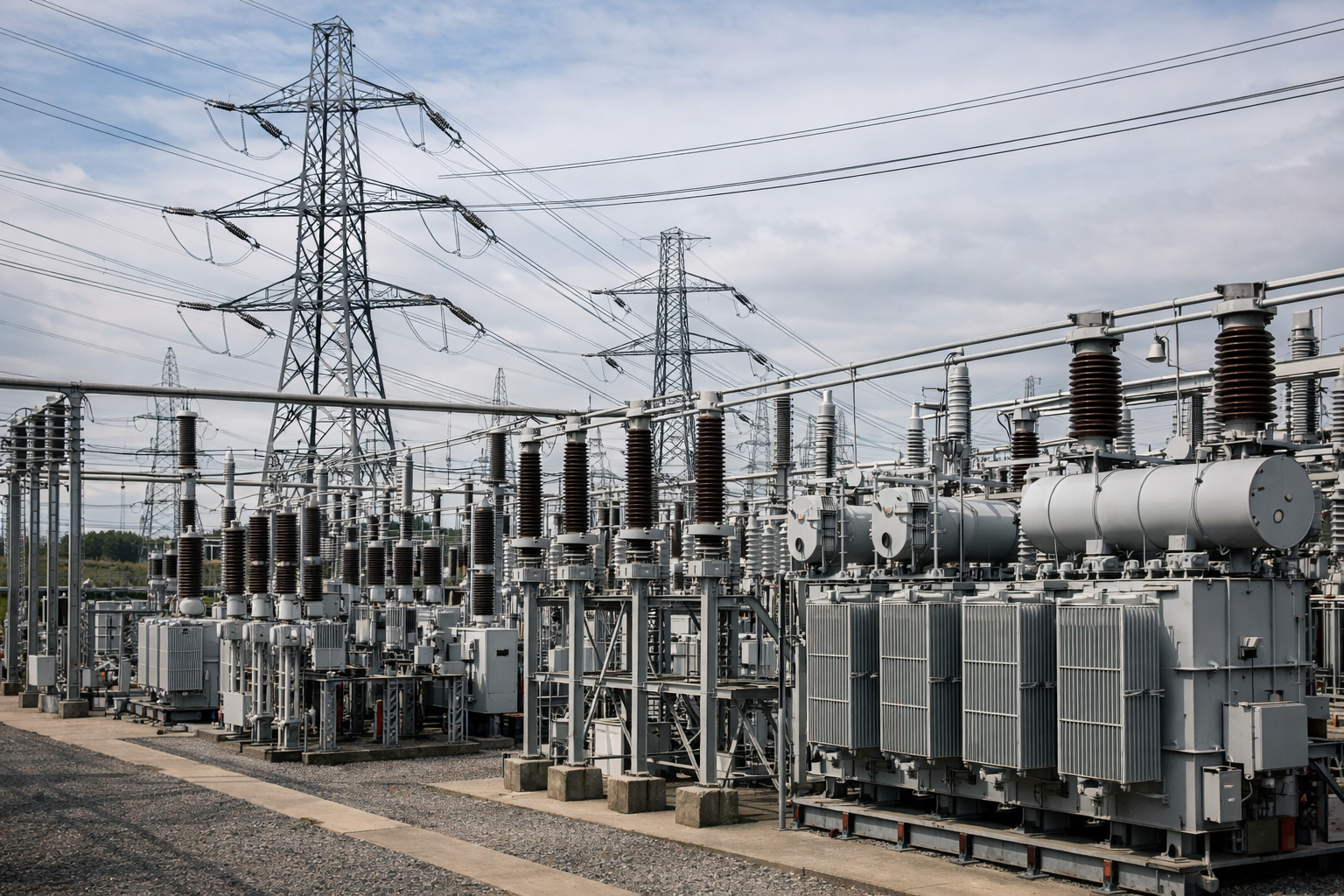
Civil works include approximately 2,750 tonnes of precast reinforced-concrete foundations, while 17 medium-voltage supply units will collect power from the battery equipment. Separate high- and medium-voltage buildings and a 300m cable route will connect the installation to Westnetz’s 110kV network.
External equipment has been installed, cable routes and ducts have been prepared, and cooling systems are operating temporarily to support the construction phase. Cabling is continuing as switchgear and control-cabinet installation proceeds alongside completion of the medium-voltage building and grid connection.
Permanent security and safety systems will include fencing, controlled access, CCTV, and lightning protection. Together with fire detection, electrical isolation, and emergency procedures, those systems will support an unmanned installation containing high-energy batteries, power conversion equipment, transformers, and network interfaces.
Once operational, the battery is expected to provide operating reserve and frequency support while trading in spot and intraday markets. The final service mix will depend on market qualification, available state of charge, connection conditions, and VERBUND’s dispatch strategy.
Grid-scale storage reaches the integration phase
Battery enclosures represent only one part of an installation of this size. Foundations, drainage, roads, cable trenches, earthing, auxiliary supplies, medium-voltage collection, protection, communications, control systems, fire arrangements, and the high-voltage interface account for a substantial share of the engineering and programme risk.
Connection at 110kV brings the project directly into a regional network environment where fault levels, voltage control, reactive-power capability, harmonics, and protection coordination must be demonstrated before energisation. Dynamic models of the inverters and plant controller will also need to show compliance during normal operation and system disturbances.
Commissioning will proceed through individual battery blocks, conversion units, transformers, switchgear, relays, meters, communications, and plant controls before the complete facility can participate in electricity markets. Response accuracy and sustained availability during testing will influence qualification for frequency and reserve services.
Modelling of the German power system has indicated that well-located storage could reduce balancing and network costs as renewable generation expands. The value available from Weissenthurm-Kettig will depend on its connection point, operating permissions, and response to actual system conditions.
With more than two hours of energy capacity, the project can operate beyond very short frequency events. It may shift energy between intraday periods, reserve capacity for balancing, and sustain output during longer imbalances, although each use competes for the same stored energy.
State-of-charge management must therefore reconcile contracted availability with market opportunity. Maintaining excessive reserves can reduce trading revenue, while aggressive cycling may leave insufficient capacity for an instructed service or accelerate degradation beyond the assumptions underpinning the warranty.
Thermal control will remain central to that balance because cell temperature affects available power, ageing, charging rate, safety, and auxiliary consumption. A battery exposed to German seasonal conditions requires heating, cooling, monitoring, and control systems that keep cells within their permitted range without consuming a disproportionate share of traded energy.
Fire and emergency planning must reflect the selected cell and enclosure design. Separation distances, detection, ventilation, suppression strategy, contaminated-water management, isolation, emergency access, and liaison with local fire services need to remain effective as equipment is maintained or replaced.
Equipment delivery and grid readiness must also remain aligned. Battery systems arriving before the high-voltage connection is available can create storage, warranty, and preservation problems, while a completed connection without commissioned batteries delays revenue and leaves network assets unused.
Germany’s storage pipeline is expanding alongside renewable deployment, capacity-market development, and persistent network congestion. As project volumes increase, proven delivery through construction, energisation, compliance testing, and market qualification will carry more weight than headline development capacity.
Weissenthurm-Kettig has entered the detailed electrical integration stage, where medium-voltage collection, high-voltage connection, control systems, battery equipment, and market interfaces must reach operational readiness together before the planned February 2027 commissioning.
Further project information is available from Tractebel.

