IN Brief:
- Siemens is investing €300m in German power distribution manufacturing capacity.
- The programme covers switchgear production in Frankfurt and a new supplier facility in Offenbach.
- Growth is being driven by electrification, data centres, e-mobility, industrial demand, and SF6-free grid equipment.
Siemens is investing €300m to expand power distribution system production in Germany, with new manufacturing capacity planned for medium-voltage equipment used in data centres, industrial electrification, e-mobility, and grid infrastructure.
The programme includes an expansion of the company’s switchgear factory in Frankfurt and a new supplier facility in Offenbach. Construction is scheduled to begin in July 2026, with the Offenbach facility due to start production in spring 2027 and an additional Frankfurt manufacturing site expected to be operational by the end of October 2027.
Up to 700 jobs are expected to be created by 2030 as the new capacity comes online. Siemens’ Frankfurt site has produced electrical switchgear for more than four decades, and the latest investment gives the plant a larger role in supplying equipment for a European power system under pressure from rising connection demand and more complex load profiles.
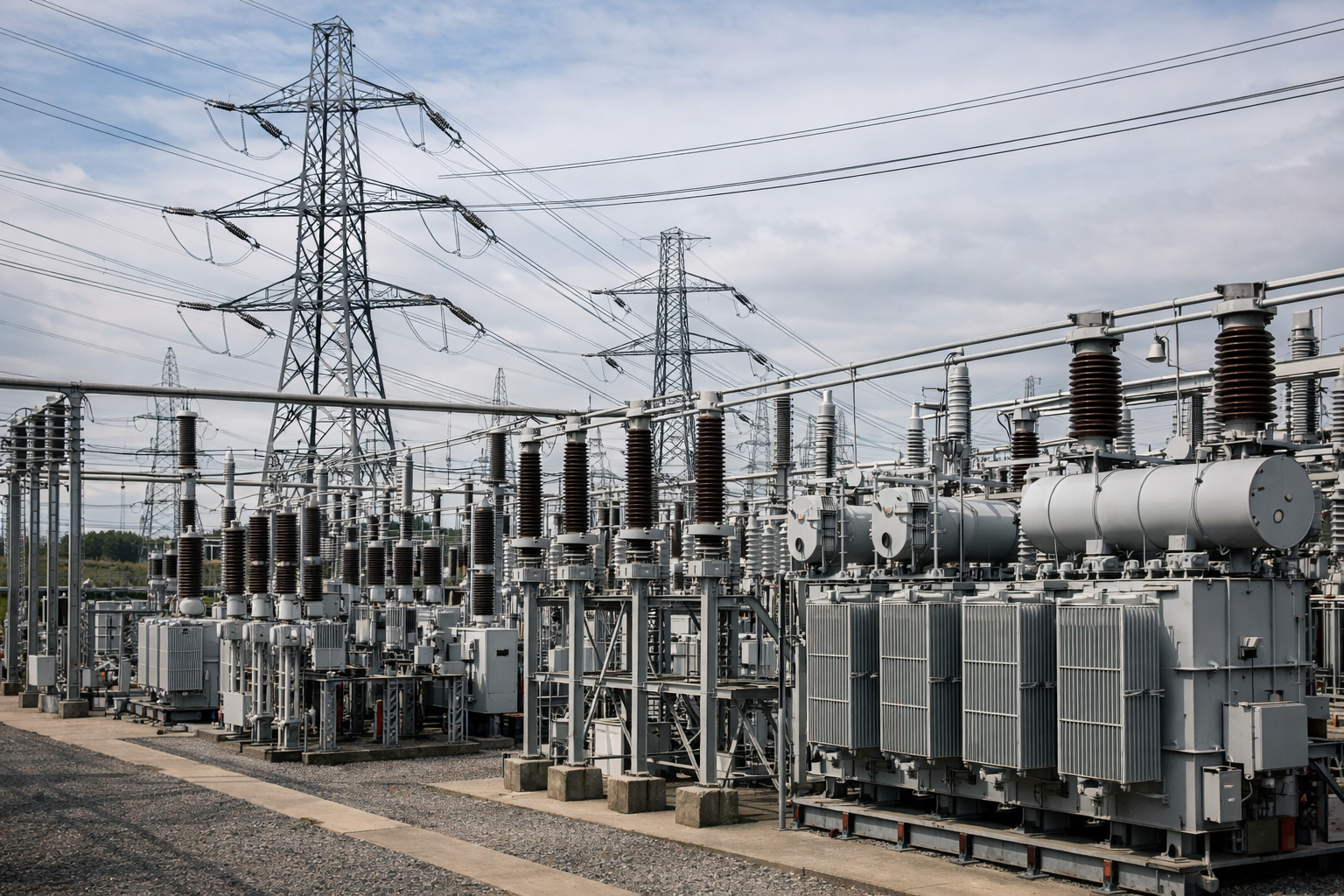
Medium-voltage switchgear is becoming strategically important as electricity demand concentrates around high-density sites. Data centres, semiconductor plants, battery factories, EV charging hubs, automated warehouses, and electrified industrial processes all depend on resilient distribution equipment, while network operators face tighter delivery windows and longer procurement lead times.
The investment also supports the expansion of SF6-free technology. Sulphur hexafluoride has been widely used as an insulating gas in switchgear, but its high global warming potential has accelerated the shift towards alternative insulation technologies. Utilities, contractors, and large electrical users are increasingly having to align procurement with emissions rules as well as performance requirements.
Siemens has connected the expansion to growth in its Smart Infrastructure business, where power distribution systems are being pulled into a wider electrification cycle. The equipment once treated as standard network hardware is now bound into the delivery of digital infrastructure, transport charging, industrial decarbonisation, and resilient building power systems.
Power equipment supply chains have been strained by simultaneous demand from grid reinforcement, renewable connections, storage projects, data centres, and electrified transport. Transformers, switchgear, protection systems, and cable infrastructure are no longer routine procurement categories. They can determine whether a project moves from consent and design into construction.
That constraint is also visible in high-voltage collaboration, including the wider AC grid alliance between Hitachi Energy and Samsung. Across voltage levels, equipment makers are moving to secure production depth, technology partnerships, and more resilient supply chains for grids that are being asked to expand faster than their historical investment cycles allowed.
Germany’s manufacturing base gives Siemens a strong platform, but the investment also reflects a broader European capacity issue. Electrification targets depend on physical hardware manufactured at scale, tested to grid standards, and delivered on predictable schedules. A shortage of switchgear can delay distribution upgrades, building connections, industrial sites, and charging infrastructure even where capital and planning approvals are in place.
The equipment mix is changing alongside the volume. Network customers increasingly require compact, digitally monitored, low-emission, and higher-performance systems capable of supporting active grid management. Remote monitoring, predictive maintenance, and integration with automated control systems are becoming part of the specification rather than optional enhancements.
Switchgear rarely attracts the public attention given to offshore wind auctions or transmission corridors, but it sits close to the point where electrification becomes deliverable. The transition depends on enough clean, reliable, and digitally integrated distribution equipment being available when projects are ready to connect.