IN Brief:
- Baltic Power has delivered electricity from its first commissioned offshore turbines into Poland’s national grid.
- More than 50 of the project’s 76 Vestas 15MW turbines have been installed, with offshore construction more than 80% complete.
- The 1.2GW wind farm is expected to generate about 4TWh annually once testing, certification, and licensing are complete.
Baltic Power has delivered electricity from its offshore turbines into Poland’s power system for the first time, beginning the staged commissioning of the country’s first operational offshore wind farm.
After completing the tests required to generate and export power, the first turbines transmitted electricity through the project’s offshore and onshore infrastructure to the new Choczewo substation. Individual generating units and electrical systems will continue through sequential testing as installation proceeds across the 1.2GW development.
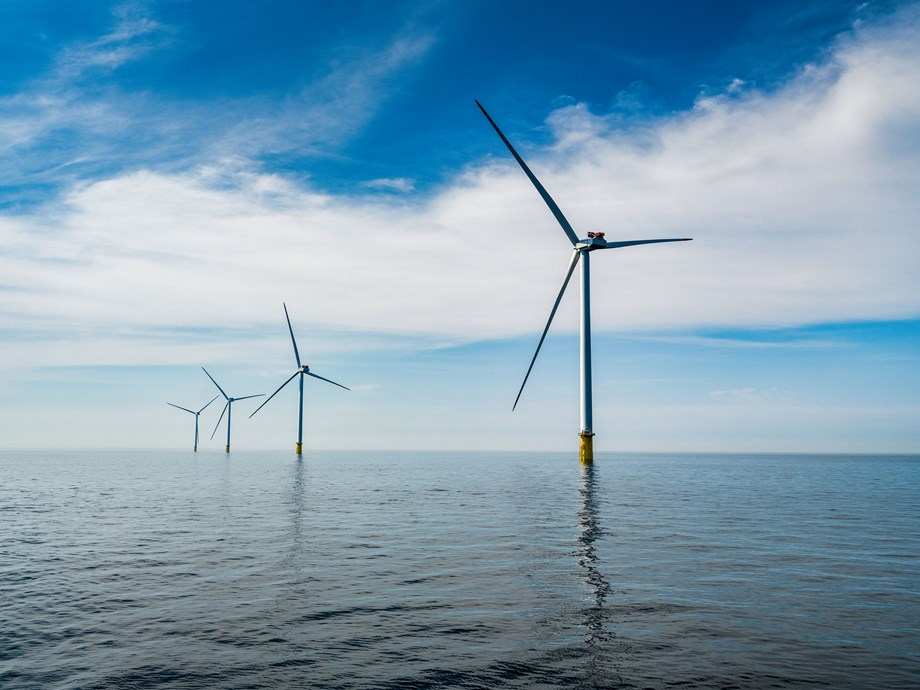
More than 50 of the planned 76 turbines have been installed approximately 23km off the coast near Choczewo and Łeba. Each machine has a rated capacity of 15MW, while the wider offshore construction programme is now more than 80% complete.
Electricity from the turbines passes through the inter-array cable system to two offshore substations, where voltage is transformed to 230kV for transmission ashore. At the onshore substation near Choczewo, the power is transformed again to 400kV before entering Poland’s national transmission network.
With more than 350km of offshore and onshore cables incorporated into the project, the first-power milestone confirms operation across a substantial electrical chain. All internal and export cables have been laid and buried, both offshore substations have been installed, and the onshore connection infrastructure is complete.
Before each turbine moves into normal operation, commissioning teams must verify electrical, mechanical, protection, communications, and remote-control functions. The full wind farm will also require independent certification, final inspections, operating permits, and a generation licence from Poland’s Energy Regulatory Office.
First power tests the complete connection chain
Delivering the initial megawatt-hours verifies far more than turbine output, since the process depends on turbine transformers, array cables, offshore substations, export circuits, onshore voltage transformation, protection systems, control platforms, and metering operating as one coordinated system. Faults or interface problems identified during staged commissioning can be corrected before the entire 1.2GW fleet is energised.
Bringing the project online in stages also limits the network impact of introducing a large block of new generation. Each turbine must demonstrate compliance with voltage, frequency, reactive-power, fault-ride-through, and control requirements, while the offshore substations and grid connection must respond correctly as output rises and operating configurations change.
Long-term operation will be supported by a subsea maintenance programme based around FON Energy’s role across the project’s underwater infrastructure. As construction winds down, the emphasis will move towards marine inspection, cable condition, fault response, turbine servicing, and management of the offshore electrical estate.
The operations base at Łeba has supported construction logistics since spring 2025 and will become the centre for long-term maintenance once commissioning is complete. A 24-hour offshore coordination centre already manages vessel movements, personnel transfers, and work activity across the site.
More than 100 vessels and over 5,300 crew members and contractors have participated in the installation campaign, with as many as 20 vessels operating daily within the 130km² project area. Marine coordination, heavy lifting, cable work, commissioning, and weather-dependent access all remain closely linked during the final construction phase.
Poland builds its offshore grid interface
Jointly developed by ORLEN and Northland Power, Baltic Power is expected to generate approximately 4TWh annually once fully operational. That output would represent around 3% of Poland’s present electricity demand, adding a significant low-carbon source to a system still undergoing a major transition away from coal.
The Choczewo connection forms part of a much wider transmission programme required for Poland’s offshore wind pipeline. Contracts for new transmission lines serving Baltic Sea generation reflect the extent of onshore reinforcement needed as additional projects move towards construction.
Offshore capacity cannot expand independently of the network that receives it, because substations, 400kV lines, reactive-power management, protection coordination, and system planning determine how much wind generation can be accommodated without increasing congestion or curtailment. Baltic Power’s first electricity is therefore an early operating test of infrastructure that will eventually support a much larger offshore fleet.
Although the use of 15MW turbines reduces the number of machines required for a project of this scale, it increases the capacity associated with each foundation, cable connection, transformer, and maintenance intervention. Component reliability and access planning become more consequential because the loss of one unit removes a larger block of generation than on earlier offshore projects.
Commercial operation will depend on completing the remaining turbine installation, terminating and testing every array connection, closing outstanding certification work, and securing the final licence. First power confirms that the principal electrical route is functioning; the remaining programme must demonstrate that the entire wind farm can deliver its rated output reliably into Poland’s transmission system.