IN Brief:
- The EU Modernisation Fund has allocated €2.5bn to 51 clean energy projects across 11 member states.
- The latest round covers grid upgrades, storage, district heating, energy efficiency, public transport electrification, and industrial decarbonisation.
- Total Modernisation Fund disbursements have reached €23.2bn since January 2021.
The European Commission and the European Investment Bank have allocated €2.5bn from the EU Modernisation Fund to 51 clean energy projects across 11 lower-income member states.
The fund is financed through revenues from the EU Emissions Trading System and supports energy-system modernisation in eligible member states. The latest disbursement takes total Modernisation Fund allocations to €23.2bn since January 2021.
The projects cover renewable energy, energy efficiency, electricity grid modernisation, greener district heating, energy storage, public transport electrification, and industrial decarbonisation. Romania received the largest allocation in the latest round at €636.9m, followed by Hungary at €552.3m and Czechia at €516.8m.
Further allocations include €233.9m for Greece, €180m for Poland, €169m for Lithuania, €109m for Croatia, €81.4m for Portugal, €44.8m for Estonia, €40m for Latvia, and €20.2m for Slovenia. Eligible Modernisation Fund countries are Bulgaria, Croatia, Czechia, Estonia, Greece, Hungary, Latvia, Lithuania, Poland, Portugal, Romania, Slovakia, and Slovenia.
The supported schemes include electricity grid upgrades in Hungary and Slovenia, battery energy storage installations in Romania, thermal energy storage for district heating in Poland, industrial energy efficiency improvements in Greece and Lithuania, district heating decarbonisation in Czechia and Croatia, public-building energy efficiency programmes in Portugal, and electric buses and charging infrastructure in Estonia and Latvia.
The spread of funded assets reflects the widening technical definition of clean energy infrastructure. Renewable generation remains central to decarbonisation, but the capital programme increasingly extends to the networks, storage systems, heating assets, transport charging infrastructure, and industrial upgrades required to make low-carbon electricity usable at scale.
Storage deployment is already moving in that direction, with a European agreement targeting faster battery and flexibility deployment through measures detailed at electricalnews.co.uk. The Modernisation Fund allocation adds public capital to the same infrastructure chain, particularly in markets where grid and flexibility investment has historically lagged renewable ambition.
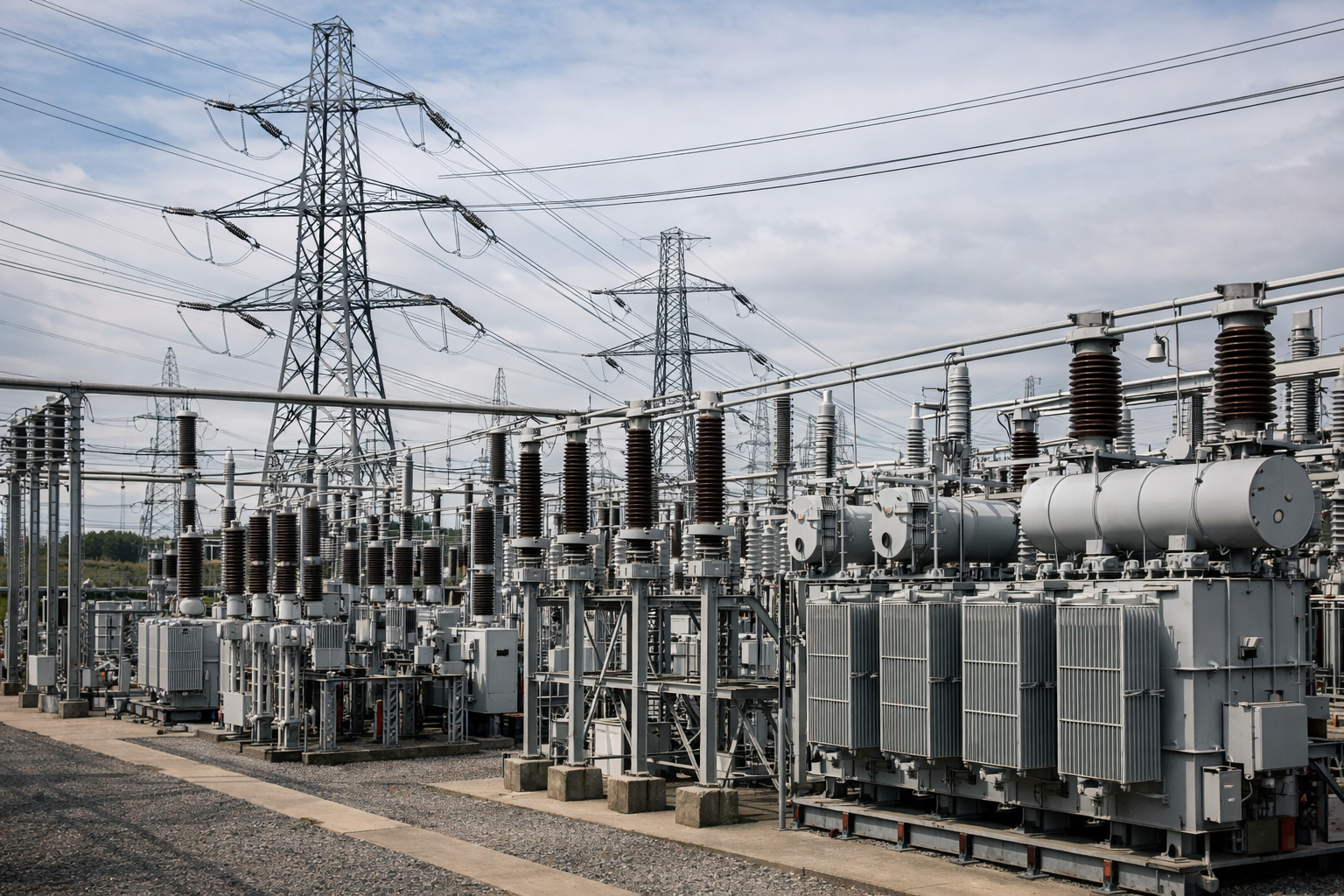
Grid modernisation is becoming a primary constraint across Europe. Higher renewable penetration places additional operational pressure on transmission and distribution networks, especially where legacy infrastructure was not designed around decentralised generation, large battery assets, electric bus depots, heat electrification, and industrial demand response.
The latest allocations also show how decarbonisation is moving beyond power generation into adjacent electrical systems. Electric bus charging requires depot upgrades, connection capacity, load management, and maintenance regimes. District heating decarbonisation brings thermal storage, electrified heat, and control systems into the energy infrastructure mix. Industrial energy efficiency requires metering, automation, process control, and often new electrical equipment at plant level.
Funding allocation is only one stage of delivery. Grid upgrades need permitting, procurement, transformers, switchgear, cabling, protection systems, civil works, outage coordination, and commissioning resources. Battery projects require connection offers, fire-safety design, market access, control platforms, and dispatch integration. Public transport electrification relies on power capacity arriving at depots before fleet transition schedules overrun infrastructure readiness.
The practical strength of the programme will depend on how quickly national authorities convert approved funding into contracted and energised assets. The projects best placed to move at pace will be those that align public finance, grid capacity, technical specification, procurement, and operating responsibility early in the programme rather than treating connection and commissioning as late-stage details.