IN Brief:
- Lightsource bp has secured planning approval for the Straboe Solar and Energy Storage Project in County Carlow.
- The scheme combines 102MW of solar PV with a 60MW battery energy storage system.
- The 320-acre project is expected to generate power equivalent to the annual consumption of 26,400 homes.
Lightsource bp has secured planning approval for the Straboe Solar and Energy Storage Project at Tullow in County Carlow, Ireland.
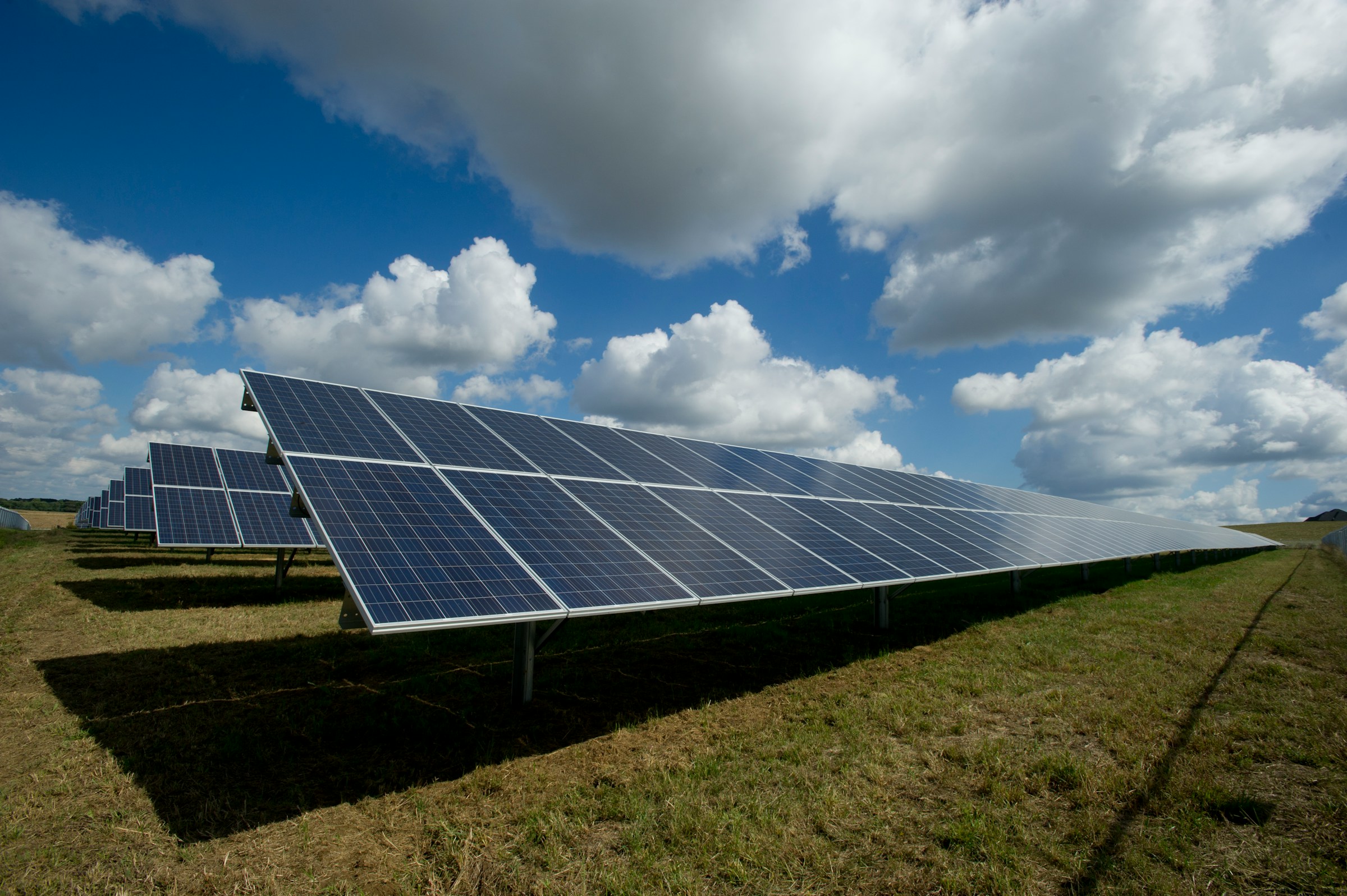
The hybrid development comprises a 102MW solar PV installation and a 60MW battery energy storage system across a 320-acre site. It is expected to generate enough low-carbon electricity to match the annual consumption of around 26,400 homes.
The project is expected to avoid about 47,100 tonnes of CO2e annually, equivalent to removing around 28,300 cars from the road each year. It will also contribute €1.2m in development funds to Carlow County Council.
Lightsource bp’s Irish portfolio now includes 386MW of solar PV and 451MW of battery energy storage. The Straboe project has been designed following environmental assessments covering landscape and visual impact, heritage and archaeology, ecology, ornithology, and flood risk.
The development includes biodiversity enhancements across the site and follows community engagement that included a public information event at Grange GAC Club Hall. A Community Benefit Fund will support local initiatives, quality-of-life improvements, growth and development opportunities, and energy-awareness activity.
Hybrid solar and storage projects are becoming more prominent in Ireland as grid connection, system stability, and renewable output timing move closer to project economics. Solar generation can provide large volumes of daytime electricity, but its system value depends on how effectively that output can be absorbed, exported, or shifted through storage.
The Straboe approval adds to an Irish flexibility pipeline that includes the Rathrush storage plan, where long-duration storage proposals are being shaped around system balancing requirements and connection availability. Further details on that project are available at electricalnews.co.uk.
Battery energy storage can support renewable integration by shifting output, reducing local constraint risk, providing fast response, and supporting system services. Co-location with solar also allows the grid connection, control systems, and operational strategy to be planned as a single hybrid asset rather than as separate generation and storage projects.
Ireland’s target of 80% renewable electricity by 2030 places heavy demands on grid investment, connection reform, storage, demand flexibility, and dispatchable backup. Large renewable projects are increasingly judged by their ability to operate inside a constrained and rapidly changing power system, rather than by generation capacity alone.
Straboe’s 60MW BESS gives the project a flexibility component from the outset. That avoids the retrofit question faced by older solar schemes and enables grid compliance, control architecture, battery safety, metering, and route-to-market arrangements to be considered during the main delivery phase.
The approval still leaves substantial engineering work ahead. Grid connection, procurement, construction sequencing, inverter selection, battery integration, fire-safety systems, commissioning, and commercial optimisation will determine when the project becomes an active system asset.
Planning consent moves Straboe from development proposal into delivery pipeline, with the next stage centred on the coordination of civil works, electrical balance of plant, connection readiness, and long-term operation. Ireland’s renewable targets will ultimately be delivered through that conversion of consented assets into connected assets able to operate within the grid conditions they were designed for.