IN Brief:
- Fabrication has started in Wallsend on the offshore substation jacket for ScottishPower Renewables’ 960MW East Anglia TWO wind farm.
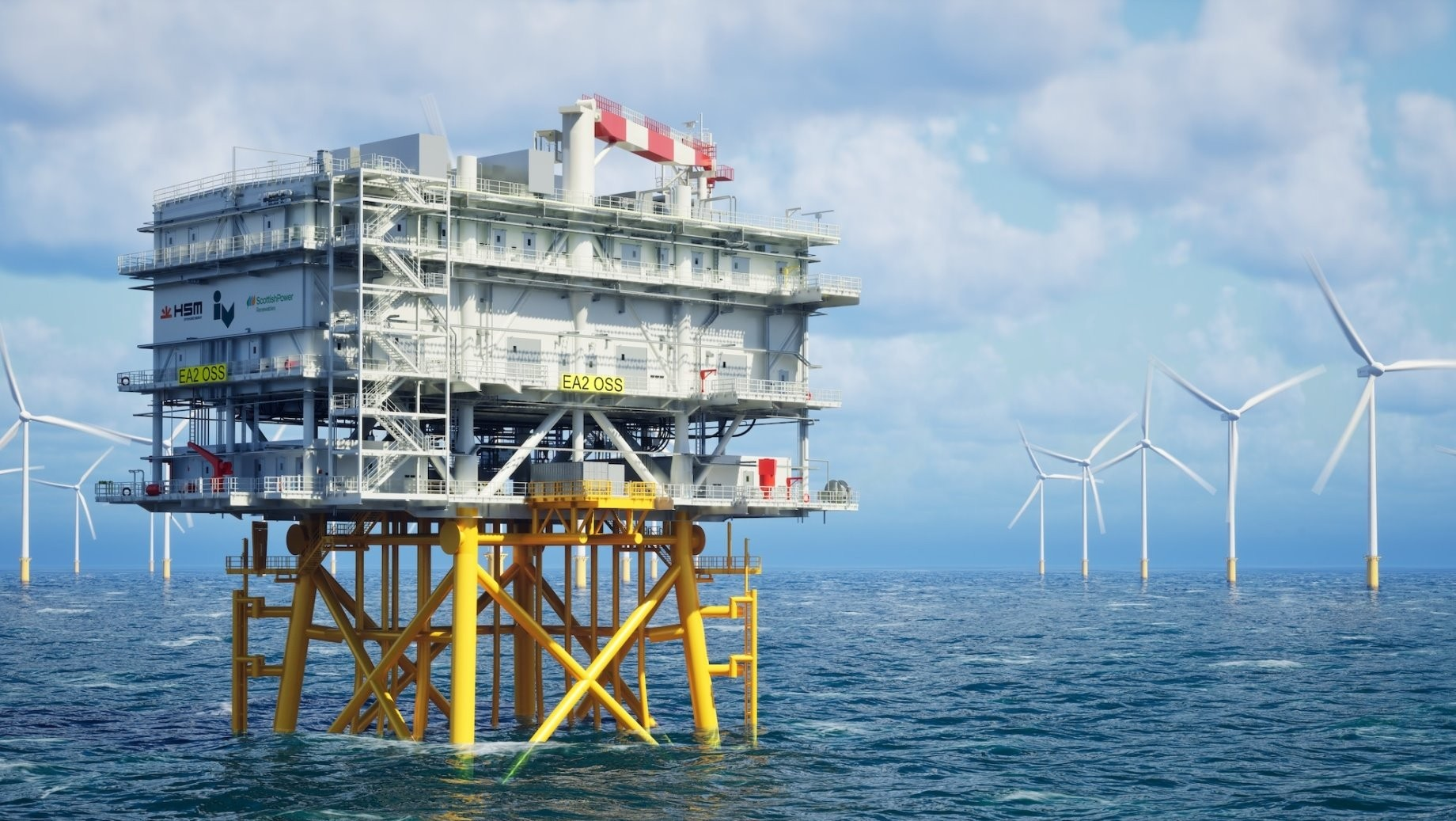
- The structure will support a 5,100-tonne offshore high-voltage substation that will collect output from 64 turbines before export to the grid.
- The project is moving from contract award into heavy manufacturing ahead of offshore installation in 2027 and planned operation by the end of 2028.
Steel cutting has started at the Smulders yard on the River Tyne for the offshore substation jacket foundation that will support ScottishPower Renewables’ East Anglia TWO wind farm. The fabrication package is worth more than £60 million and covers a four-legged lattice jacket standing about 58 metres high, due to be installed in the southern North Sea in 2027.
East Anglia TWO is planned as a 960MW offshore wind project around 33km from the Suffolk coast at its nearest point off Southwold and about 37km from Lowestoft. The scheme is currently configured around 64 turbines and an offshore high-voltage substation that will gather output from the array and export power to shore, with commercial operation targeted for the end of 2028.
The jacket now entering production in Wallsend will form the base for a topside weighing around 5,100 tonnes. HSM Offshore Energy, part of the Smulders group, was awarded the EPCIC contract for the offshore substation and jacket in 2025, following earlier East Anglia TWO foundation awards covering 64 monopiles and 64 transition pieces. The wider programme is therefore being executed across multiple yards in the UK and the Netherlands rather than through a single fabrication location.
That broader manufacturing footprint is now becoming visible in physical output. ScottishPower has already lined up Great Yarmouth as the pre-assembly port for turbine components, while the Newcastle jacket package brings one of the project’s heaviest steelwork elements into fabrication on a UK yard. With the offshore substation due to sail in late 2027, the programme leaves limited slack between completion, load-out, transport, and installation.
For the Tyne, the contract adds another major offshore wind structure to a site that has expanded quickly in recent years. Smulders has invested more than £80 million in its UK facility since 2023, and the Wallsend yard is now focused on offshore wind foundations and final assembly work. The site’s former life as a colliery underlines how much of the UK’s offshore wind supply chain is now being built on repurposed industrial land.
East Anglia TWO secured a Contract for Difference in Allocation Round 6 in September 2024, and the next phase is about turning that policy support into installed hardware, port activity, and grid-connected generation. The start of steel cutting in Newcastle does not complete that shift, but it does mark the point at which East Anglia TWO becomes a fabrication programme rather than a contracted pipeline.