IN Brief:
- Tion Renewables will supply solar power to IONITY’s German high-power charging network from 2027.
- The long-term agreement gives IONITY renewable electricity supply for charging infrastructure across Germany.
- EV charging operators are increasingly linking power procurement, grid capacity, charging hardware, and software control.
Tion Renewables and IONITY have signed a long-term agreement to supply renewable electricity to IONITY’s high-power charging network in Germany.
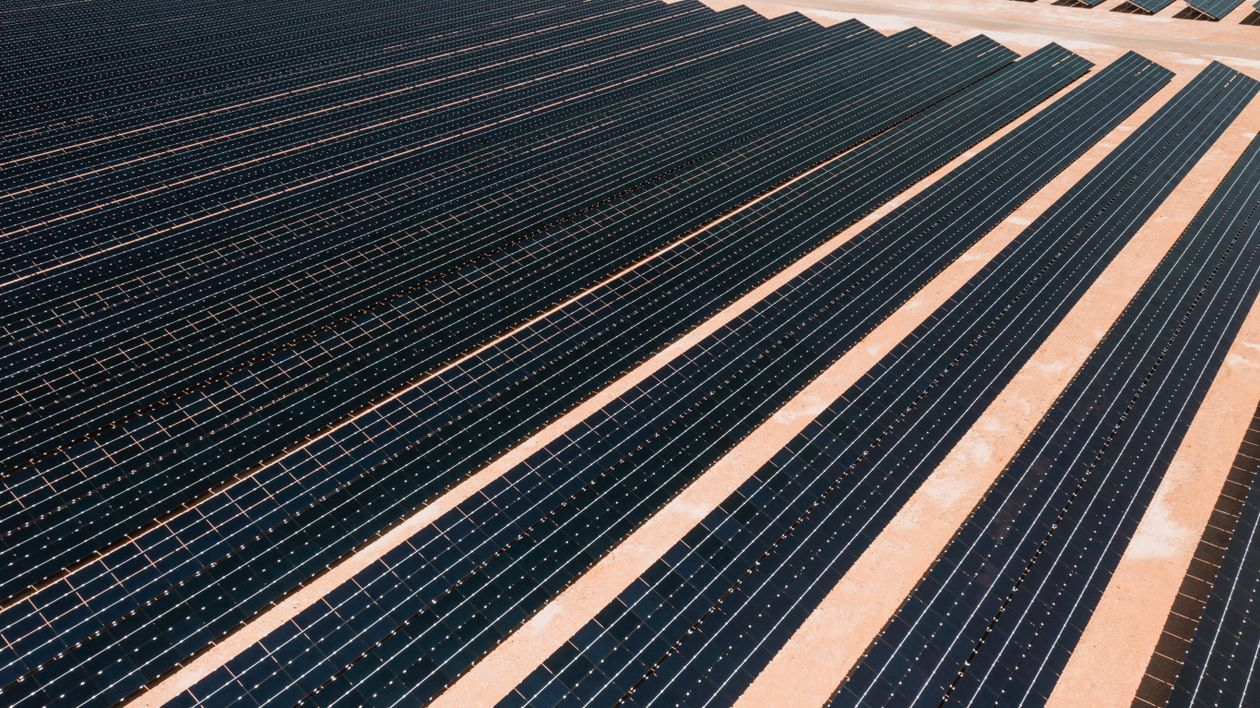
Under the agreement, Tion Renewables will supply solar power to IONITY’s German charging sites from 2027. The arrangement is designed to support IONITY’s growing electricity demand and provide long-term planning certainty for both companies.
IONITY operates a pan-European ultra-rapid charging network open to electric vehicles from all brands. Its network spans 24 European countries and includes more than 6,000 charging points. The company’s charging infrastructure supports capacities of up to 600kW, placing its sites among the higher-load assets in public EV charging.
Tion Renewables is a Munich-headquartered independent power producer backed by EQT Group. The company invests in, builds, operates, and optimises solar PV, onshore wind, and battery energy storage systems across selected European markets, with a target of 3GW by 2030.
The agreement brings together two infrastructure sectors that are becoming increasingly linked. High-power charging networks require reliable grid connections, predictable energy procurement, suitable site layouts, load management, and electrical equipment capable of handling sharp demand peaks. Renewable generators, in turn, need credible offtake arrangements, price certainty, and demand profiles that support long-term investment cases.
A solar supply contract does not remove the technical demands of charging infrastructure. A large charging hub can resemble an industrial electrical load, with power electronics, transformer capacity, cable sizing, protection coordination, thermal management, metering, load balancing, and energy management all forming part of the installation model.
Public charging development in the UK is running through similar planning and grid-interface questions, including Fastned’s Hanger Lane charging hub, where site design, local approval, and electrical capacity sit alongside charger deployment. The Tion and IONITY agreement sits further upstream in the same chain, dealing with the renewable power supply that supports a high-power charging network across a major European market.
The direction of travel across the charging sector is changing. Operators are no longer judged only on charger count or advertised peak power. Commercial performance increasingly depends on site acquisition, connection capacity, utilisation, uptime, energy cost, software control, and the ability to manage demand without exposing the business fully to short-term electricity market volatility.
Germany is a major test case for that model. The market combines high motorway traffic, a large automotive sector, strong renewable deployment, and grid congestion in some regions. High-power charging networks therefore need to be planned as electrical infrastructure rather than roadside equipment, with decisions around procurement, connections, power quality, and control made early in the project cycle.
Solar supply introduces its own matching challenge. PV output is strongest during daylight hours, while charging demand varies by site, season, route, fleet behaviour, and driver dwell time. Aligning renewable generation with high-power charging demand can involve contracting, settlement, forecasting, storage, and flexibility arrangements, even when the physical electricity is delivered through the wider grid.
The agreement also reflects a wider convergence between renewable developers and large electricity users. Industrial sites, datacentres, transport operators, and charging networks are increasingly using long-term renewable power arrangements to manage cost exposure, carbon reporting, and energy availability. For renewable developers, those agreements can support portfolio growth by creating clearer offtake routes.
IONITY’s charging network already uses renewable electricity. The agreement with Tion provides a defined German solar supply route from 2027, while giving Tion additional demand for its generation portfolio. As charging loads rise across Europe, similar arrangements are likely to become more common, particularly where operators need both renewable supply and greater certainty over the power feeding high-load infrastructure.
The next phase of EV charging deployment will be shaped as much by electrical integration as by charger rollout. Higher power ratings, larger charging hubs, depot electrification, fleet operations, and motorway corridors all increase the need for coordinated decisions across grid connection, energy procurement, power electronics, storage, and digital control.