IN Brief:
- UK Power Networks and NESO have completed a first live MW Dispatch, using distribution-connected assets to help manage transmission constraints.
- The service links control rooms through cloud and API-based dispatch systems, giving smaller generators and batteries a route into constraint management.
- In constrained regions, the model is intended to bring forward new connections and reduce reliance on slower conventional balancing routes.
UK Power Networks and NESO have completed a first live dispatch under the MW Dispatch service, moving a long-developed transmission-distribution coordination model from trials into operational use.
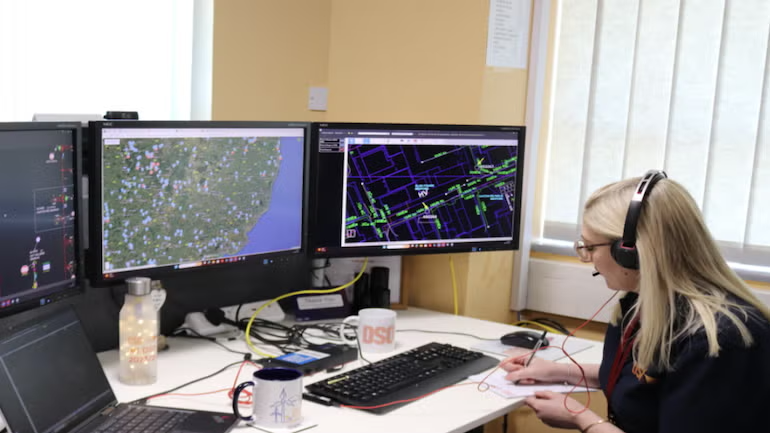
The service allows smaller generators and battery assets connected to distribution networks to be dispatched specifically to relieve transmission constraints. Instead of relying only on larger Balancing Mechanism units, NESO can send an instruction through UK Power Networks’ dispatch platform, with cloud and API-based integration linking the two control rooms and the participating distributed energy resources.
The model has been in development for several years and was opened to market in 2025. UK Power Networks says it can accelerate the connection of more than 1.5GW of generation and battery projects in the transmission-constrained South East by 10 to 15 years, while a 2024 service overview identified 50 customer projects in the regional pipeline and five grid supply points at the centre of the initial rollout.
The commercial logic is as important as the control-room logic. Assets behind a transmission bottleneck can be brought into a coordinated service without the full market and IT overhead associated with Balancing Mechanism participation, while still receiving constraint payments when they are instructed to turn down. Eligible assets can register through NESO’s single market platform, although onboarding can still take several months.
The immediate significance is not the volume moved in a single dispatch event, but the precedent it sets. Smaller, local assets are now being used directly to manage transmission bottlenecks, with visibility and control shared across network layers rather than treated as separate operational problems.