IN Brief:
- The UK has paired a new fusion strategy with a construction partner appointment for West Burton, moving STEP further from programme development into physical delivery.
- The ILIOS consortium will lead redevelopment works, site infrastructure, early enabling activity, and construction integration for the prototype fusion plant.
- West Burton is being positioned as a long-term fusion hub, with construction, skills, and computing investment intended to build a domestic supply chain around commercial fusion.
Government has moved the STEP fusion programme into a more delivery-focused phase, combining a new national fusion strategy with the appointment of a construction partner for West Burton in Nottinghamshire.
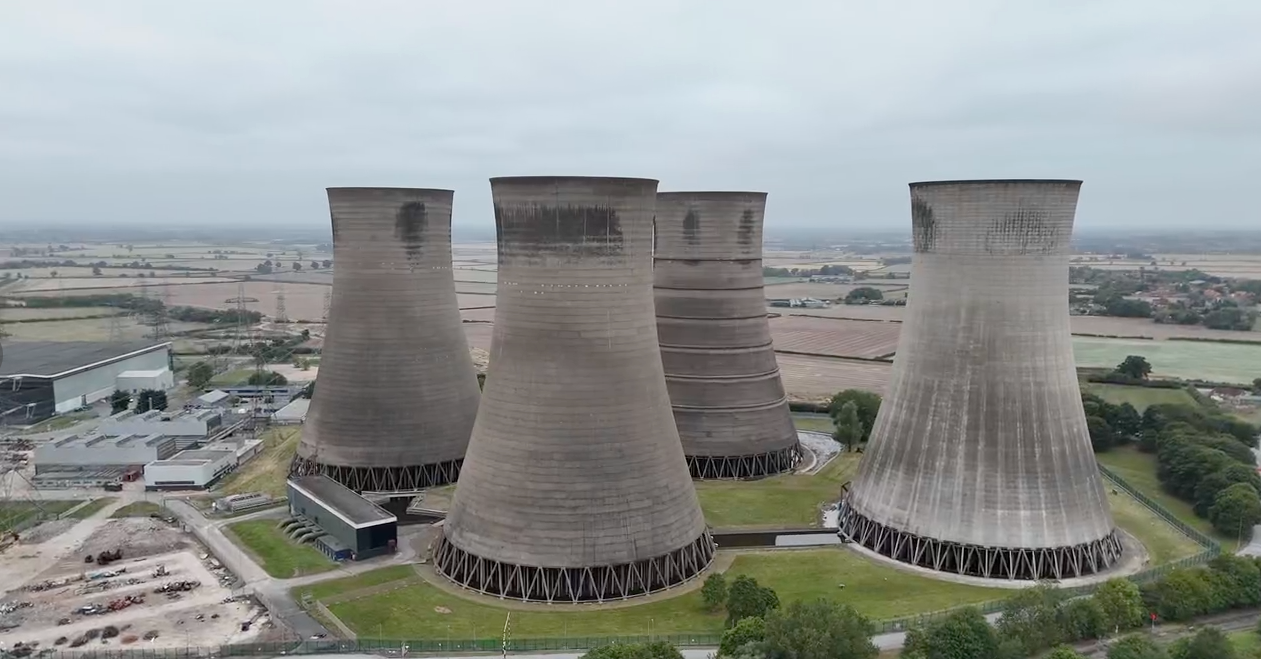
The site of the former coal-fired West Burton Power Station is now set for a redevelopment programme worth about £200 million, with the work intended to prepare the location for the UK’s prototype fusion power plant. At the centre of that next phase is STEP Fusion, the programme being delivered by UK Industrial Fusion Solutions, which is moving to the new name UK Fusion Energy as its focus shifts from programme formation to plant delivery.
ILIOS, the newly appointed construction partner, is led by a joint venture between Kier and Nuvia, with AECOM, AL_A, and Turner & Townsend also involved. Its role covers principal design-and-build delivery at the West Burton site, early enabling works, construction sequencing, logistics, civil engineering, buildings, and wider site infrastructure.
STEP is no longer being framed simply as an R&D exercise. The programme is being set up as the first step in building a commercial fusion capability in the UK, with West Burton intended to function as both a prototype plant location and a centre for industrial activity around the technology. The former power station site gives the programme a grid-connected, energy-industrial location with an established workforce catchment across Nottinghamshire, Lincolnshire, and South Yorkshire.
The government’s wider Fusion Strategy sets that site announcement within a broader industrial programme. Alongside the West Burton contract, it has confirmed support for a market framework for fusion electricity, skills investment, and a £45 million commitment to Sunrise, the AI-focused supercomputer intended to accelerate fusion design, modelling, and operations. The strategy is also tied to a wider aim of supporting more than 10,000 UK jobs by 2030 across the fusion ecosystem.
For West Burton itself, the immediate impact is more concrete. Peak redevelopment activity is expected to support around 8,000 on-site jobs, while local suppliers are being drawn into the programme earlier than would normally happen on an emerging energy technology project. That combination of enabling works, design integration, and supply chain development is one of the clearest signs yet that fusion is being treated as an infrastructure delivery challenge, not just a laboratory ambition.
The programme still carries long technical timelines. STEP remains targeted for operations in 2040, and fusion’s commercial case will continue to depend on advances in materials, fuel cycle engineering, power extraction, and plant maintainability. Even so, the move at West Burton is significant because it starts to put those engineering ambitions onto a live site with a named delivery team, a defined redevelopment budget, and a government strategy designed to bring private capital into the sector.
That does not make commercial fusion imminent, but it does make the UK’s intention harder to dismiss. At West Burton, the shift from coal generation to fusion development is no longer being described as a distant possibility. It is becoming a construction programme.