IN Brief:
- Sensata’s new FaultBreak contactor combines a high-voltage contactor with resettable passive fault interruption in a single device for EV applications.
- The unit has been validated for repeated 16 kA breaks at 1 kV and is aimed at reducing system complexity by eliminating pyrofuses and associated hardware.
- Sensata is positioning the product for passenger vehicles, trucks, and buses as EV platforms move toward higher-voltage architectures and tighter packaging constraints.
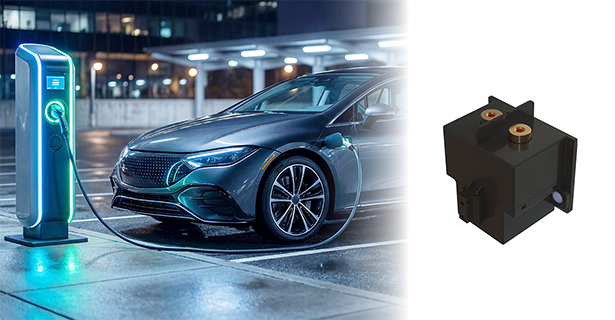
Sensata Technologies has introduced FaultBreak, a new automotive high-voltage DC contactor intended to combine switching and fault protection in a single unit for electric vehicle power systems.
At the centre of the launch is a design that merges the functions of a conventional contactor and a passive fuse, allowing the device to disconnect during fault and short-circuit events without relying on external detection electronics. Sensata said the unit has been validated for repeated breaks of 16 kA at 1 kV, while the production-series specification lists a 600 A rated load current, 850 VDC rated switching voltage, and 1000 VDC maximum switching voltage.
That specification matters because high-voltage EV architectures are steadily becoming less forgiving of added components, duplicated protection hardware, and unnecessary losses. In standard layouts, contactors, pyrofuses, busbars, and low-voltage harnesses all add packaging complexity and create additional interfaces that must be managed thermally and electrically. FaultBreak is intended to reduce that parts count by more than 50%, while also cutting weight and lowering contact resistance through a hermetically sealed construction.
Sensata is also leaning on reset capability as a differentiator. Traditional pyrofuse protection is typically single-use, which means a temporary or nuisance event can leave a vehicle immobilised until hardware is replaced. FaultBreak is designed to reset after recoverable triggers, which shifts the component from sacrificial protection toward a reusable protection element. For system designers, that has implications not only for uptime, but also for serviceability, warranty exposure, and the logic used around pack isolation.
The company is targeting passenger car, truck, and bus platforms, and the product can be deployed in dual-contactor configurations where additional redundancy is required. It is also rated to IP67 and is positioned as a compact device that does not require extra cooling or special ancillary equipment, which will appeal where space inside battery enclosures or high-voltage junction assemblies is already tight.
For EV electrical architecture, the launch points in a clear direction. Protection hardware is being asked to do more with fewer components, lower losses, and faster reaction times, especially as operating voltages climb and current events become harder to manage. FaultBreak does not remove the underlying challenge, but it does show where the component stack is heading: fewer boxes, fewer links, and less tolerance for protection systems that only work once.