IN Brief:
- Elucian has launched IP65-rated EV boards for UK charging installations, extending its single-phase consumer unit range.
- The boards combine metal enclosures, surge protection, and pre-fitted RCD or RCBO options to simplify compliant installation.
- Dedicated EV distribution hardware is becoming more common as charger loads, outdoor siting, and wiring requirements become more demanding.
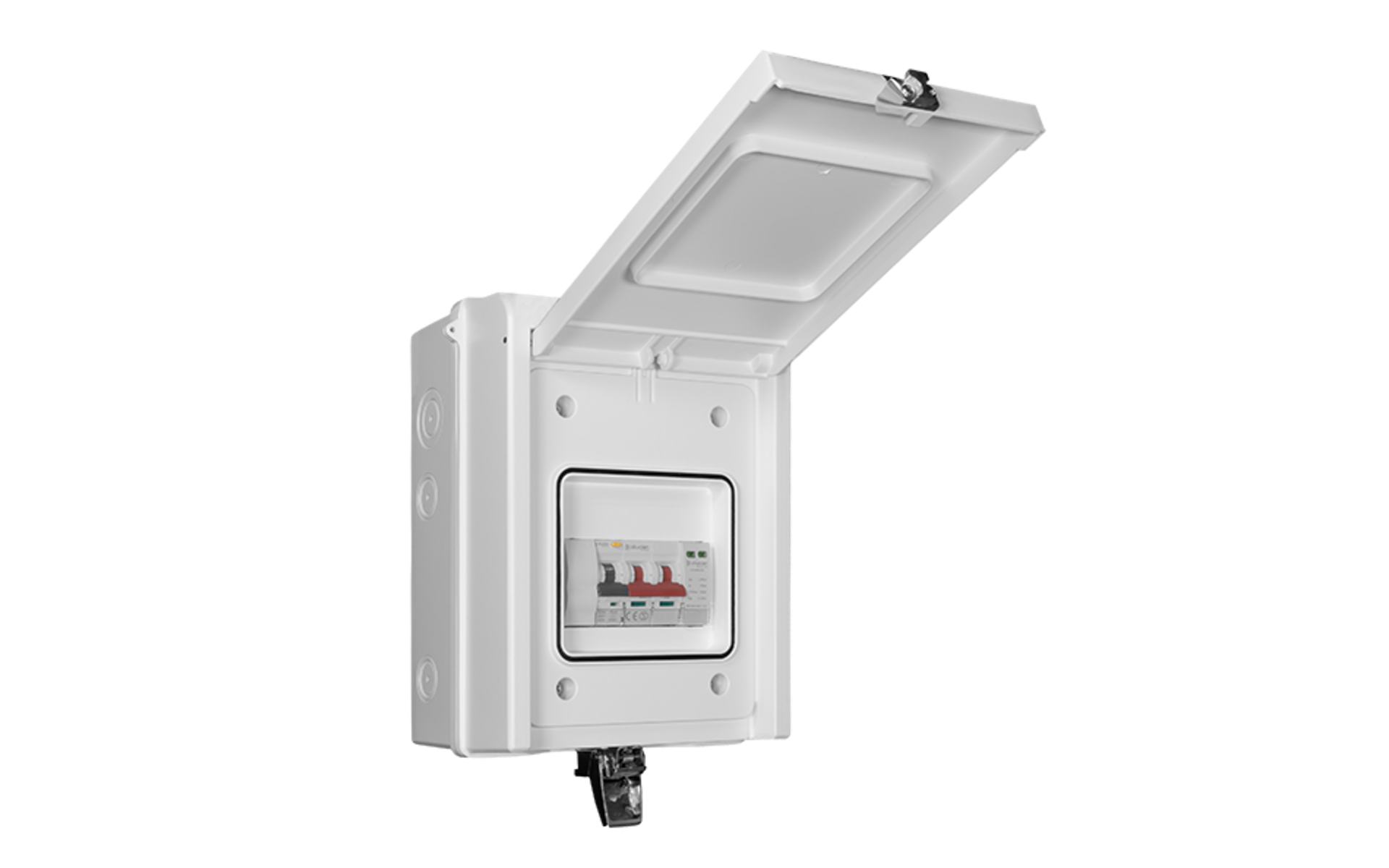
Elucian has expanded its consumer unit range with a new series of IP65-rated EV boards aimed at the growing volume of electric vehicle charging installations across the UK.
The new units are built as dedicated EV boards rather than general-purpose consumer units adapted at the point of install. That distinction matters because EV charging has brought a specific set of electrical and compliance requirements into what is often a fairly tight installation envelope: high continuous current, fault protection, surge protection, isolation, and, in many cases, outdoor or semi-exposed mounting conditions.
Elucian’s new range covers several five-way, single-phase configurations. Options include boards with a 100A main switch, surge protection device, and either a 32A or 40A B-curve RCBO, alongside a version fitted with a 63A 30mA Type A RCD, SPD, and 40A B-curve MCB. Each board is supplied with one free way, giving installers some headroom for future additions rather than forcing a like-for-like fit around a single charging circuit.
The physical specification has clearly been pushed towards exposed applications. The boards use metal enclosures, carry an IP65 ingress rating, and are listed as compliant with BS 7671. Elucian is also highlighting variable knockout arrangements, rear knockouts, and a mains switch tail clamp, all of which point to a product built around quicker cable entry and cleaner termination work. The manufacturer lists a 100A rating on the main switch variants and a 10-year enclosure warranty.
There is also a durability angle. Scolmore states that the equipment has third-party approval for operation from -25°C to +40°C, with enclosure materials selected for resistance to sunlight exposure and UV degradation. That is relevant for EV charging work, where board location is often driven by charger position, cable routes, and building layout rather than ideal internal plant space.
The wider point is that EV infrastructure is pushing low-voltage distribution products into more specialised territory. Installers are being asked to deliver safe, compliant charging circuits in a broader range of locations, and pre-configured boards reduce the number of decisions and component combinations required on site. That does not remove the need for good design or proper verification, but it does make the hardware more aligned with the job.
As charger volumes continue to rise, more manufacturers will end up segmenting their ranges in the same direction. General consumer units still have their place. EV work increasingly wants something more specific.