IN Brief:
- UK LV and MV switchgear capacity is being pulled hard by data centre demand.
- Commercial building packages are seeing selective quoting, shorter validity, and higher deposits.
- Earlier design freeze and long-lead procurement strategies are moving from best practice to baseline.
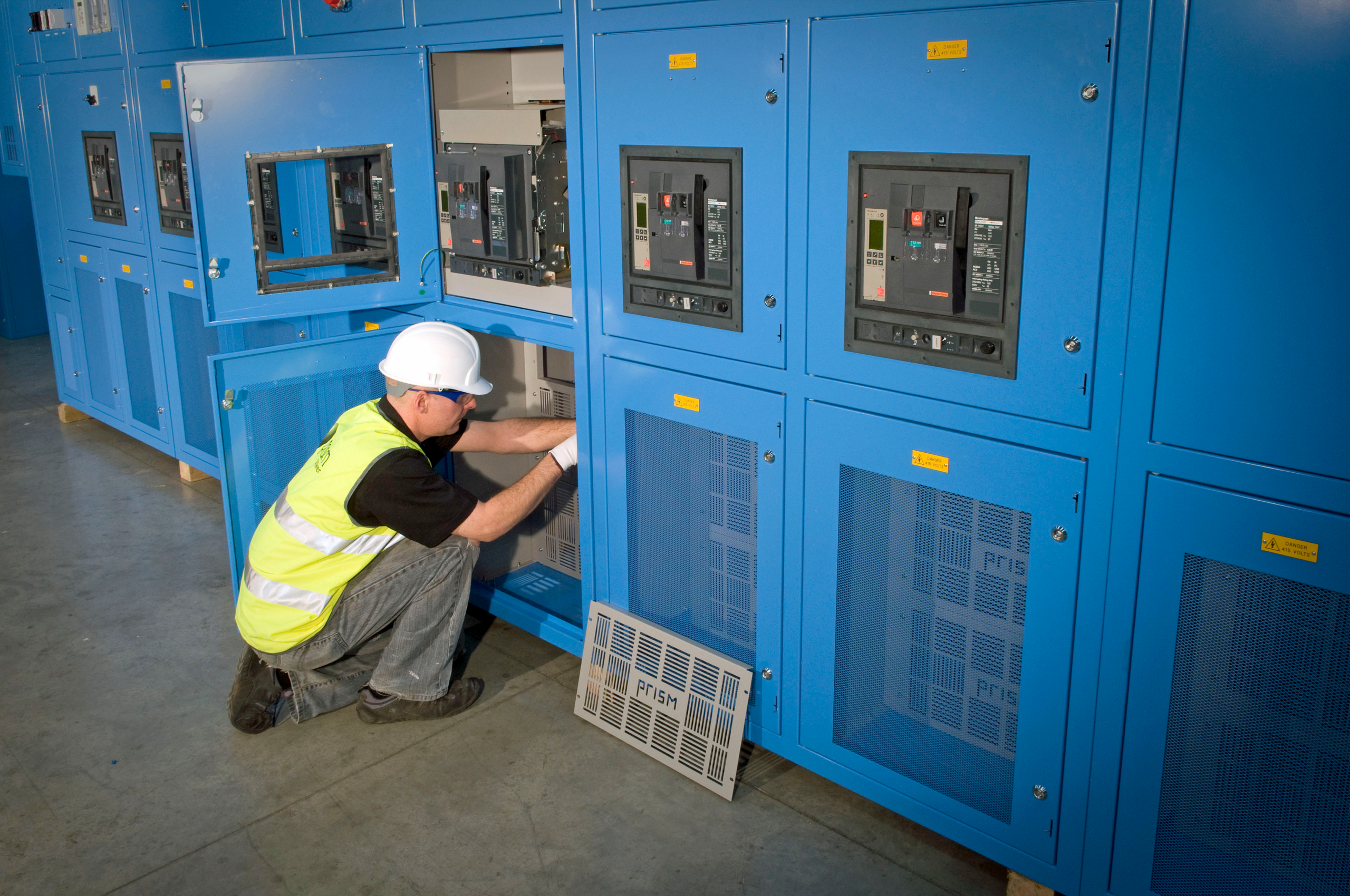
Switchgear has become a schedule risk in UK commercial construction, as manufacturers allocate finite capacity toward higher-volume, higher-certainty data centre frameworks. Prism Power, a UK supplier focused on critical power infrastructure, said lead times that were once predictable are now routinely stretching into many months, with commercial developments increasingly pushed down the queue.
Adhum Carter Wolde-Lule, Director at Prism Power Group, described allocation decisions as a rational response to order books that have been reshaped by hyperscale buildouts and AI-driven compute growth. “Manufacturers are simply behaving rationally. If you are allocating factory capacity and you have a 50MW data centre framework on one side and a standalone commercial building on the other, the decision is straightforward. Scale and certainty win,” he said.
The knock-on effects are showing up in procurement behaviour. Wolde-Lule said some manufacturers are choosing not to price lower-value packages, while quote validity periods are shrinking and deposits are rising. In practice, that shifts risk into the contractor’s programme, particularly where electrical infrastructure has been treated as a late-stage purchase.
That sequencing no longer holds. Switchgear delivery now dictates commissioning windows, temporary power duration, and, in some cases, design outcomes. Where projects delay engagement, teams can end up extending temporary supplies, compressing test-and-commission stages, and absorbing redesign work when preferred configurations are no longer available in the required time window.
Programme pressure can also drive technical compromise. Prism Power flagged a growing tendency toward reactive substitutions, rushed approvals, and non-standard configurations when availability narrows. For LV and MV distribution equipment, those decisions sit directly on top of compliance, resilience, and safety outcomes, with limited room for “value engineering” that changes fault ratings, segregation, protection coordination, or maintainability.
The supply squeeze is also distorting competition across the wider contracting market. As manufacturers prioritise repeat, high-value buyers, smaller contractors and regional delivery teams can be left pricing in substantial contingency or declining to tender on electrical packages where risk is hard to quantify and harder to recover.
Alongside demand, equipment transitions are adding friction. Medium-voltage switchgear is moving toward SF6-free designs, and while the direction is established, deployment at scale requires engineering familiarity, qualification activity, and, in some cases, redesign of layouts and interfaces.
Prism Power’s position is that switchgear now needs treating as a strategic procurement item rather than a late-stage component. Earlier design freeze, earlier manufacturer engagement, two-stage procurement, and explicit long-lead strategies are increasingly being written into viable delivery plans.