
IN Brief:
- VDE FNN has published two connection and control models for EV charging in apartment buildings.
- A central energy-management system can distribute available capacity between multiple chargers and flexible loads.
- Independent charger control remains possible but provides less scope to optimise the shared building connection.
VDE FNN has published technical guidance defining two approaches for connecting and controlling electric-vehicle charging equipment in German apartment buildings under Section 14a of the Energy Industry Act.
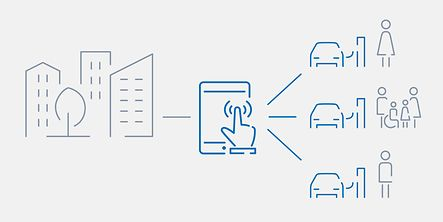
One model uses a central energy-management system to coordinate participating charge points and other controllable loads across the property. The alternative allows each charging installation to be controlled independently, enabling owners or tenants to retain separate equipment and contractual arrangements.
Within the coordinated model, the energy-management system receives information about the power available to the building and distributes it between connected chargers. It can account for simultaneous demand, vehicle requirements, other electrical loads, and agreed priorities without allowing total consumption to exceed the service connection’s permitted capacity.
Because available power can be reassigned as vehicles arrive, depart, or complete charging, the central arrangement can support a greater number of charge points than a design based on each unit drawing maximum power simultaneously. It also provides a framework for adding heat pumps, batteries, or other controllable equipment later.
Individual control creates a clearer ownership boundary where occupants procure their own charging installations separately. However, unused capacity associated with one charger cannot necessarily be transferred to another, and the combined demand may place greater pressure on the main service, distribution board, and local network.
Section 14a allows distribution network operators to reduce consumption from controllable devices temporarily when local network conditions require intervention. Participating customers receive reduced network charges, while a defined minimum power level remains available instead of the equipment being disconnected completely.
Intervention is intended for exceptional periods of network loading rather than routine operation, but the communications, controls, metering, and fail-safe behaviour must be established before the system is energised. Coordination is therefore required between the distribution operator, meter operator, building owner, management-system supplier, charge-point operator, and electrical installer.
Neither control model removes the need to assess the building’s existing electrical infrastructure. Cable routes, protective devices, earthing, voltage drop, fault levels, switchboard capacity, fire compartmentation, accessibility, and metering arrangements must be reviewed across communal and privately controlled areas.
Shared buildings require coordinated electrical planning
Apartment charging presents different constraints from a wallbox installed at a detached property. Parking spaces may have separate owners, cable routes often pass through shared areas, meters can be located remotely from bays, and the incoming supply may not have been designed for sustained vehicle charging across numerous spaces.
A coordinated system can use diversity between vehicles to avoid unnecessary reinforcement. Most cars remain parked for several hours, while the energy needed for the next journey can usually be delivered below the charger’s maximum output. Scheduling can reduce coincident peaks without preventing vehicles from reaching the required state of charge.
Reliable operation depends on a clear hierarchy between local controls, the building-management platform, the meter interface, and any signal received from the network operator. Designers must establish how the installation responds to lost communications, failed sensors, unavailable servers, software updates, or conflicting charging priorities.
Protection and earthing remain independent safety requirements. Automated load management does not replace residual-current protection, overcurrent protection, isolation, cable sizing, voltage-drop calculations, inspection, or verification. Sustained charging currents also require assumptions that differ from short-duration domestic demand.
Germany’s approach forms part of a wider shift towards flexible distribution connections. Britain’s electricity flexibility programme is also moving into operational delivery, although its regulatory, tariff, communications, and metering structures differ from the German Section 14a framework.
Property owners must weigh capital cost against long-term governance. A central platform can reduce reinforcement requirements and support expansion, but it also requires agreement over ownership, maintenance, billing data, software support, service contracts, and eventual replacement.
Designing solely for the first few charge points can leave later occupants facing extensive changes to switchgear, containment, communications, or metering. A building-wide strategy can establish reserved cable routes, spare protective-device capacity, common standards, and an agreed control architecture even where physical installation proceeds in stages.
Distribution operators also need predictable aggregate behaviour. Large numbers of independently controlled devices can respond to the same tariff or market signal simultaneously, creating steep changes in demand. Coordinated management can smooth those responses and provide a more stable interface between the property and the local network.
The two VDE models preserve a choice between shared and individual arrangements rather than prescribing one structure for every development. Connection capacity, tenure, parking layout, metering, expansion plans, and building governance can therefore be assessed together before equipment and communications systems are selected.
The full technical guidance is available through the VDE FNN apartment charging publication.

