
IN Brief:
- Skeleton Technologies has launched GrapheneUPS for AI data-centre infrastructure.
- The double-conversion UPS is designed to stabilise short-duration disturbances and rapid load fluctuations.
- The system is positioned around grid compliance, power density, and reduced connection requirements.
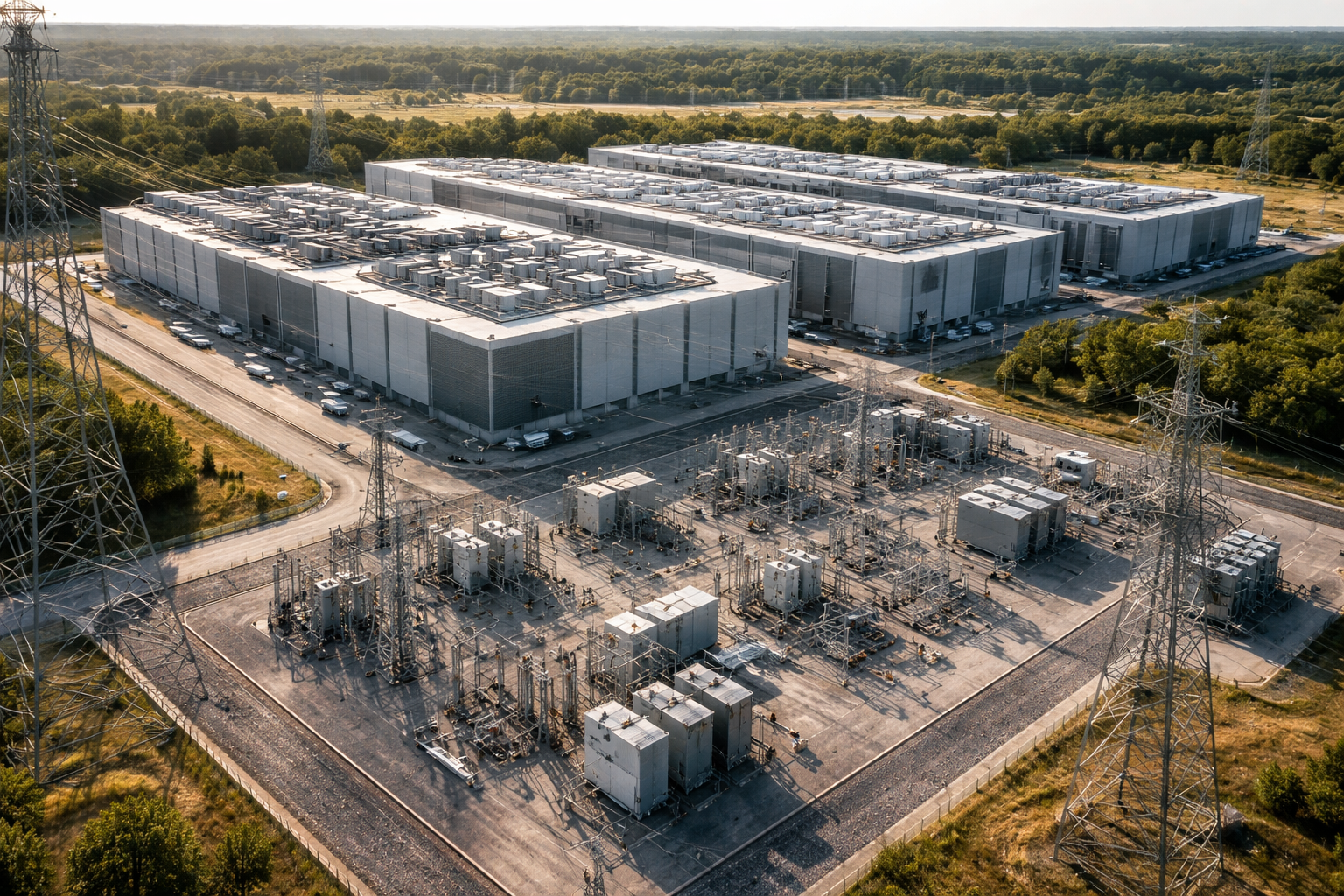
Skeleton Technologies has launched GrapheneUPS, a high-density uninterruptible power supply system designed for AI data centres facing tighter grid connection requirements and more dynamic power loads.
The system uses a double-conversion UPS architecture, continuously converting incoming AC power to DC and back to AC. That design isolates critical IT equipment from utility disturbances and allows the UPS layer to stabilise voltage dips, interruptions, restoration events, and rapid load changes.
GrapheneUPS is designed to enable up to a 40% increase in computing power and up to a 44% smaller grid connection, with the system managing short-duration disturbances and load fluctuations that would otherwise place additional strain on the connection. Skeleton also highlights safety characteristics intended to avoid key lithium-ion concerns, including thermal runaway.
AI infrastructure is changing the electrical design assumptions behind data centres. Conventional data-centre loads are already large, but GPU-heavy AI workloads add sharper power-density requirements, fast-changing demand profiles, and more complex resilience expectations. Backup power remains essential, but the grid-facing behaviour of high-density compute is now part of site design.
Several European markets are already seeing data-centre connection pressure. Large campuses can require capacity comparable with industrial loads, while connection assessments increasingly consider voltage stability, harmonic behaviour, fault levels, local reinforcement, flexibility, and operational response to rapid load changes. UPS and power-conditioning equipment therefore sit closer to the boundary between internal resilience and grid compliance.
Industrial power discussions have been moving in the same direction. At Hannover Messe, AI loads, EV charging, electrified production, and high-density data centres were increasingly framed as power-system design challenges, with power infrastructure treated as a central constraint on industrial electrification. Control, protection, storage, and cyber-secure electrical systems now sit alongside generation capacity in project planning.
GrapheneUPS fits into that broader movement. Short-duration energy storage and power electronics can reduce the effect of rapid load events, support ride-through, and help sites satisfy grid conditions without relying entirely on upstream reinforcement. Response time, control precision, power density, and integration with the rest of the electrical plant determine how useful those systems become.
UPS specification is consequently moving closer to grid-planning decisions. Transformers, switchgear, protection, static transfer systems, backup generation, battery or supercapacitor modules, cooling loads, and power management software all affect how a site behaves at the point of connection. As AI halls become denser, relatively short load changes can create larger system effects.
The same convergence is visible across commercial and industrial storage. Schneider Electric’s Boost Pro launch in the UK positioned local battery storage as part of an integrated architecture for buildings, depots, and charging sites, combining power distribution, software, EV charging, and energy management. The system, detailed in Schneider Electric launches Boost Pro in UK, reflects a market where storage is increasingly treated as capacity management infrastructure.
For data centres, that integration will carry more weight as operators compete for connection capacity and face closer scrutiny from grid operators. The electrical system must protect IT load, satisfy connection requirements, manage disturbances, and support expansion without simply demanding a larger import limit. Skeleton’s launch sits within that transition toward site power systems that actively shape demand at the grid boundary.

