IN Brief:
- Hannover Messe 2026 placed power infrastructure at the centre of industrial transformation, with AI, electrification, EV charging, storage, and hydrogen increasing pressure on grids.
- The strongest electrical engineering themes were low voltage grid control, battery backed capacity management, DC distribution, virtualised protection, and cyber secure storage systems.
- The energy transition is moving beyond clean generation into controllable, resilient, and interoperable electrical architectures at the grid edge.
It was fitting that power featured so prominently at Hannover Messe 2026. The event has long been a showcase for the technologies expected to reshape industry: automation, robotics, digital twins, AI systems, EV infrastructure, hydrogen production, and high density datacentres. Nearly all of them place new demands on electrical networks, from factory feeders and private substations to regional distribution grids and transmission capacity.
The result was an energy discussion rooted in the electrical foundations of industrial transformation. Energy & Industrial Infrastructure sat at the centre of the fair’s structure, with power engineering, energy automation, storage, hydrogen, industrial infrastructure, and grid resilience running through the programme. The emphasis was not simply on adding cleaner generation. It was on the behaviour of systems where volatile renewable output, electrified industrial loads, data intensive production, EV charging, and storage assets all operate inside the same electrical environment.
That changes the character of resilience. The term has often been used as shorthand for hardening infrastructure, adding redundancy, or recovering from outages. At Hannover, the engineering focus was controllability. The future power system being described is not merely stronger; it is more observed, more automated, more modular, more dependent on data, and more exposed to software, communications, and cyber physical risk.
The first pressure point is the low voltage edge. EVs, heat pumps, PV, and distributed generation are altering networks originally designed around comparatively predictable flows in one direction. As these assets proliferate, low voltage systems become active operating environments rather than passive delivery infrastructure. Monitoring, forecasting, switching, control logic, and asset visibility move from digital enhancements to basic operating requirements.
Transmission expansion and large scale renewable deployment remain essential, but industrial reliability is often decided closer to the load. The decisive points are increasingly the transformer, feeder, switchboard, charging hub, battery cabinet, private substation, and plant energy management system. A grid can retain strong historical reliability while facing greater difficulty accommodating sharp local demand changes, bidirectional flows, clustered EV charging, on site generation, and industrial flexibility.
From capacity to controllability
Hannover’s grid resilience sessions reflected that movement from expansion alone to active operation. Discussions covered system stability, digital twins, cyber security, extreme weather, physical threats, and the operational role of distributed assets. The risk profile is changing as electrical infrastructure becomes more decentralised and increasingly governed by software, communications, and automated control. Resilience now depends on how physical equipment, control systems, market signals, standards, and operating procedures perform together under stress.
Datacentre and AI loads made the issue more explicit. Hannover’s wider AI programme was dominated by industrial automation and production intelligence, but AI also appeared as a power system design problem. High density compute campuses, liquid cooled server environments, and AI factories can turn large electrical loads into grid planning events. Available capacity remains important, but utilisation, buffering, protection, and control are becoming just as central to whether that capacity can be used effectively.
The same logic applies to industrial sites with electrified production, charging infrastructure, solar PV, and storage. A factory no longer draws power as a comparatively simple load profile. It may generate, store, convert, shift, trade, and consume electricity across multiple assets and timeframes. That turns the site energy system into a managed electrical architecture, with resilience measured by how well it can maintain operation when prices move, demand spikes, grid capacity tightens, or local generation falls away.
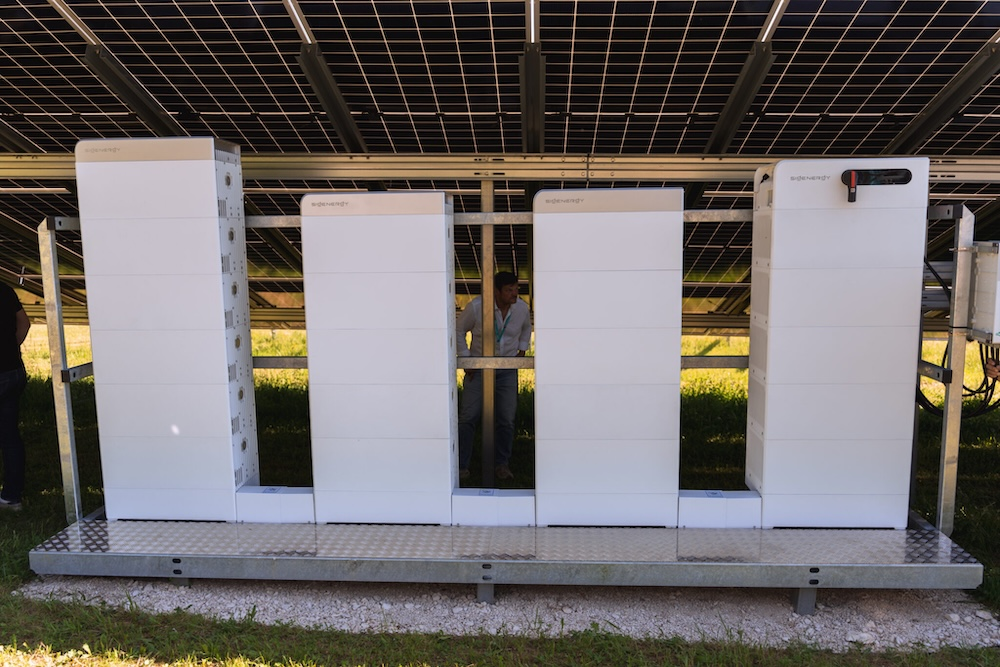
Storage sits at the centre of that shift. Battery systems are still specified for backup and continuity, but at Hannover they were also framed as tools for capacity management, peak reduction, tariff response, and grid connection optimisation. In datacentre applications, storage can help manage the gap between reserved connection capacity and actual utilisation, where contracted capacity may exceed real demand during gradual ramp up or periods of lower compute load. In industrial and commercial settings, the same principle can support high power charging, reduce peak stress, and provide a buffer against volatile energy costs.
ADS-TEC Energy used Hannover to present battery buffered infrastructure for constrained grid environments and volatile energy markets. Its systems support high power charging where local grid capacity is limited, using battery storage to absorb and release energy in a way that reduces peak load on the connection. The technology sits within a wider move toward storage as an operating asset, rather than a passive reserve.
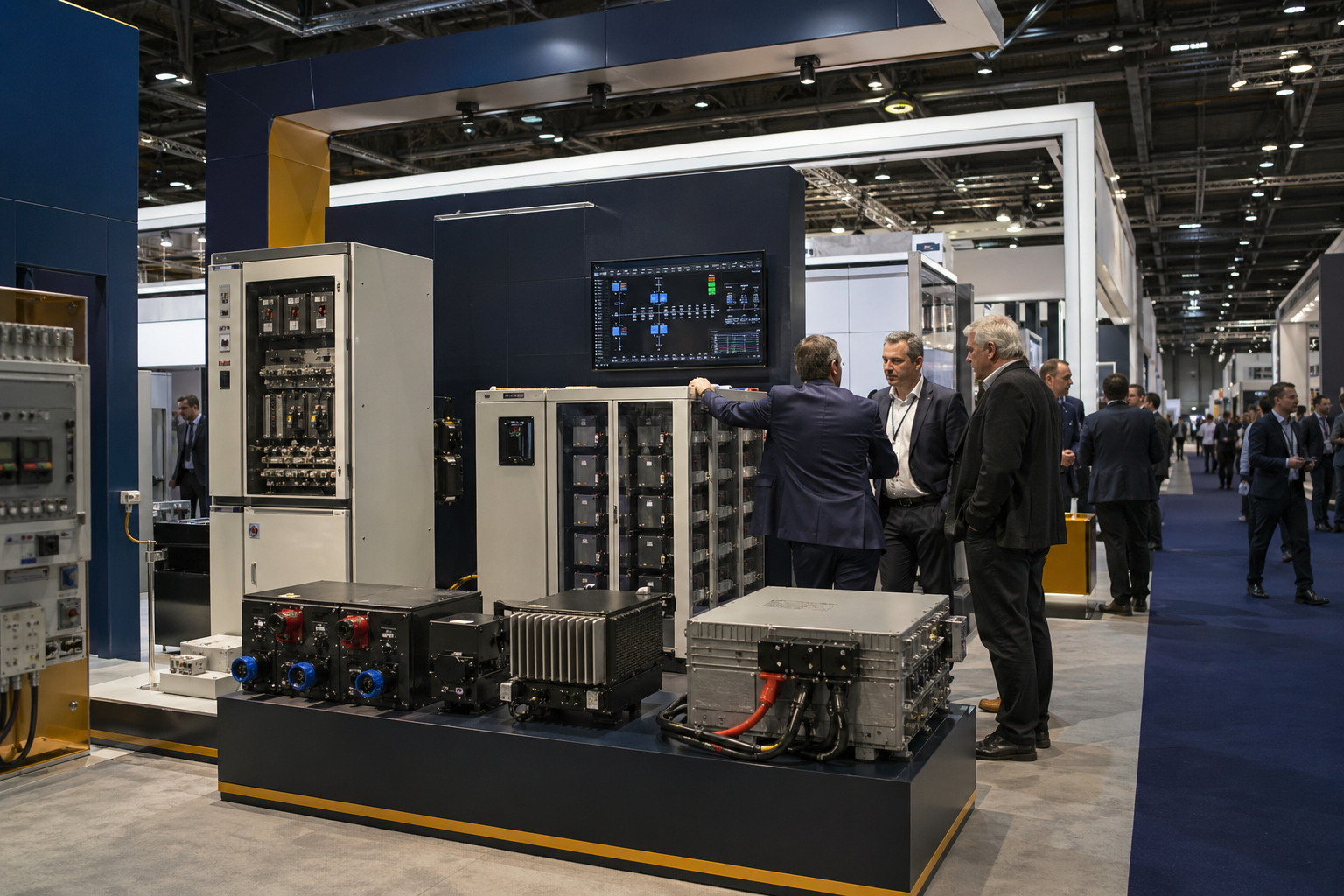
Delta’s presence followed a similar trajectory from equipment to architecture. Its Hannover showcase brought together industrial power supplies, energy storage, EV charging, solar PV, and energy management technologies, including a commercial and industrial all in one storage cabinet. The combined proposition reflects the direction of travel across industrial sites: generation, storage, conversion, charging, and control increasingly have to be designed as one energy system.
Protection at the industrial edge
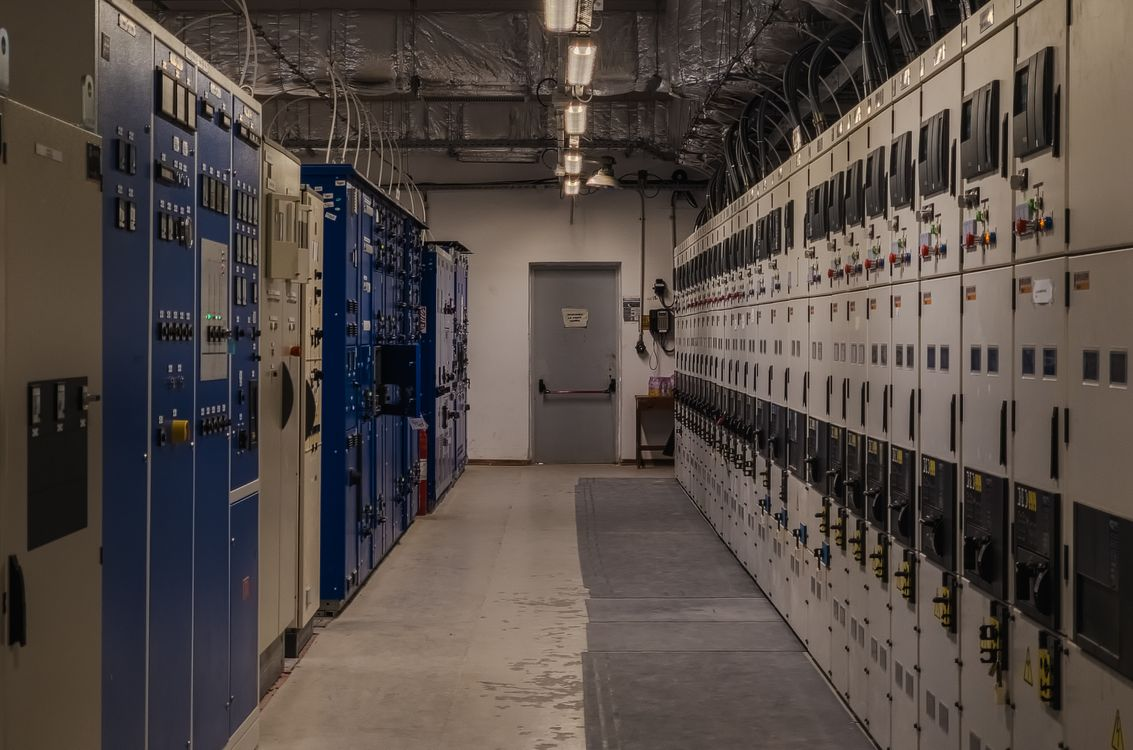
Once the site becomes more active electrically, protection and switching become more important, not less. Siemens used Hannover to present a DC protection and switching portfolio for applications including datacentres, AI factories, industrial manufacturing, battery storage, and renewable integration. The background is straightforward: PV, batteries, EV charging, drives, electronics, and datacentre equipment already sit close to DC electrically, even where AC distribution remains dominant.
DC architectures offer efficiency and material advantages in the right applications, particularly where repeated conversion stages can be reduced. Their wider use depends on confidence in fault interruption, arc behaviour, switching speed, selectivity, safety, and maintenance. Semiconductor based DC circuit protection and solid state switching point to the protection technologies needed before DC infrastructure can scale across more demanding industrial environments.
The same transition is visible in substations. Siemens also highlighted virtualised protection and control technology that consolidates multiple hardware based protection and control devices into a server based environment. The immediate attractions are reduced hardware, smaller substation footprints, faster project execution, and more flexible testing. The deeper engineering shift is that protection is moving further into software environments, where validation, cyber security, lifecycle management, patching, and commissioning discipline become inseparable from resilience.
Battery storage follows the same pattern. As BESS moves into grid support, industrial continuity, EV charging, and flexibility services, it becomes part of critical electrical infrastructure. Remote access, monitoring, communications, firmware, control interfaces, and incident response now belong in the engineering specification. Hannover sessions linking storage to NIS2, the Cyber Resilience Act, ENISA guidance, and IEC 62443 placed cyber security inside the electrical design problem, rather than treating it as a later IT overlay.
That theme also explains the continued presence of hydrogen without making it the centre of the piece. The strongest hydrogen discussions at Hannover dealt with deployment: storage, system integration, functional safety, Power to X, cost drivers, industrial heat, and standards. Hydrogen remains relevant to hard to electrify processes and industrial energy security, but it faces the same requirement as every other part of the transition. It has to connect safely and economically into existing electrical, process, and control infrastructure.
Hannover Messe 2026 therefore presented a power sector moving from assets to interfaces. The most important engineering questions now sit between local networks and flexible loads, between batteries and market signals, between DC systems and protection devices, between datacentres and grid connections, between hydrogen assets and industrial processes, and between digital control platforms and physical infrastructure.
That is where resilience becomes concrete. It is no longer an abstract quality attached to a grid or a project. It is built into visibility, selectivity, switching, controls, standards, commissioning, communications, and operating discipline. Each new electrified asset adds capability, but also another dependency that must be measured, protected, and coordinated.
Power became visible at Hannover because the rest of industrial transformation now depends on it. The next phase of the energy transition will not be judged only by installed renewable capacity or headline electrification targets. It will be judged by whether electrical systems can remain controllable as demand rises, generation becomes more variable, assets become more distributed, and resilience moves from design principle to daily operation.