IN Brief:
- Siemens Energy and NSORe will deliver the North Sea Connector 2 grid connection for 50Hertz.
- The 2GW offshore converter platform will be fabricated primarily at Neptun Werft’s Rostock-Warnemünde shipyard.
- The project combines offshore conversion, onshore converter infrastructure, transformers, converters, and SF6-free gas-insulated switchgear.
Siemens Energy and Neptun Smulders Offshore Renewables have secured a contract to deliver a new offshore grid connection system for 50Hertz in the German North Sea, creating a 2GW route for offshore wind power to reach the onshore network.
The connection, North Sea Connector 2, will include an offshore converter platform and associated onshore converter infrastructure. NSORe, a joint venture between Neptun Werft, part of Meyer Werft Group, and Belgian steel construction company Smulders, will fabricate the offshore platform primarily at Neptun Werft’s shipyard in Rostock-Warnemünde.
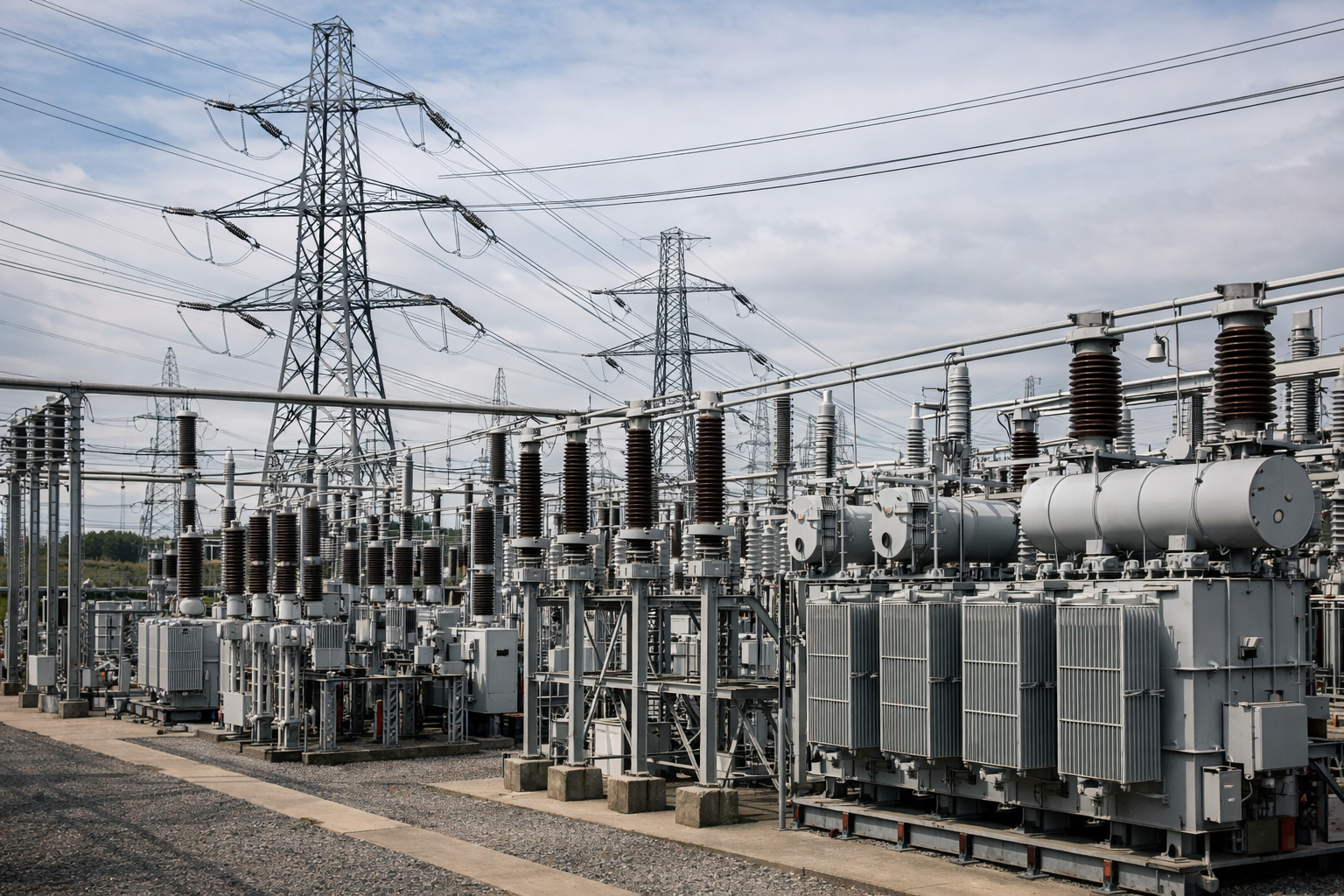
Siemens Energy will provide the electrical transmission technology for the platform, with a large share of its scope delivered from German manufacturing sites. Transformers and converters will come from Nuremberg, while SF6-free gas-insulated switchgear will be supplied from Berlin. The company has also been awarded a long-term service contract covering maintenance, IT services, and on-call support.
Two-gigawatt offshore converter platforms sit at the upper end of current offshore transmission requirements. They require maritime fabrication, high-voltage electrical engineering, power electronics, protection systems, control architecture, digital monitoring, offshore logistics, and long-term service access to work as a single asset class rather than a collection of separate packages.
Offshore wind grid connection has become one of Europe’s most demanding infrastructure bottlenecks. Turbine capacity continues to increase, wind farms are moving farther from shore, and transmission systems must carry large blocks of power over long distances while controlling losses and maintaining stable operation. HVDC conversion is central to that model, converting offshore AC generation into DC for efficient transmission before conversion back to AC onshore.
The project also reinforces the strategic value of domestic industrial capacity. Offshore converter platforms need large fabrication halls, heavy steel capability, integrated electrical fit-out, skilled labour, specialist vessels, and long procurement lead times. By placing major fabrication work in Rostock-Warnemünde and sourcing key electrical equipment from German plants, the contract ties offshore wind transmission directly into European manufacturing capacity.
SF6-free gas-insulated switchgear adds a further technical layer. SF6 has been widely used in high-voltage switchgear because of its insulation and arc-quenching performance, but its high global warming potential has driven grid operators and manufacturers toward alternatives. Offshore and coastal substations place strict demands on space, safety, reliability, and maintenance, so deployment in a large grid project is a practical test of the shift away from SF6 in critical transmission equipment.
Large offshore transmission corridors are also changing the shape of European grid planning. Individual wind farms are no longer being treated only as generation projects with radial connections. Future systems are expected to include shared offshore hubs, hybrid interconnectors, multi-country power flows, and more complex market arrangements around capacity, curtailment, balancing, and cost recovery.
Similar questions are already visible in the UK, where choices between buried cables and overhead lines continue to shape power infrastructure planning. The trade-offs examined in analysis of Britain’s cable and pylon strategy apply just as clearly once offshore power reaches landfall. Whether renewable electricity comes ashore in Germany, Britain, or the Netherlands, it still needs reinforced routes into demand centres.
For 50Hertz, North Sea Connector 2 will expand offshore integration capacity in a grid area covering eastern Germany, Berlin, and Hamburg. That area is tied closely to Germany’s wider industrial and urban load, meaning offshore wind connection is not only a renewables question but also a system-capacity question.
For Siemens Energy, the contract adds to demand for converter platforms, HVDC systems, transformers, switchgear, and digital service capability at a time when grid equipment is becoming a central part of European energy investment. The supply chain for these assets is narrow, technically specialised, and increasingly exposed to simultaneous demand from offshore wind, interconnectors, data centres, industrial electrification, and grid reinforcement.
The contract shows how offshore wind has become a grid-manufacturing challenge as much as a generation build-out. Turbines remain the visible symbol of offshore expansion, but converter platforms determine whether that power can enter the network reliably. As Europe adds offshore capacity, the pressure will fall heavily on fabrication yards, transformer plants, switchgear factories, cable routes, and the grid operators able to coordinate them.