IN Brief:
- Scatec and EBRD have agreed an investment vehicle with a 60:40 ownership split.
- Scatec describes EBRD’s up to $221m commitment as approximately $170m of equity plus project guarantees; EBRD calls the total an equity commitment.
- Obelisk reached full commercial operation in August; Shadwan, Dandara and Energy Valley have different development and investment milestones.
Scatec and the European Bank for Reconstruction and Development (EBRD) have signed an agreement to establish an investment platform for renewable generation and battery storage in Egypt. The vehicle will be owned 60% by the Norwegian developer and 40% by the bank, which has committed up to $221m towards the portfolio through a combination of equity and guarantees.
Scatec says approximately $170m of the commitment will take the form of equity, with the balance provided as project-level guarantees. The EBRD’s own project record and public statement describe an investment of up to $221m as an equity commitment, without separately identifying guarantees in that figure. The two public descriptions therefore differ in their classification of the financing; the $170m equity and remaining guarantee breakdown is attributed specifically to Scatec, and the full amount should not be presented as cash equity already invested. The agreement was announced on 22 October, while the EBRD’s project record shows the investment was approved in July and disclosed publicly in October.
The platform, identified by EBRD as Egypt Renewables Holdings BV, is expected to hold interests in projects at different stages. Scatec puts its prospective project-level holdings at 40% of Obelisk, 51% of Shadwan and approximately 60% of both Egypt Aluminium phase one, known as Dandara, and Energy Valley, alongside other minority investors. Those percentages refer to the investment vehicle’s ownership of each project. They must not be confused with the 60:40 division of shares in the holding vehicle itself, nor do they confirm that all project-level transfers have completed.
According to EBRD, the initial platform scope encompasses 2.7GW of solar capacity, 900MW of wind capacity and 4.2GWh of battery storage in Egypt. Those figures describe the assets and developments intended to be supported by the vehicle, not an entirely new set of installations awaiting commissioning. Obelisk had already entered full commercial operation before the October agreement, while other projects remain under construction or in development. The bank gives no single commissioning date for the whole portfolio.
Obelisk is a 1.1GW solar development paired with a 100MW/200MWh battery installation at Nagaa Hammadi in southern Egypt. Scatec confirmed full commercial operation of the second solar phase on 12 August 2026, after the first phase and the storage system had entered service in February. Its proposed 40% holding vehicle interest therefore concerns an existing operating asset, rather than finance for a power station whose construction has yet to begin. The battery’s 200MWh rating describes stored energy; its 100MW power rating is a separate measure of the output it can deliver under specified conditions.
At Shadwan, Scatec and EDF power solutions began construction of a 900MW onshore wind installation in the Red Sea Governorate on 1 October. Scatec also disclosed $150m of equity bridge loans from the Arab Energy Fund, comprising $50m for Shadwan and $100m for Energy Valley. These loans are separate from the Scatec–EBRD investment platform and must not be added to its $221m commitment as though they were one financing transaction. The first Shadwan phase was then expected to reach commercial operation at the end of 2027.
Egypt Aluminium phase one, known as Dandara, is being developed to supply solar electricity and battery storage to the aluminium sector. EBRD’s project record describes a 500MW photovoltaic plant and a 100MWh battery under an industrial power purchase agreement. Energy Valley is a separate and substantially larger solar and storage development, with proposed transmission infrastructure. The October platform agreement sets out intended ownership interests but does not announce that engineering, procurement or network works have been completed across those projects.
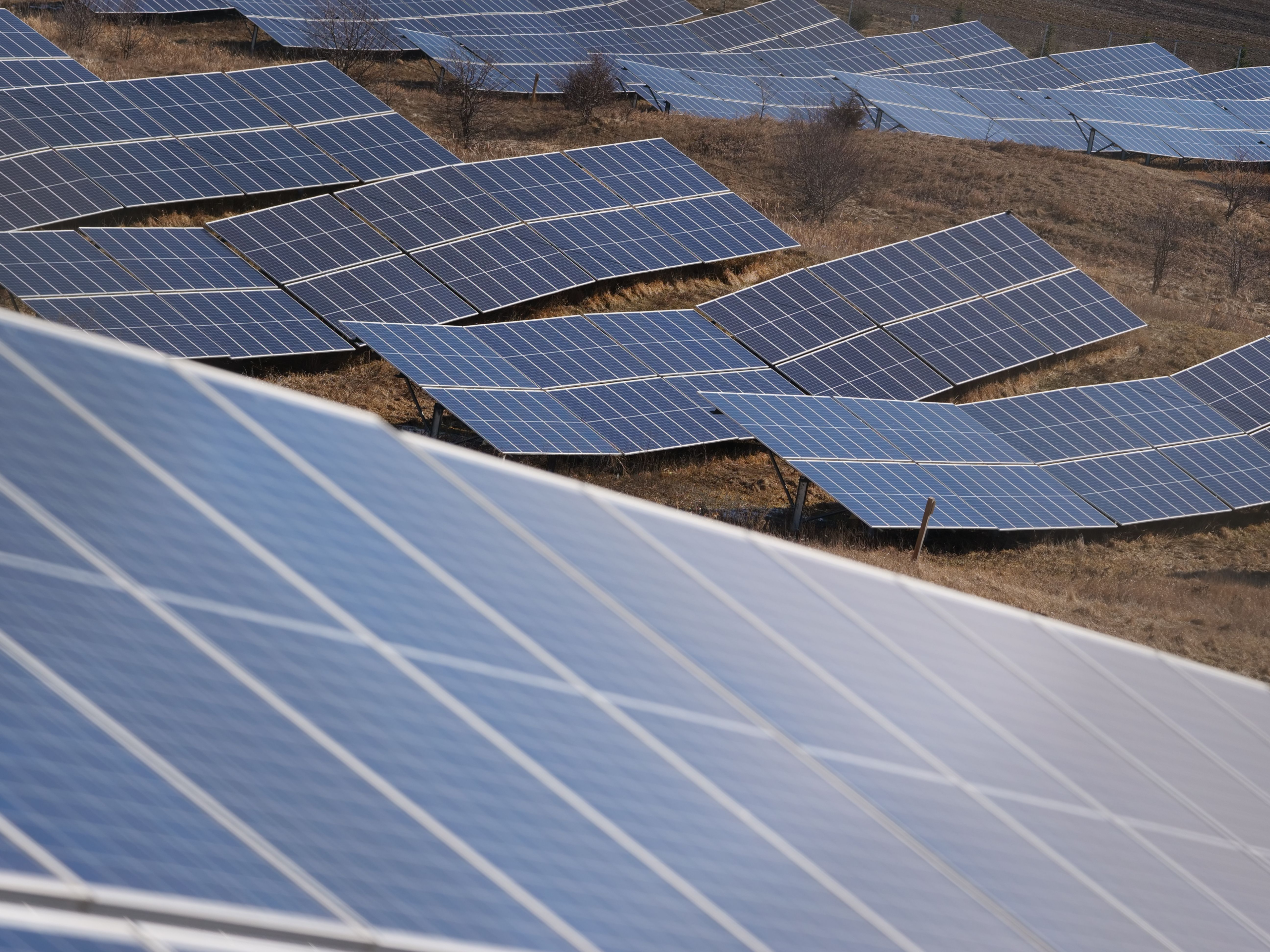
Solar photovoltaic modules produce direct current, which inverters convert into alternating current suitable for the connected electrical system. Output varies with irradiance and temperature, and plant controls must maintain the permitted export conditions at the grid connection. A battery installation adds bidirectional power conversion, electrical protection and a control system able to decide when to charge or discharge while respecting network and equipment constraints.
Storage energy ratings, measured in megawatt-hours or gigawatt-hours, describe the quantity of electrical energy available under specified conditions. They do not, by themselves, establish how much power a battery can deliver at a particular moment or how long it can sustain that output. Those characteristics also depend on the battery power rating, usable operating range and controls. EBRD’s 4.2GWh portfolio figure should therefore not be described as 4.2GW of additional generating capacity.
Wind generation creates a different operational profile from solar, with output governed by available wind conditions and turbine operating limits. Combining wind, solar and storage across a wider portfolio can provide a range of production patterns, but it does not remove periods of low generation or guarantee continuous output without adequate energy reserves and dispatch arrangements. Network operators still need suitable connections, voltage control, protection coordination and the ability to accommodate changing power flows.
Investment terms influence how the engineering programme is funded, although project delivery still depends on individual financing agreements, permits and technical readiness. Equity investors own a share of the underlying project and bear its commercial performance risk; debt lenders have contractual repayment claims, while guarantees provide specified support to a lender or counterparty if agreed conditions arise. The project’s capacity cannot be determined by treating those financial instruments as equivalent additions to generating equipment. EBRD identifies limited availability of local equity finance as one reason for backing the holding vehicle.
Scatec expects to remain the lead sponsor, developer, engineering, procurement and construction provider, and asset manager for projects placed in the platform. Those roles extend from developing and contracting an installation through construction, testing and operating oversight. Existing generation at Obelisk remains operational independently of the new ownership agreement; for developments still in the pipeline, construction, energisation and subsequent acceptance must be evidenced separately.
The platform forms part of the renewable energy programme associated with Egypt’s Nexus of Water, Food and Energy initiative, under which international financiers have supported private investment and electricity infrastructure. EBRD has also separately arranged financing for the Nefer Menya solar and battery development, owned by a different project group. That debt package must not be added to the $221m Scatec vehicle commitment or treated as one of its announced holdings.
The companies envisage using the structure for further opportunities in the Middle East and North Africa, with Egypt the immediate focus. The EBRD’s description of 2.7GW of solar, 900MW of wind and 4.2GWh of storage should be assessed project by project, separating Obelisk’s completed capacity from the remaining assets’ development milestones. Further evidence will come from completion of proposed investments, project-level finance, installation and commissioning rather than the holding vehicle’s headline commitment alone.