IN Brief:
- Up to €561 million of financing has been arranged for the Dama Solar development in western Romania.
- The current construction package describes approximately 1.3GWp of capacity, with commercial operation targeted for 2028.
- Two 15-year CfDs cover 520MW alongside a corporate PPA and further market exposure.
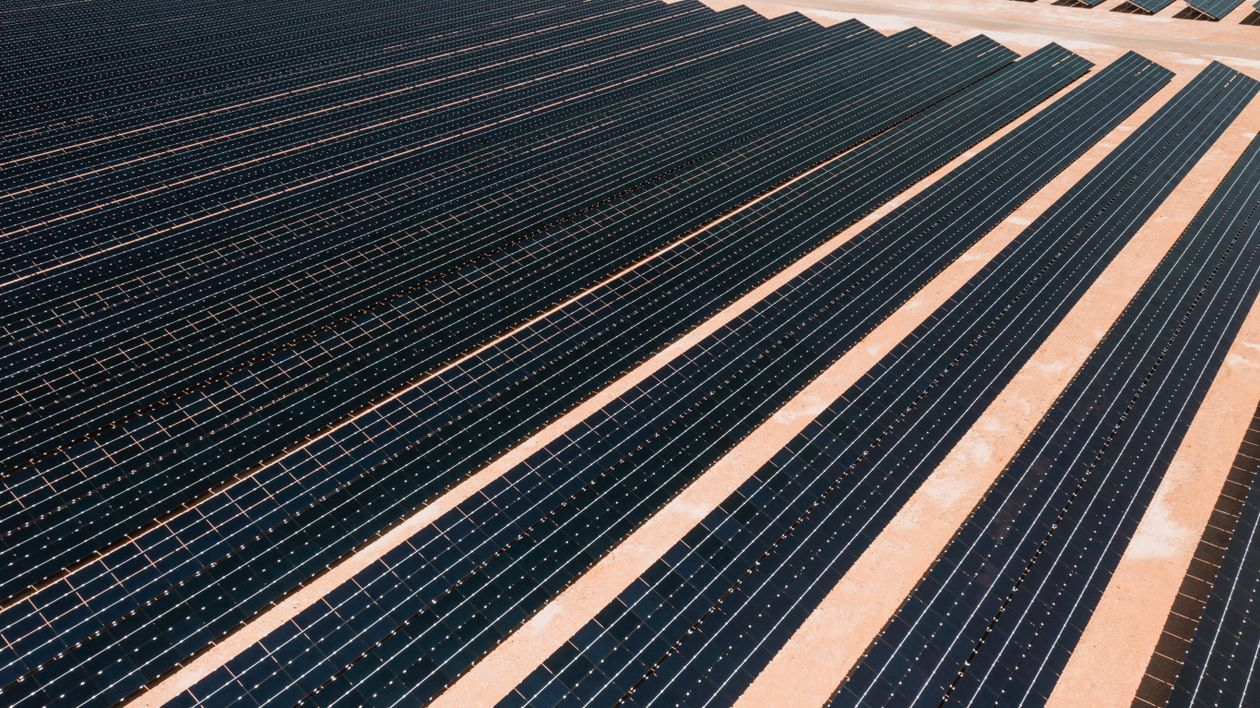
Rezolv Energy has secured up to €561 million of financing for the Dama Solar project in western Romania, moving the approximately 1.3GWp development into construction after final regulatory approvals were secured during the summer.
The green loan has been arranged through project company West Power Investments and is backed by 14 lenders. The European Investment Bank is providing €100 million as an anchor commitment with InvestEU support, while the wider financing group includes ten commercial banks together with the European Bank for Reconstruction and Development, International Finance Corporation and Black Sea Trade and Development Bank.
The EIB puts total investment in Dama Solar at about €728 million. Rezolv describes the financing as its largest transaction to date by both value and lender participation, giving the project a capital structure capable of supporting procurement and construction at a scale more commonly associated with major conventional generating assets.
Dama Solar secured its final Romanian setting-up authorisation in August, removing an important legal condition before construction. The financing now allows the project to progress into the build phase, with commercial operation targeted for the second half of 2028.
The revenue structure already includes two 15-year Contracts for Difference covering 520MW of capacity. Rezolv has also secured a corporate power purchase agreement with an undisclosed offtaker, while electricity outside those arrangements can be sold into the market or covered by further long term contracts with commercial and industrial customers.
That mix spreads exposure across several revenue mechanisms. A CfD can reduce price risk for part of the project, while a corporate agreement can provide additional contracted income. The remaining generation will still be exposed to production forecasting, imbalance costs, curtailment risk and the relationship between daytime solar output and demand.
Current financing material describes Dama Solar at approximately 1.3GWp, while Rezolv’s standing project information has previously referred to 1.2GW. The latest financing documents provide the most relevant specification for the construction stage. Rezolv expects annual generation of about 1.8TWh once the plant is fully operational.
The site is in Arad County in western Romania and lies close to the country’s 400kV transmission ring and interconnection points towards Hungary. At this scale, the grid connection is a major engineering package in its own right. Photovoltaic arrays, inverters, medium voltage collection equipment, transformers, protection systems, metering and high voltage export infrastructure must all comply with transmission system requirements while output changes continuously through the day.
Large solar developments can displace fuel consumption and reduce wholesale prices during periods of strong output, but they can also widen the difference between daytime and evening system conditions. Rezolv has previously said it is evaluating substantial energy storage for Dama Solar, although battery capacity is not included in the currently financed solar project and would represent a separate development.
Construction is expected to employ around 1,500 people at peak. The scheme also includes an 82-hectare nature restoration area, with lower quality agricultural land intended to return to pasture, alongside the civil and electrical work required across a site covering more than 1,000 hectares.
Dama Solar forms part of Rezolv’s wider portfolio in Romania and Bulgaria. The company brought the 225MW St George solar park in Bulgaria into commercial operation earlier in 2026 and is developing wind projects elsewhere in the region, giving it an operating base before beginning construction of a substantially larger Romanian asset.
A financing group of this size also imposes detailed delivery requirements. Development finance institutions and commercial lenders typically require agreed technical, environmental and reporting standards before funds can be drawn, while construction progress has to remain aligned with conditions written into the financing package.
The EIB commitment is only one part of the €561 million loan, but its anchor role helps combine public and commercial capital around a project whose construction expenditure is concentrated well before electricity sales begin. That funding structure will now be tested by the physical programme rather than the development process.
Financial close turns Dama Solar from an authorised project with contracted revenues into a funded construction programme. Procurement, civil works, electrical installation, transmission connection and commissioning must now be coordinated across a development measured in gigawatts if commercial operation is to begin during 2028.