IN Brief:
- Power availability has become a defining constraint for EMEA data-centre development.
- Grid access is limiting delivery in core markets including Frankfurt, London, Amsterdam, Paris, and Dublin.
- Developers are increasingly examining microgrids, self-generation, and non-core markets with stronger power availability.
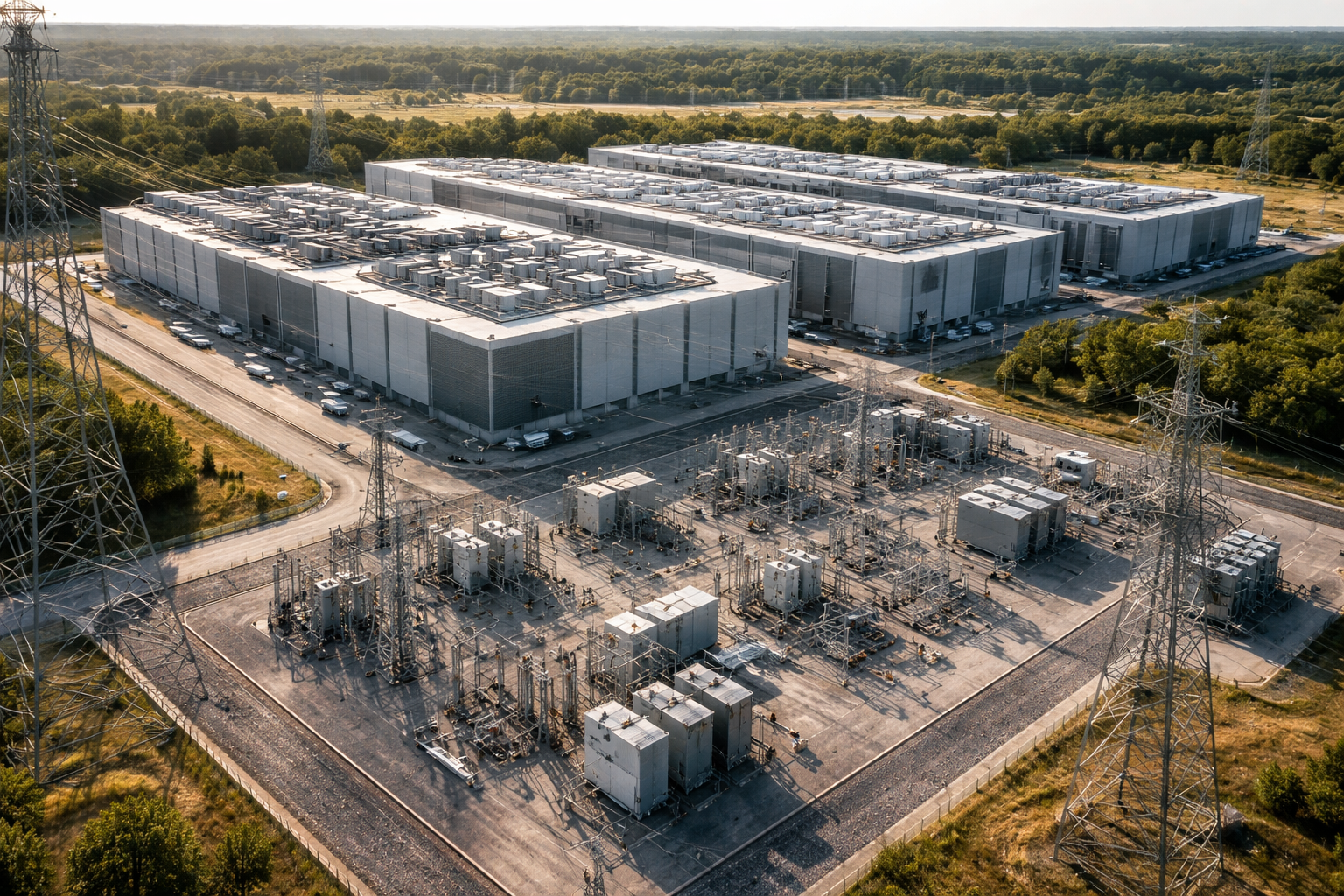
Colliers has identified power availability as a central constraint across EMEA data-centre development, with grid infrastructure limiting the conversion of planned capacity into operational capacity.
The pressure is most visible in established Frankfurt, London, Amsterdam, Paris, and Dublin markets, where grid access and connection timelines are restricting expansion. Ireland, Germany, and the UK are among the markets facing acute constraints, while developers are examining alternative power strategies including self-generation, microgrids, and site selection in markets with stronger energy infrastructure.
Data-centre development has become inseparable from electricity-network planning. Land, fibre, cooling potential, and customer demand remain important, but connection capacity, substation availability, reinforcement timelines, transmission constraints, distribution headroom, and energy procurement now determine whether a proposed campus can be delivered.
The gap between announced capacity and energised capacity is widening because data-centre construction can move faster than grid reinforcement. A facility may be designed and built within a few years, while new high-voltage circuits, substations, transformers, and planning approvals can take much longer. That mismatch is increasingly shaping investment decisions across core EMEA markets.
The same pressure is visible in other parts of the power system. Work on data-centre grid pressure across Europe has highlighted load growth, voltage control, reactive power, renewable integration, and flexibility potential. In Denmark, new grid connection agreements have been paused in response to large demand requests and network constraints. At campus level, 185MVA transformer installations show the electrical scale now being designed around digital infrastructure.
Data centres are becoming major grid nodes rather than conventional commercial loads. Their power quality requirements, redundancy arrangements, cooling systems, UPS architecture, backup generation, and high load factors all affect local and regional networks. A large campus can alter reinforcement needs, influence demand forecasts, and create new requirements for voltage management and system resilience.
Microgrids and self-generation may help in selected cases, but they do not remove the engineering challenge. On-site generation requires fuel strategy, emissions management, planning approval, maintenance, protection coordination, synchronisation, and integration with backup systems. Microgrids add control complexity, islanding logic, switching arrangements, storage integration, and interface requirements with the wider network.
Behind-the-meter batteries can support peak management, backup strategy, and flexibility services, although continuous high-load facilities still require firm supply. Storage can reduce import peaks or support resilience, but the size, duration, and operating rules of each system must be aligned with the facility’s uptime requirements and grid-connection conditions.
Power availability is also changing market geography. Secondary and emerging hubs are becoming more attractive where grid capacity, policy support, and connection prospects are stronger. Established markets will remain important, but the ability to energise new capacity is becoming as important as the ability to lease it.
The pressure will intensify as AI, cloud computing, and digital services increase demand. Data-centre developers are now competing for transformers, switchgear, high-voltage equipment, and specialist electrical engineering capacity alongside network operators, renewable developers, and industrial users. That competition is already affecting project timelines and procurement strategies.
EMEA data-centre growth is now constrained by the physical pace of power infrastructure. Substations, grid connections, transformers, reinforcement work, and credible energisation programmes will decide which parts of the development pipeline become operational and which remain stranded on paper.