
IN Brief:
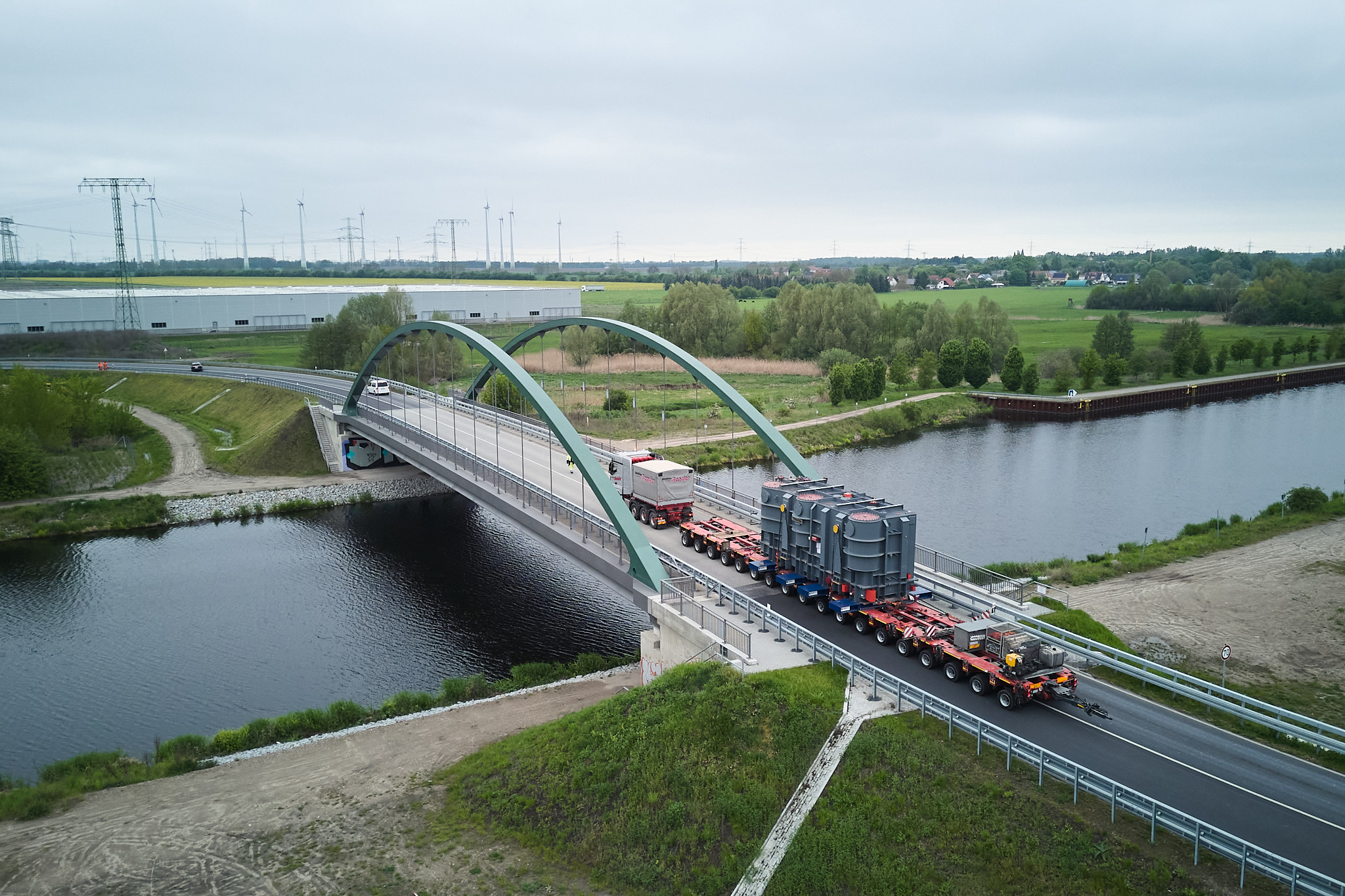
- VIRTUS has installed two 185MVA super-grid transformers at its Wustermark Campus in Berlin/Brandenburg.
- The site is designed to connect at 380kV through a dedicated 500MW substation and dual 50Hertz transmission links.
- The high-voltage design supports an initial 300MW campus capacity and gives customers a potential zero-generator operating model.
VIRTUS Data Centres has installed two 185MVA super-grid transformers at its Wustermark Campus in Berlin/Brandenburg, marking a major power infrastructure milestone for the large-scale data centre development.
The transformers are among the largest deployed at a European data centre and form part of the campus’s initial 300MW capacity. The site is being developed with a dedicated 500MW substation and dual direct connections to the 50Hertz 380kV transmission network.
Wustermark is expected to become the first data centre campus in the Berlin/Brandenburg region to connect at 380kV. That high-voltage connection architecture gives the site a different power profile from conventional data centre campuses connected at lower distribution voltages. It is designed to support large AI and cloud workloads while improving resilience, reducing transmission losses, and increasing system stability.
The campus is also being designed as a closed distribution network. Under that structure, power can be distributed within the campus through a dedicated network arrangement, supporting phased data centre growth and customer-specific power configurations. Diesel generator capacity remains available as standard, while the high-voltage design gives customers the option of operating a zero-generator model.
Data centres have traditionally relied on diesel generators as backup power infrastructure, even where their electricity supply is contracted from renewable sources. A campus connected directly to a robust transmission network, supported by mesh topology and renewable infeed points, creates a different resilience case. It does not remove the need for risk assessment, redundancy design, or emergency planning, but it changes the balance between standby generation and grid-based resilience.
The site will operate on 100% certified renewable electricity. Its regional location also places it close to onshore wind capacity, which supports customers seeking to reduce reliance on fossil-fuel backup systems and lower long-term carbon intensity. As AI workloads increase, the carbon and grid impact of data centre power architecture is moving from a sustainability consideration into a core electrical design requirement.
The installation of oil-filled 185MVA transformers at super-grid voltage also illustrates the scale of equipment now required for digital infrastructure. Large data centres are becoming major power-system nodes. Their load profiles, redundancy requirements, harmonic performance, fault levels, protection settings, cooling demand, and emergency operating modes all affect grid planning and electrical engineering.
Across Europe, data centre developments are moving closer to transmission-level electricity infrastructure. AI workloads increase both total demand and power density, while renewable procurement, grid capacity, and local planning constraints shape where campuses can be built. The limiting factor is often not land or fibre connectivity alone, but access to firm, resilient, and scalable power.
Grid engineering capacity is expanding around the same pressure points. Hitachi Energy’s Glasgow grid engineering centre and Trant’s appointment to National Grid’s substation framework both sit within a wider infrastructure cycle shaped by electrification, renewables, and high-load industrial demand. Data centres now sit firmly inside that grid investment agenda.
Higher-voltage connection can improve electrical efficiency and reduce losses, but it also raises the technical burden. Protection coordination, transformer procurement, insulation requirements, commissioning, operational control, and fault management all become more specialised. Transformers at this scale are long-lead assets, and their installation shows how far data centre power engineering has moved beyond conventional building services.
The Wustermark campus is expected to scale over time. Its power architecture will need to accommodate phased load growth, customer demand profiles, grid operating requirements, and renewable electricity sourcing. The commercial value of the campus will depend on IT capacity, but delivery depends just as heavily on high-voltage engineering.
As data centre demand grows across Europe, the strongest campuses are likely to be those that treat grid integration as primary infrastructure rather than a utility connection at the edge of the site. Wustermark is being built around that principle, with transformer capacity, transmission access, and internal distribution forming the backbone of the development.

