
IN Brief:
- Nexans and Epsilon Composite have completed field validation of CORECHECK on TenneT’s 380kV transmission network in the Netherlands.
- The technology checks the structural integrity of composite-core overhead conductors after manufacture, delivery, and installation.
- The test can usually be completed by one technician in around five minutes per conductor without disrupting installation schedules.
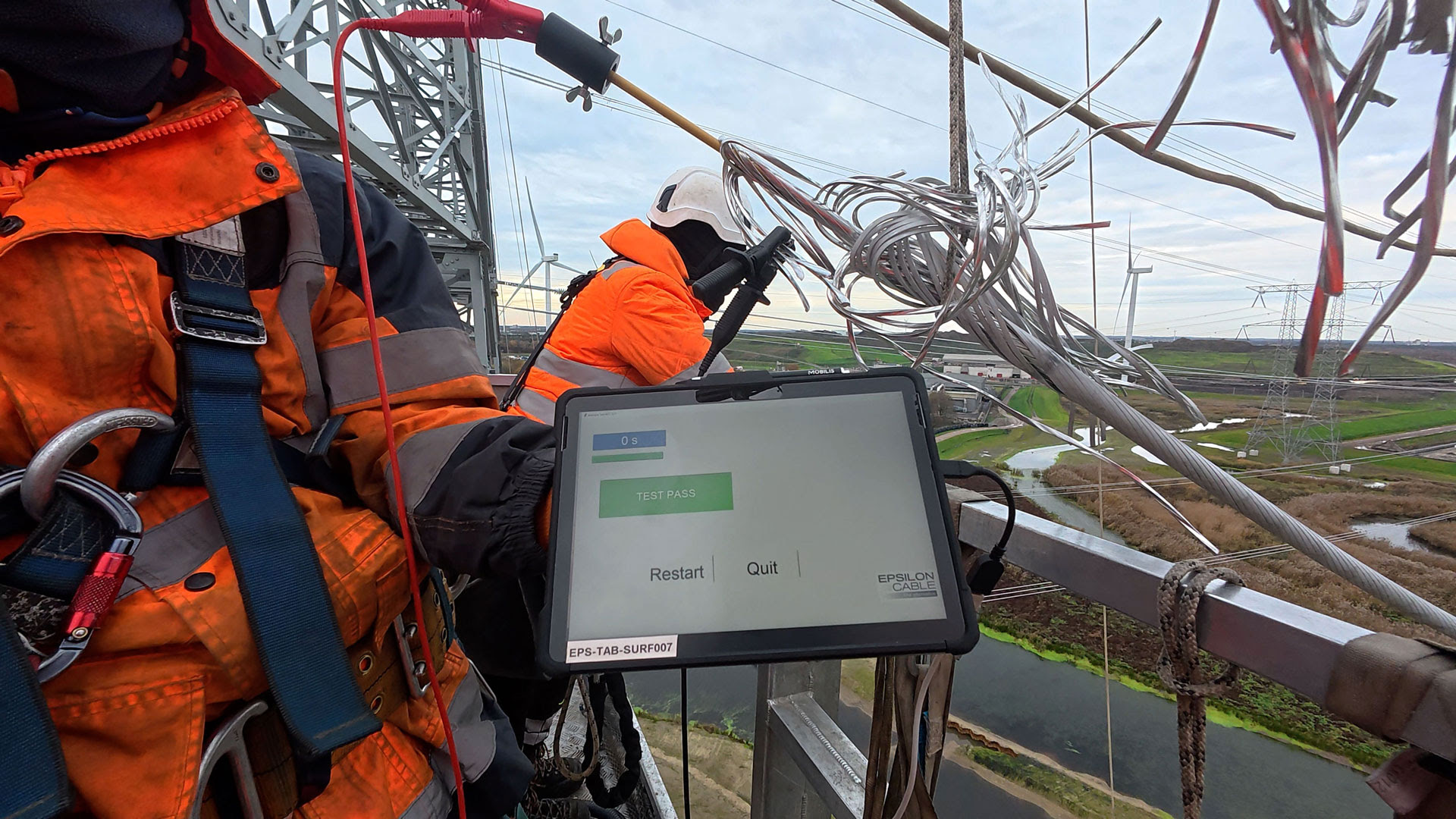
Nexans and Epsilon Composite have completed the first field validation of CORECHECK composite-core conductor monitoring technology on TenneT’s 380kV transmission network in the Netherlands.
The technology is designed to verify the structural integrity of composite-core overhead conductors throughout transport, installation, and commissioning. It has been integrated with Nexans’ High Voltage Composite Reinforced Conductor, part of the company’s overhead line portfolio for higher-capacity transmission upgrades.
TenneT is using high-temperature low-sag conductors as part of its long-term programme to increase transmission capacity. HTLS conductors can raise capacity on existing corridors by operating at higher temperatures while limiting conductor sag. That makes them valuable where grid operators need more capacity but face land, planning, cost, and delivery constraints around new infrastructure.
Composite-core conductors provide a route for uprating existing overhead lines. Their mechanical performance allows higher current carrying capacity with reduced thermal sag compared with conventional alternatives. The challenge has been quality assurance: utilities and contractors need confidence that the composite core has not been damaged during manufacture, transport, handling, stringing, or commissioning.
CORECHECK detects internal defects within the composite core through a breakdown voltage test. The method uses the insulating properties of the conductor’s glass fibre outer layer. The test is designed for field use, requires limited operator training, and can typically be completed by a single technician in around five minutes per conductor.
During the TenneT deployment, conductor integrity was verified at each key stage of the project lifecycle. Testing took place after manufacture of the composite core by Epsilon Composite, after conductor stranding by Nexans, on delivery to site, and after installation by the engineering contractor. The process was completed under challenging field conditions, including strong winds, dense fog, heavy rain, and sub-zero temperatures.
Overhead line projects are exposed to multiple handling risks before energisation. A conductor can pass through production, storage, logistics, lifting, pulling, tensioning, clamping, and commissioning activities before it enters service. If a defect is missed, the consequences can emerge later as performance degradation, reliability risk, or remedial work on live network assets.
CORECHECK also creates a traceable quality record. The system records operator identification, conductor batch information, and measurement results for every test performed. That traceability is useful for utilities, contractors, manufacturers, and insurers because it establishes a documented chain of verification across the project lifecycle.
Stéphane Morice, overhead lines sales director at Nexans, said: “By integrating CORECHECK into our HVCRC solution, we are providing customers with a practical way to verify conductor integrity throughout the installation process. This gives utilities and contractors greater confidence that critical transmission infrastructure has been installed correctly and is ready to perform throughout its operational lifetime.”
European transmission networks are under pressure from renewable generation, electrification, interconnection, and rising demand. Grid operators need new capacity, but new corridors remain difficult to consent and deliver. Uprating existing overhead lines can provide capacity more quickly in some locations, provided conductor performance, installation assurance, and lifecycle monitoring are strong enough.
The same delivery chain is visible in the consented 400kV substation infrastructure planned for Birkhill Wood, where transmission reinforcement depends on substations, switchgear, overhead lines, cable interfaces, and planning consent moving together. CORECHECK sits at the component assurance end of that wider grid modernisation cycle.
Advanced conductors are not a substitute for all new transmission infrastructure. Some network reinforcements still require new lines, new substations, HVDC links, or wider system redesign. Where an existing route can be uprated, conductor technology can improve capacity without the same level of land take or visual impact as a new corridor.
Field verification strengthens that route. A higher-performance conductor only delivers value if installed correctly and documented properly. The ability to verify composite-core integrity on site reduces uncertainty between factory quality control and operational acceptance.
Nexans plans to present a technical paper on the project and field validation results at CIGRE Paris 2026. The deployment gives utilities a tested field method for one of the practical risks attached to composite-core overhead conductors, just as Europe’s transmission networks enter a heavier build and uprating cycle.

