
IN Brief:
- National Grid has secured planning consent for the Birkhill Wood 400kV substation.
- The site will connect Dogger Bank South East, Dogger Bank South West, and Dogger Bank D.
- The project links into wider 400kV reinforcement between North Humber and High Marnham.
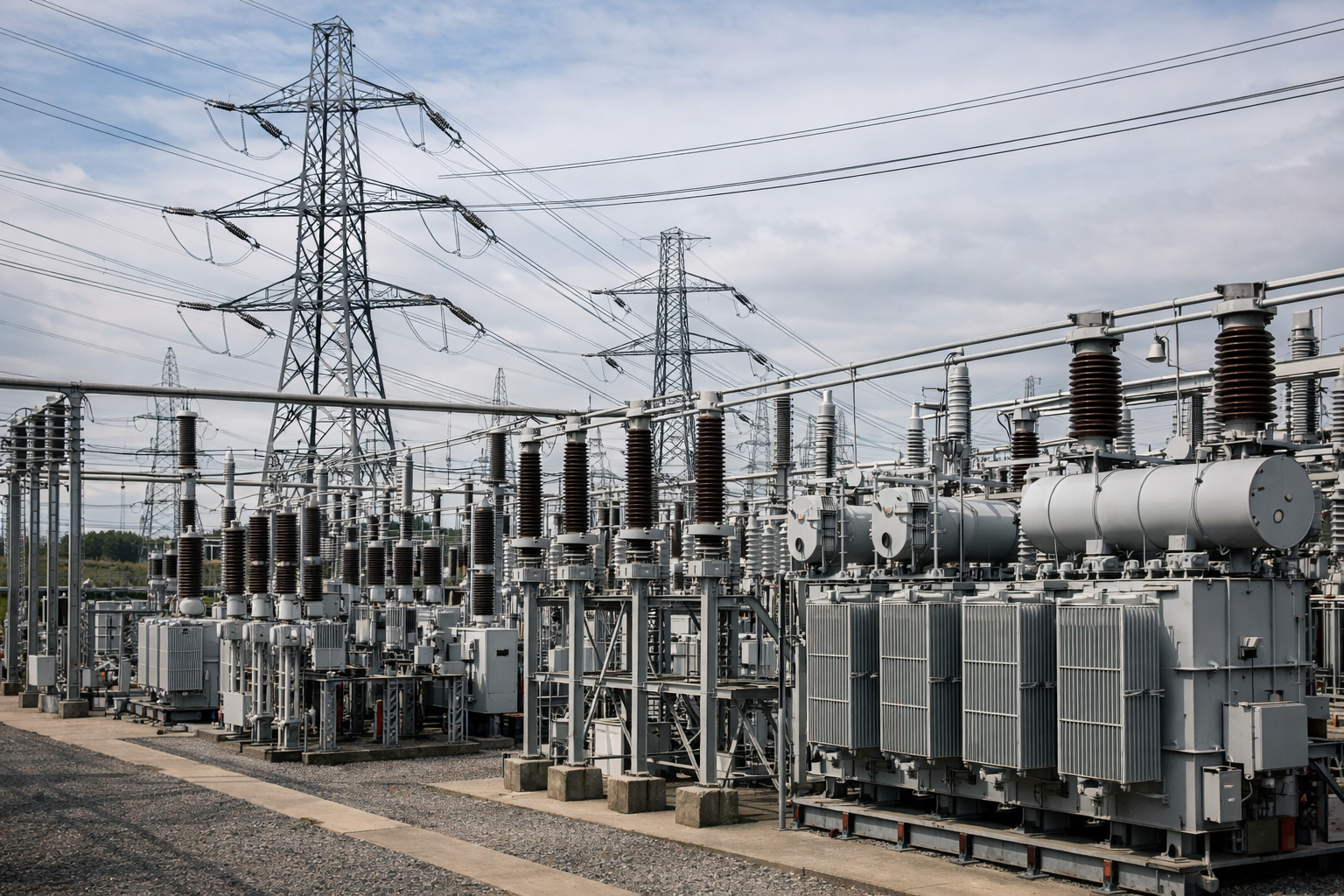
National Grid Electricity Transmission has secured planning consent from East Riding of Yorkshire Council for Birkhill Wood, a new 400kV substation intended to connect the next wave of Dogger Bank offshore wind projects.
The substation will provide a grid connection point for Dogger Bank South East, Dogger Bank South West, and Dogger Bank D. Together, the projects represent 4.22GW of potential offshore wind capacity from the North Sea. Construction of a new 2km access road off the A1079 has already begun, with substation construction expected to start in spring 2027.
Birkhill Wood will use gas-insulated switchgear, reducing the physical footprint compared with an air-insulated alternative. The site will also act as the northern connection point for the proposed North Humber to High Marnham 400kV reinforcement, which includes around 90km of new overhead line between Birkhill Wood and High Marnham.
Creyke Beck, the existing connection point associated with earlier Dogger Bank phases, cannot absorb all of the additional capacity now being developed around the Dogger Bank zone. Dogger Bank A and B connect at Creyke Beck, while Dogger Bank C connects at Lackenby in Teesside. The new substation provides the grid interface needed for the next projects in the cluster.
Dogger Bank South East and Dogger Bank South West secured development consent in May 2026, alongside North Falls. Dogger Bank D remains at an earlier stage, but its grid connection location has already been confirmed at Birkhill Wood. National Grid’s substation programme is therefore advancing as part of a larger offshore transmission pathway rather than as a standalone local grid asset.
The wider requirement is the movement of large offshore wind volumes from coastal landing points into inland demand centres. Offshore generation capacity is concentrated around resource-rich areas of the North Sea, while demand is spread across homes, businesses, industry, data centres, transport infrastructure, and future hydrogen production. Substations such as Birkhill Wood sit on the route between offshore generation and usable system capacity.
The consented Dogger Bank South and North Falls projects underline the same transmission problem: offshore wind planning is inseparable from cables, converter stations, substations, and onshore reinforcement. Turbine consent only becomes practical when export systems and grid assets are planned in parallel.
Birkhill Wood also connects directly to the debate around overhead and underground transmission. The North Humber to High Marnham reinforcement will require new 400kV infrastructure, and the choices around pylons, buried cables, land disruption, cost, and maintenance remain politically sensitive. Britain’s approach to buried cables and pylons continues to balance technical performance, public acceptance, capital cost, delivery speed, and whole-life maintenance.
The use of gas-insulated switchgear reflects a practical response to land and footprint constraints. GIS equipment can reduce site area and improve layout flexibility, although it brings its own technical and lifecycle considerations around insulation medium, maintenance, cost, and future environmental rules. For high-capacity nodes in constrained or sensitive areas, compact switchgear often helps reconcile operational requirements with planning and land-use pressure.
The substation will still require detailed design, procurement, civil works, control systems, protection settings, communications, commissioning, and interface management with connected projects. It must also be coordinated with the timing of offshore generation, cable routes, and wider north-south reinforcement. Any mismatch can leave generation waiting for grid capacity or grid assets underutilised while generation projects reach final investment decision.
Birkhill Wood is a planning milestone with direct system consequences. It advances one of the grid interfaces required for the UK’s next offshore wind build-out and reinforces the role of substations as strategic assets. The energy transition is being built through access roads, switchgear halls, overhead line routes, cable corridors, transformers, protection systems, and the consents that allow them to proceed.

