IN Brief:
- Mer AS has completed the divestment of Mer Fleet Services Ltd through a management buyout.
- The UK fleet charging business will continue under members of its existing leadership team.
- The company provides design, delivery, and operation of EV charging infrastructure for fleets.
Mer Fleet Services Ltd has completed a management buyout from Mer AS, moving the UK fleet charging business into standalone ownership under members of its existing leadership team.
Paul Winchester becomes Chief Executive Officer, joined by Natasha Fry as Chief Commercial Officer, Jane Crosby as Chief Financial Officer, and Louise Gillingham as Chief Operating Officer. The company will continue to provide EV charging infrastructure services for UK fleet customers, including design, delivery, and operation.
Mer AS is retaining its focus on public charging in the Nordics, Germany, and Austria. The UK fleet business will move through a transition covering branding, digital channels, customer materials, and operational separation, while existing contracts and services continue through the change in ownership.
The transaction follows Mer’s earlier exit from UK public charging, when its public network was sold to Be.EV. With the fleet business now separated, Mer AS becomes more concentrated around selected European public charging markets, while the UK company continues as a specialist provider for depot and commercial charging.
Fleet charging has a different infrastructure profile from public charging. Depot and workplace projects are shaped by dwell time, route scheduling, available grid capacity, charging windows, operational resilience, and energy cost. Charger installation is only one part of the work; load management, maintenance, reporting, billing, and future expansion planning determine whether the site can support electrified operations over time.
UK fleets are moving from small pilots into larger rollouts across cars, vans, buses, logistics vehicles, emergency-service fleets, and heavier commercial vehicles. Each vehicle type brings different charging requirements. Some sites can rely on AC charging and overnight dwell time, while others need DC chargers, battery buffering, staged grid upgrades, or active energy management to avoid excessive peak demand.
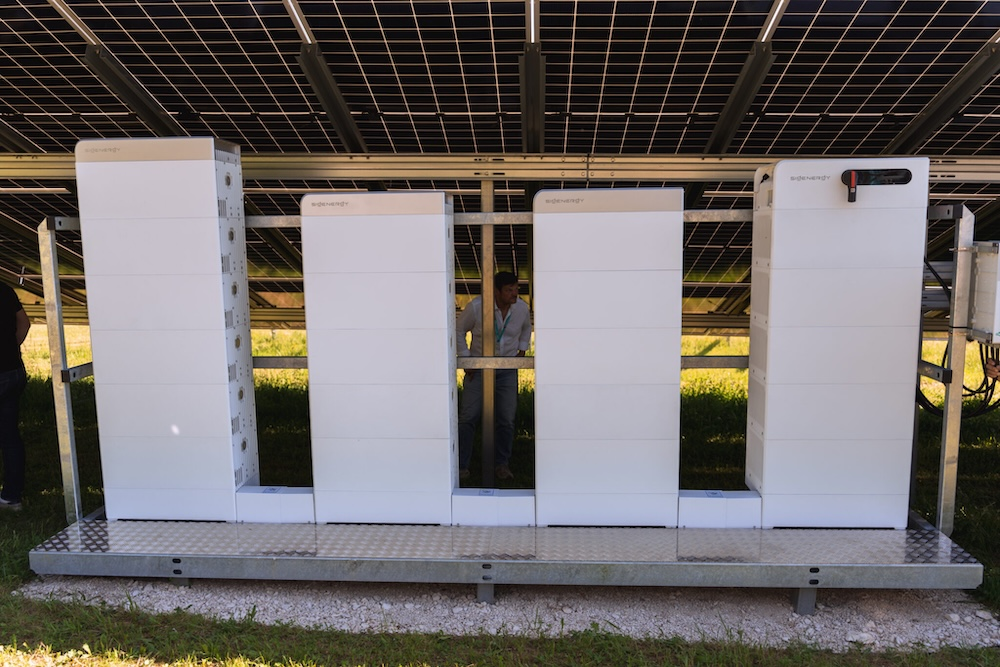
Depot electrification is becoming a site-wide electrical design problem. Recent modelling of lower-cost truck charging showed how PV, battery storage, and energy management can reduce electricity costs for heavier vehicles, while battery-backed charging sites have demonstrated how storage can support high-power charging where grid capacity is constrained.
Those developments are increasingly relevant to fleet operators because vehicle procurement cannot be separated from power availability. Connection timescales, reinforcement cost, charger redundancy, load profiles, metering, payment systems, and service response all affect whether vehicles are ready when operations require them. A specialist fleet charging provider therefore sits close to electrical engineering, site planning, energy management, and long-term maintenance.
The management buyout gives Mer Fleet Services a focused ownership structure as the UK market becomes more demanding. Public charging networks are often judged by coverage, location quality, utilisation, and payment reliability. Fleet charging is judged by uptime, vehicle readiness, depot throughput, electricity cost, and the ability to scale without disrupting operations.
Continuity will be important through the transition. Customers will need stable service contracts, software platforms, maintenance arrangements, support channels, and delivery schedules as the company separates from Mer AS. New projects will be judged on their ability to support expansion over several years, not only on the initial charger installation.
Fleet electrification is entering a more disciplined phase. Early projects have exposed practical constraints around grid capacity, scheduling, cost, and operational resilience. The buyout keeps an established UK specialist in the market as commercial fleets move from demonstration projects toward permanent charging infrastructure.