IN Brief:
- Energa has launched a tender for a general contractor covering 13 solar and battery energy storage projects in Poland.
- The programme includes BESS additions to existing photovoltaic sites and new solar plants with battery systems across eight locations.
- The tender reflects Poland’s shift toward hybrid renewable assets that support grid stability as renewable capacity increases.
Energa has launched a tender to select a general contractor for 13 projects combining solar power and battery energy storage across Poland, moving hybrid renewable infrastructure further into the country’s delivery pipeline.
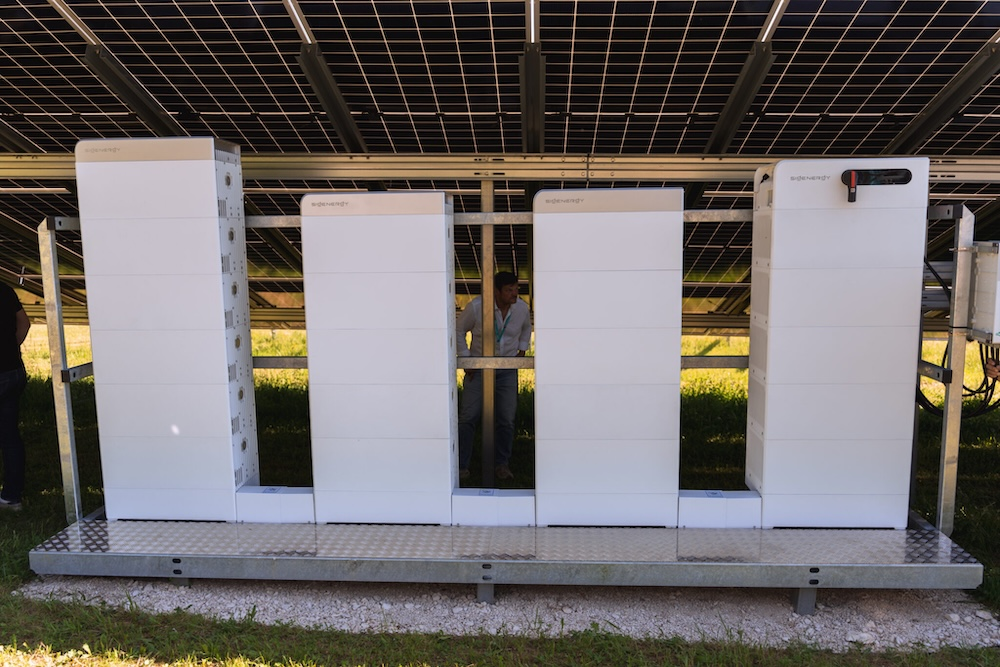
The programme includes battery energy storage systems to be added to existing photovoltaic farms at PV Wąbrzeźno, PV Działdowo, PV Barczewo, and PV Płońsk. BESS facilities will also be added to the Sompolno complex, which combines 27MW of wind generation with a 10MW solar installation.
Energa Green Development will build solar plants at eight locations with a total capacity of 100MW, each equipped with batteries. The solar farms will be financed from Energa’s own resources, while the battery systems will be financed through the EU Modernisation Fund under grant agreements signed with Poland’s National Fund for Environmental Protection and Water Management.
The funding was awarded through a competitive round under a programme focused on electricity storage facilities and associated infrastructure to improve the stability of the Polish power grid. The national programme has a budget of PLN4.15bn, equivalent to about €976m.
The tender process for the hybrid projects is expected to conclude in the third quarter of 2026. Energa forms part of Orlen and is one of Poland’s four largest energy groups. At the end of 2025, it crossed the 1GW mark in renewable energy capacity, with renewables accounting for 57% of its installed capacity.
By adding storage to existing solar assets and designing new solar plants with batteries from the outset, Energa is moving beyond single-technology renewable deployment. Existing PV farms can gain more operational value where batteries are used to shift output, reduce curtailment exposure, support local network conditions, and improve export profiles. New solar projects designed around storage can also make better use of connection capacity where grid congestion and export limits are becoming more prominent.
Poland’s power system is moving through a structural transition. Renewable capacity is increasing, offshore wind is moving toward construction, and coal-fired generation remains a large part of the historical system. That mix creates demand for storage, stronger transmission corridors, flexible generation, and tighter operational coordination between renewable output and consumption.
Transmission development is advancing alongside that shift. PSE has awarded contracts for a 400kV line serving Baltic Sea offshore wind projects, showing how Poland’s renewable build-out depends on both generation assets and the electrical infrastructure required to move power inland. Hybrid solar and storage projects address the same system need from the distribution and project-connection side.
Battery integration changes the design of a renewable asset. Developers and contractors have to account for transformer sizing, protection settings, grid codes, land use, fire safety, control systems, battery duration, degradation, metering, route-to-market arrangements, and connection agreements. A hybrid plant is an energy system with a more complex control and revenue profile than a standalone solar farm.
Across Europe, that design model is becoming more common. Co-located renewable and battery capacity is forecast to grow sharply as negative pricing, curtailment, and grid congestion reshape the economics of wind and solar. Poland’s tender-backed programme adds a public funding and grid stability dimension to that wider move toward hybridisation.
The procurement route will now test how quickly contractors can deliver hybrid assets at multiple locations while managing equipment supply, grid interfaces, construction sequencing, and commissioning. Battery projects are competing for power conversion systems, transformers, battery cells, control platforms, and grid connection expertise at the same time as renewables, data centres, and network operators increase demand for electrical infrastructure.
Energa’s tender turns storage policy into a defined delivery programme. The next measure will be how effectively those funded battery systems can become connected assets that support renewable output and day-to-day grid operation.