IN Brief:
- Endesa is investing €36.3m to replace 40 turbines installed at Coriscada since 1998 with four 7MW machines.
- Annual generation is forecast to rise from 47GWh to 83.9GWh even though the site’s grid export limit remains 24MW.
- Testing is planned for late 2027 and full operation for March 2028, with reusable equipment retained or sold for further service.
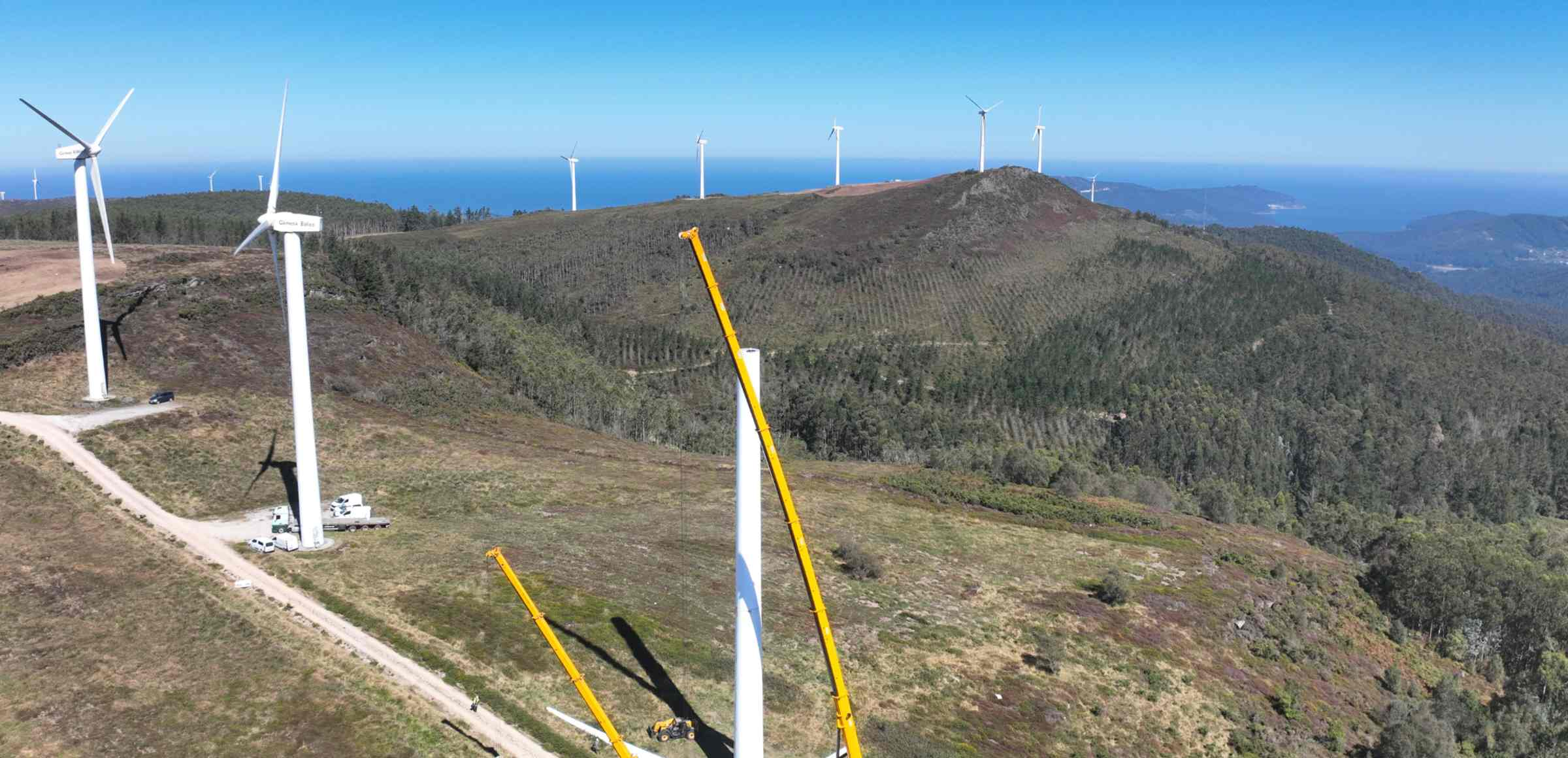
Endesa has started repowering the Coriscada wind farm in Galicia, replacing 40 turbines operating since 1998 with four 7MW machines. The €36.3m programme will increase installed turbine capacity from 24MW to 28MW while retaining the site’s existing 24MW grid export limit.
The work is being delivered through Sistemas Energéticos Mañón Ortigueira SA, owned 96% by Endesa through Enel Green Power España and 4% by the Galician Energy Institute, INEGA. Construction is under way in the municipalities of Mañón and Ortigueira and is due to be substantially completed during 2027.
Annual generation is forecast to rise from 47GWh to 83.9GWh, an increase of 78.5%. The change in energy yield is far larger than the increase in installed turbine capacity, reflecting the higher output available from modern machines with larger rotors, taller structures, improved control systems, and higher availability.
Coriscada will move from 40 turbines of different technologies to four units with the same 7MW rating. Endesa has not identified the turbine model, but reducing the machine count by 90% will substantially alter the mechanical and electrical layout of a site that has operated for almost three decades.
The retained 24MW evacuation limit means the four new turbines, with a combined nameplate rating of 28MW, will not always be able to export their full simultaneous output. Higher annual production will instead come from improved energy capture across a broader range of wind conditions, with plant controls ensuring the grid connection remains within its permitted limit.
Repowering mature wind farms can therefore raise energy yield without requiring a matching increase in network capacity. Existing substations, access arrangements, grid rights, and operating history can give established locations an advantage over greenfield projects, although new turbines still require foundations, heavy-lift operations, electrical integration, and protection studies suited to equipment far larger than the machines originally installed.
Endesa expects the rebuilt Coriscada plant to begin testing towards the end of 2027 before entering full operation in March 2028. The delivery programme includes dismantling 40 existing machines, preparing four replacement positions, installing the new turbines, modifying the electrical system, and recommissioning the site against the retained export constraint.
The equipment being removed will not automatically enter the waste stream. Endesa plans to reuse suitable turbines or components as spares elsewhere in its fleet or sell equipment to third parties for continued service, extending the operating life of assets that remain technically usable.
Components that cannot be reused are intended to enter recovery processes. Wind-farm repowering increasingly has to address decommissioning alongside construction because the commercial value of a replacement project can be undermined if blades, towers, electrical equipment, and other large components are treated solely as demolition waste.
The replacement turbines are also specified with European Union manufacturing content. That ties the project to the regional wind supply chain at a time when turbine manufacturing, installation capacity, and major component sourcing are receiving greater scrutiny across European energy policy.
Public funding covers part of the programme. Coriscada has been awarded up to €6.79m through Spain’s IDAE under the second call of the circular repowering programme, financed through the national Recovery, Transformation and Resilience Plan with EU support.
The grant does not remove the engineering constraints of rebuilding an operating generation site. Legacy foundations and electrical equipment have to be assessed against modern loads, crane and transport access must accommodate much larger components, and the new turbines must operate within a grid connection originally designed around a very different generating fleet.
The export constraint also places additional importance on the plant controller. With 28MW of turbine capacity behind a 24MW grid limit, control logic must coordinate output whenever available generation exceeds the permitted export level, while preserving stable behaviour during faults, voltage changes, and network instructions.
That configuration can still increase the utilisation of the existing connection because the wind farm will spend more hours operating closer to its 24MW limit. The old turbines may have provided the same maximum export capacity on paper, but lower individual ratings, smaller rotors, and ageing equipment meant the site reached that ceiling less frequently.
Testing at the end of 2027 will establish whether the rebuilt electrical and control systems perform as intended before commercial operation begins in March 2028. Coriscada will then have four turbines where 40 once stood, with almost 79% more forecast annual generation passing through the same 24MW export connection.